COMICBOOKSTOCKEXCHANGE.COM·
UTC LIVE TIMEDEAL RADAR
MARKET CLOCKS
HOME OFFICEHOME OFFICE--:--
NYSENew York--:--
LSELondon--:--
JPX / NIKKEITokyo--:--
DFM / ADXDubai--:--
WORLD / UTC--:--
DC·Batman·#251·Bronze Age·ID-2316410
| Grade | Census & Float Distribution | Role | FMV | Total Value | Multiple |
|---|---|---|---|---|---|
| 9.8 | 37 of 5,155 slabs (0.7%) | SOV | $26,840.00 | $993,080.00 | (72.5x) |
| 9.6 | 127 of 5,155 slabs (2.5%) | $5,175.48 | $657,285.96 | (14.0x) | |
| 9.4 | 213 of 5,155 slabs (4.1%) | $2,888.00 | $615,144.00 | (7.8x) | |
| 9.2 | 242 of 5,155 slabs (4.7%) | $1,600.00 | $387,200.00 | (4.3x) | |
| 9.0 | 352 of 5,155 slabs (6.8%) | $1,548.88 | $545,205.76 | (4.2x) | |
| 7.0 | 462 of 5,155 slabs (9.0%) | ANC | $839.00 | $387,618.00 | (2.3x) |
| RAW | 385,470 ungraded (390,625 printed − 5,155 graded) | RAW | $370.00 | $142,623,900.00 | (1.0x Base) |
Assumes raw copies grade like the copies already in the CGC census (which skews to copies owners chose to submit). Fees: CGC Vintage tier by graded value ($30–$105, 4% above $1,000), insured shipping shared across 10 books; pre-screen reject $14; eBay 13.25%. Not financial advice.
Underlying: CGC 7.0 (Liquid Center) · Spot $839.00 · Model IV 38.5% · Open Contracts: 0
| Calls (Right to Buy 1 Copy) | Strike | Puts (Right to Sell 1 Copy) | ||||||||
|---|---|---|---|---|---|---|---|---|---|---|
| OCC Contract | Premium | Intr / Time | IV · Δ | Θ/d · ν | Strike $ | OCC Contract | Premium | Intr / Time | IV · Δ | Θ/d · ν |
| BAT251-261218C670 | $171.07 | $169.00 + $2.07 | 43.9% · 0.98 | -0.15 · 0.09 | $670.00 | BAT251-261218P670 | $0.60 | $0.00 + $0.60 | 43.9% · -0.02 | -0.08 · 0.09 |
| BAT251-261218C760 | $87.39 | $79.00 + $8.39 | 40.3% · 0.85 | -0.48 · 0.48 | $760.00 | BAT251-261218P760 | $6.72 | $0.00 + $6.72 | 40.3% · -0.15 | -0.41 · 0.48 |
| BAT251-261218C800 | $56.55 | $39.00 + $17.55 | 39.2% · 0.71 | -0.67 · 0.72 | $800.00 | BAT251-261218P800 | $15.79 | $0.00 + $15.79 | 39.2% · -0.29 | -0.59 · 0.72 |
| BAT251-261218C840 | $32.71 | $0.00 + $32.71 | 38.5% · 0.52 | -0.74 · 0.84 | $840.00ATM | BAT251-261218P840 | $31.86 | $1.00 + $30.86 | 38.5% · -0.48 | -0.66 · 0.84 |
| BAT251-261218C880 | $16.72 | $0.00 + $16.72 | 37.9% · 0.33 | -0.66 · 0.77 | $880.00 | BAT251-261218P880 | $55.78 | $41.00 + $14.78 | 37.9% · -0.67 | -0.57 · 0.77 |
| BAT251-261218C920 | $7.54 | $0.00 + $7.54 | 37.6% · 0.18 | -0.47 · 0.56 | $920.00 | BAT251-261218P920 | $86.52 | $81.00 + $5.52 | 37.6% · -0.82 | -0.38 · 0.56 |
| BAT251-261218C1000 | $1.11 | $0.00 + $1.11 | 37.5% · 0.04 | -0.14 · 0.17 | $1,000.00 | BAT251-261218P1000 | $161.00 | $161.00 + $0.00 | 37.5% · -0.96 | -0.04 · 0.17 |
Empirical cash settlement intelligence, cross-grade elasticity curve, and secondary liquidation velocity.
Empirical step multipliers between adjacent condition tiers. Pinpoints the exponential premium transition and capital efficiency frontier.
Realized turnover cadence and capital absorption depth across certified auction comps.
Autonomous institutional strategies, financial equilibrium, scarcity modeling, and algorithmic risk profiling.
Market operates purely on organic buyer and seller auction discovery. Zero artificial price interventions or emergency liquidity halts on record.
Verified historical transaction line with quarterly equilibrium baseline anchor.
Understand how physical sales, invested dollars, and liquidity friction divide across grades.
Completed market sales by grade
Relative market value allocation
Estimated execution friction
Bibliographic provenance, creator credits, historical significance, and multimedia documentation.
Dennis O'Neil
?; ? (photo)
?; ? (photo)
?; typeset
Julius Schwartz
Home of Superman, Batman, Wonder Woman, and the Justice League.
Comics grow darker and more socially aware. Wolverine, Punisher, Swamp Thing debut. Creator-driven storytelling emerges.
Newsstand variants carry meaningful scarcity premiums. First appearances from this era are blue-chip investments.
Bronze Age (1970–1984) — comics grew darker and more socially aware. The era of classic runs, creator-driven storytelling, and the birth of serious collecting culture. Newsstand variants carry a meaningful scarcity premium.
Inspectable mathematical proof, blockchain/ledger provenance, data integrity validation, and asset taxonomy.
In illiquid alternative asset markets, sovereign blue-chip holdings trade at an exponential multiple over mid-grade float due to institutional accumulation and inelastic seller reservation prices.
The Joker has set himself free from the Mental Hospital for the Criminally Insane that Batman had him incarcerated in, and now he is out for blood. Before he was sent away, knowing that one member of his previous gang had ratted him out to the police, he had vowed to murder all five of them, and only the Batman is capable of stopping him. Despite Batman's best efforts, the Joker is able to finish off nearly all of the men on his hit list. Batman is only alerted after the first murder, when a grinning corpse is found in the mud just outside of Gotham City, and he goes to each of the former members of the Joker's gang individually to try to protect them. The second member agrees to go into protective custody with Batman, but drinks from his water bucket right afterwards and is killed by Joker Venom that it had been laced with. The third member is treated favorably by the Joker, and even believes the two of them to be on good terms when the Joker gives him a cigar before leaving his apartment. As the Joker walks out of the building, the cigar blows up the man's entire household and him with it. As it turns out, it was an exploding cigar that was filled with nitroglycerin. Most interestingly, the fourth member of the gang believes that Batman is only trying to bring him in for a mugging that he recently committed, even after Batman tells him the story. He asks if Batman will lead the way because he is frightened, and then the second his back is turned bashes Batman over the head with a sap and runs back to his hideout. When Batman regains his composure enough to pursue, he finds the man already strung up by the neck, hanged from his rafters, and the Joker lying in ambush. Although the Joker is able to subdue the already disoriented Batman, he declines to kill him, because it was "mere chance that caused his attack on Batman to succeed," and he had "always envisioned his winning as a result of cunning at the end of a bitter struggle." When Batman regains consciousness, he is able to deduce the location of the Joker's hideout by the strange mixture of sand and oil on his face where the Joker had kicked him. The Joker is hiding out in the aquarium right next to the beach, where there was an oil spill very recently. Batman tracks the Joker down, hoping to save the life of the last man, now a senior citizen confined to a wheelchair. Naturally, knowing Batman would find him, the Joker has the man poised over a giant tank of water with a shark that was hurt by the oil spill inside of it, and agrees that he will let him go only if Batman takes his place. Batman is forced to agree, and after he is handcuffed, the Joker pushes both of them in. Thinking fast, Batman is actually able to subdue the shark using only his handcuffs, and to break the glass of the tank by bashing it with the wheelchair, saving the man's life and escaping in barely enough time to pursue the Joker. Batman runs out into the early dawn, and chases the Joker to his getaway car, but worries that in his current condition, after the lump on his head, the lack of air, and the night of running around Gotham, he will not be able to catch up to him in time. But the Joker slips on the oil slime on the beach right before reaching his escape, and Batman is able to catch up with him, and beat him senseless. As Batman drags the Joker off into the sunrise, the Dark Knight finds irony in the fact that pollution was the element that helped him capture his most dangerous rival.
Each cover variant, retailer incentive, and subsequent printing represents an independent atomic tradeable instrument with unique supply elasticity, barcode registration, and secondary market demand.
Strict algorithmic segregation separating clean single-issue Cover A sales from multi-issue lot bundles, retailer exclusives, and foreign variants.
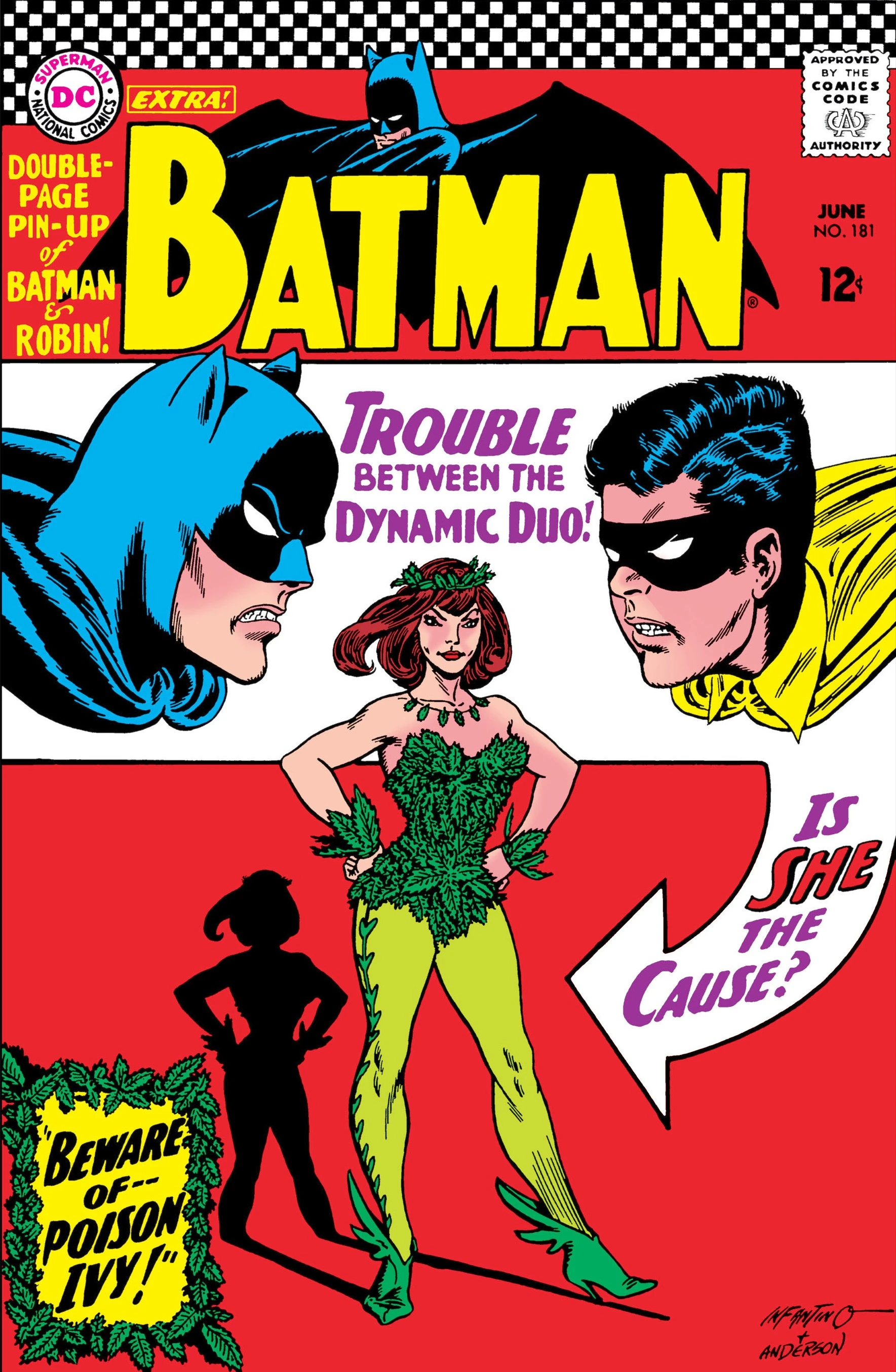
Batman #181
9.8
$31,176.09
9.6
$29,280.00
9.4
$12,600.00
RAW
$274.32
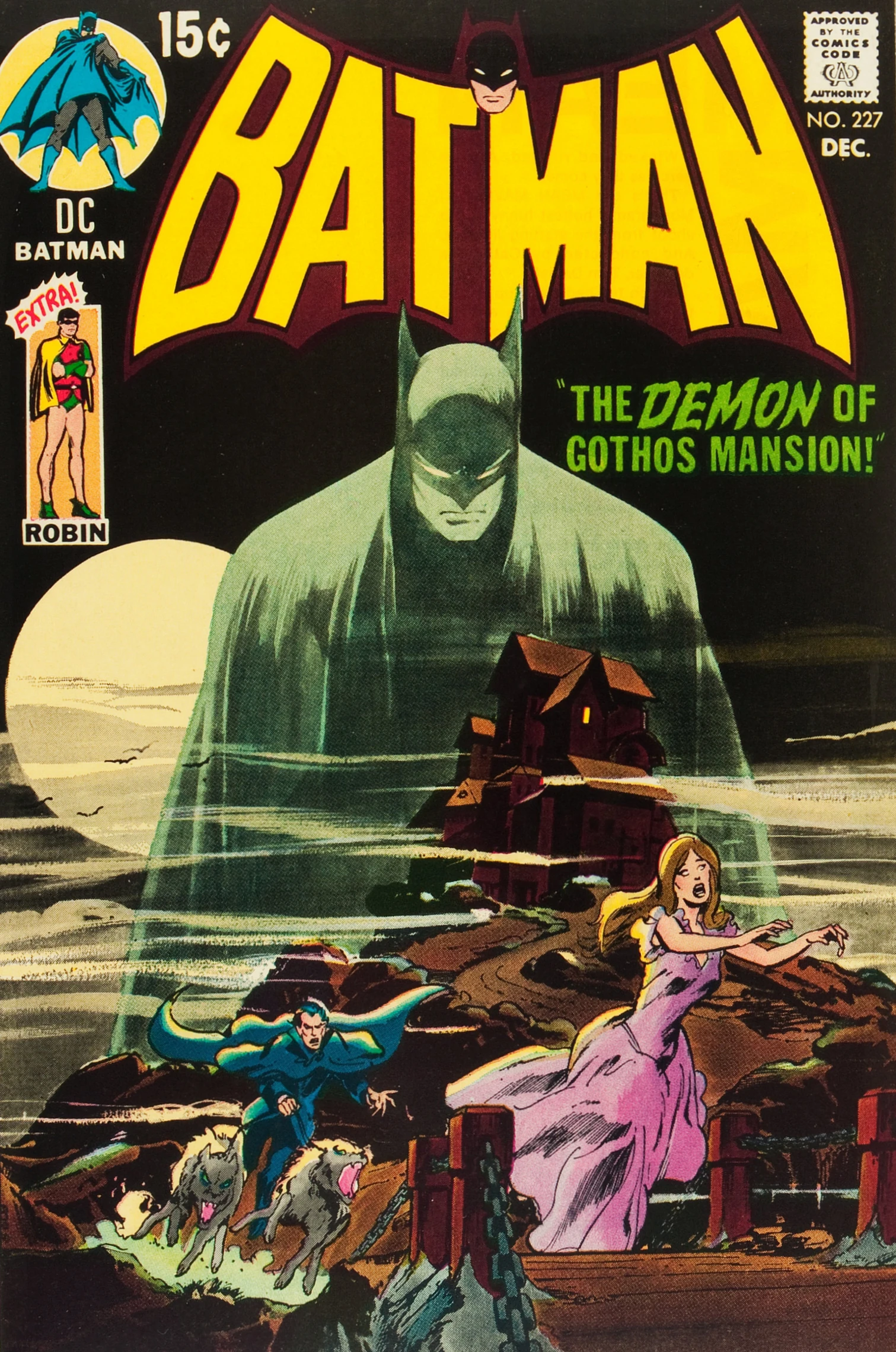
Batman #227
9.8
$29,280.00
9.6
$8,470.00
9.4
$3,500.00
RAW
$515.91

Batman #251
9.8
$26,840.00
9.6
$5,175.48
9.4
$2,888.00
RAW
$370.00
Batman #189
9.8
$21,630.42
9.6
$6,050.00
9.4
$3,126.50
RAW
$171.25
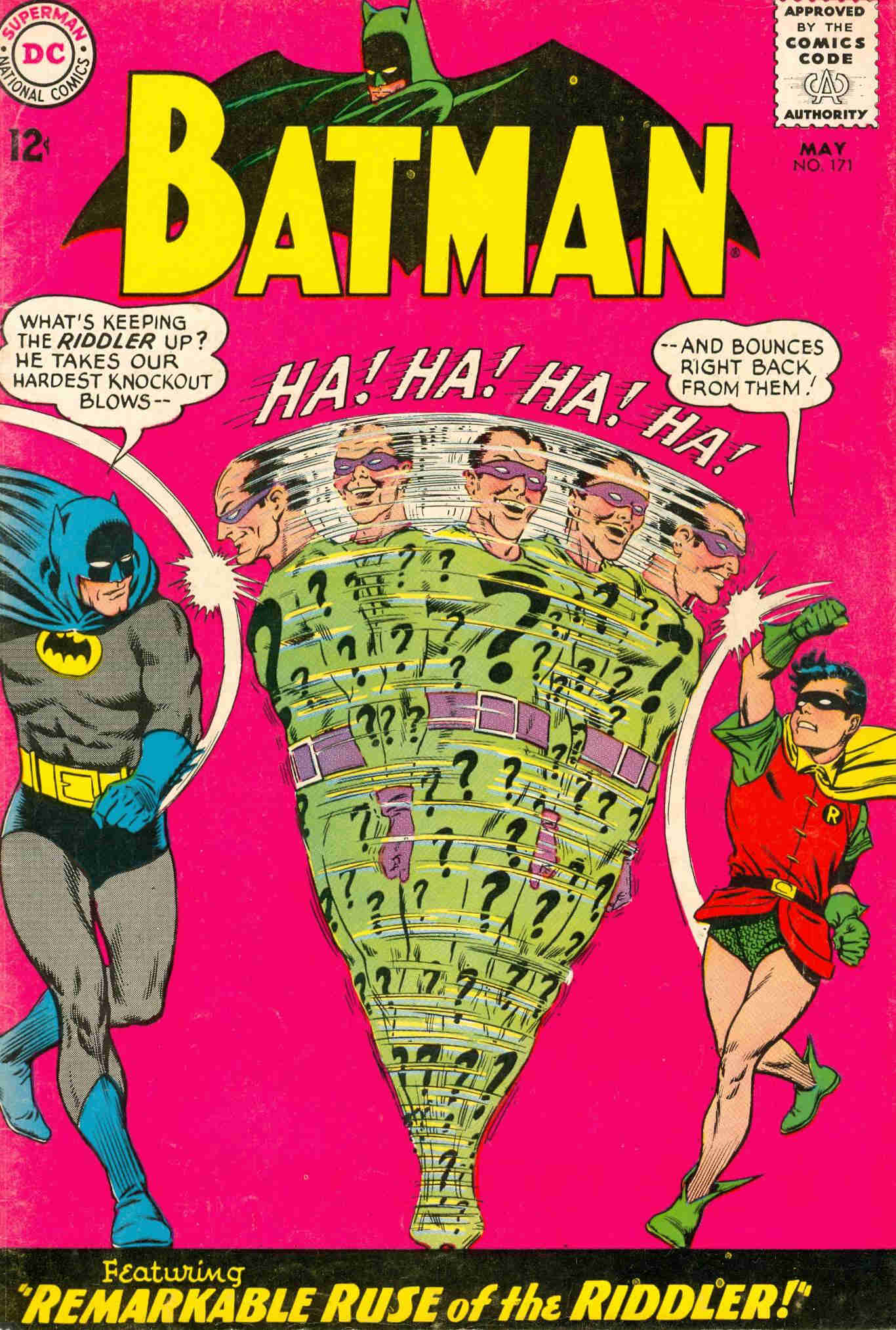
Batman #171
9.4
$11,400.00
9.6
—
9.4
$11,400.00
RAW
$236.50
Mac uses the Charles Atlas course to build up his muscles and fight back against a bully of the beach.
The Joker has set himself free from the Mental Hospital for the Criminally Insane that Batman had him incarcerated in, and he is out for blood. Before he was sent away, knowing that one member of his previous gang had ratted him out to the police, he had vowed to murder all five of them, and only the Batman is capable of stopping him. Despite Batman's best efforts, the Joker is able to finish off nearly all of the men on his hit list. Batman is only alerted after the first murder, when a grinning corpse is found in the mud just outside of Gotham City, and he goes to each of the former members of the Joker's gang individually to try to protect them.
The second member agrees to go into protective custody with Batman, but drinks from his water bucket right afterwards and is killed by Joker Venom that it had been laced with. The third member is treated favorably by the Joker, and even believes the two of them to be on good terms when the Joker gives him a cigar before leaving his apartment. As the Joker walks out of the building, the cigar blows up the man's entire household and him with it. As it turns out, it was an exploding cigar that was filled with nitro glycerin. Most interestingly, the fourth member of the gang believes that Batman is only trying to bring him in for a mugging that he recently committed, even after Batman tells him the story. He asks if Batman will lead the way because he is frightened, and then the second his back is turned bashes Batman over the head with a sap and runs back to his hideout. When Batman regains his composure enough to pursue, he finds the man already strung up by the neck, hanged from his rafters, and the Joker lying in ambush. Although the Joker is able to subdue the already disoriented Batman, he declines to kill him, because it was "mere chance that caused his attack on Batman to succeed," and he had "always envisioned his winning as a result of cunning at the end of a bitter struggle."
When Batman regains consciousness, he is able to deduce the location of the Joker's hideout by the strange mixture of sand and oil on his face where the Joker had kicked him. The Joker is hiding out in the aquarium right next to the beach, where there was an oil spill very recently. Batman tracks the Joker down, hoping to save the life of the last man, now a senior citizen confined to a wheelchair. Naturally, knowing Batman would find him, the Joker has the man poised over a giant tank of water with a shark that was hurt by the oil spill inside of it, and agrees that he will let him go only if Batman takes his place. Batman is forced to agree, and after he is handcuffed, the Joker pushes both of them in. Thinking fast, Batman is actually able to subdue the shark using only his handcuffs, and to break the glass of the tank by bashing it with the wheelchair, saving the man's life and escaping in barely enough time to pursue the Joker. Batman runs out into the early dawn, and chases the Joker to his getaway car, but worries that in his current condition, after the lump on his head, the lack of air, and the night of running around Gotham, he will not be able to catch up to him in time. But the Joker slips on the oil slime on the beach right before reaching his escape, and Batman is able to catch up with him, and beat him senseless.
This issue is historically significant for the following reasons: It marks the Joker's return to his violent roots. After having been portrayed as a mass murderer during the early years of the Golden Age, the Joker was reduced to being an annoying prankster during the late years of the Golden Age and in his scarce appearances during the Silver Age. With this story, many elements of the Joker's original portrayal were updated and still remain to the present day, a constant feature in the development of the character. This story also makes relevant the fact that criminals like the Joker are held in an unnamed mental hospital for the criminally insane. While some Golden Age stories also mentioned mental hospitals for the Joker and other villains, the idea had been largely forgotten during the entire Silver Age and the concept is first revisited in this issue. Arkham Asylum would make its first official appearance as Arkham Hospital in Batman Vol 1 258, only seven issues after this one. This issue also marks the permanent return of Batman's rogues gallery after several years of absence. "The Joker's Five-Way Revenge!" has been reprinted entirely and partially in the following releases: Batman Vol 1 254-Batman Vol 1 255|255 (reprint of page 21) The Best of DC Vol 1 2 The Greatest Joker Stories Ever Told (Collected) Batman Illustrated by Neal Adams Vol 3 (Collected) Batman: The Greatest Stories Ever Told Vol. 1 (Collected)|Batman: The Greatest Stories Ever Told The Joker: A Celebration of 75 Years (Collected)|The Joker: A Celebration of 75 Years Facsimile Edition: Batman Vol 1 251 (a full reprint of the issue by DC, coinciding with the release of the film Joker) * The Joker: 80 Years of the Clown Prince of Crime: The Deluxe Edition (Collected)|The Joker: 80 Years of the Clown Prince of Crime: The Deluxe Edition The Joker's last appearance before this was four years earlier in Justice League of America Vol 1 77.
As Batman drags the Joker off into the sunrise, the Dark Knight finds irony in the fact that pollution was the element that helped him capture his most dangerous rival.