COMICBOOKSTOCKEXCHANGE.COM·
UTC LIVE TIMEDEAL RADAR
MARKET CLOCKS
HOME OFFICEHOME OFFICE--:--
NYSENew York--:--
LSELondon--:--
JPX / NIKKEITokyo--:--
DFM / ADXDubai--:--
WORLD / UTC--:--
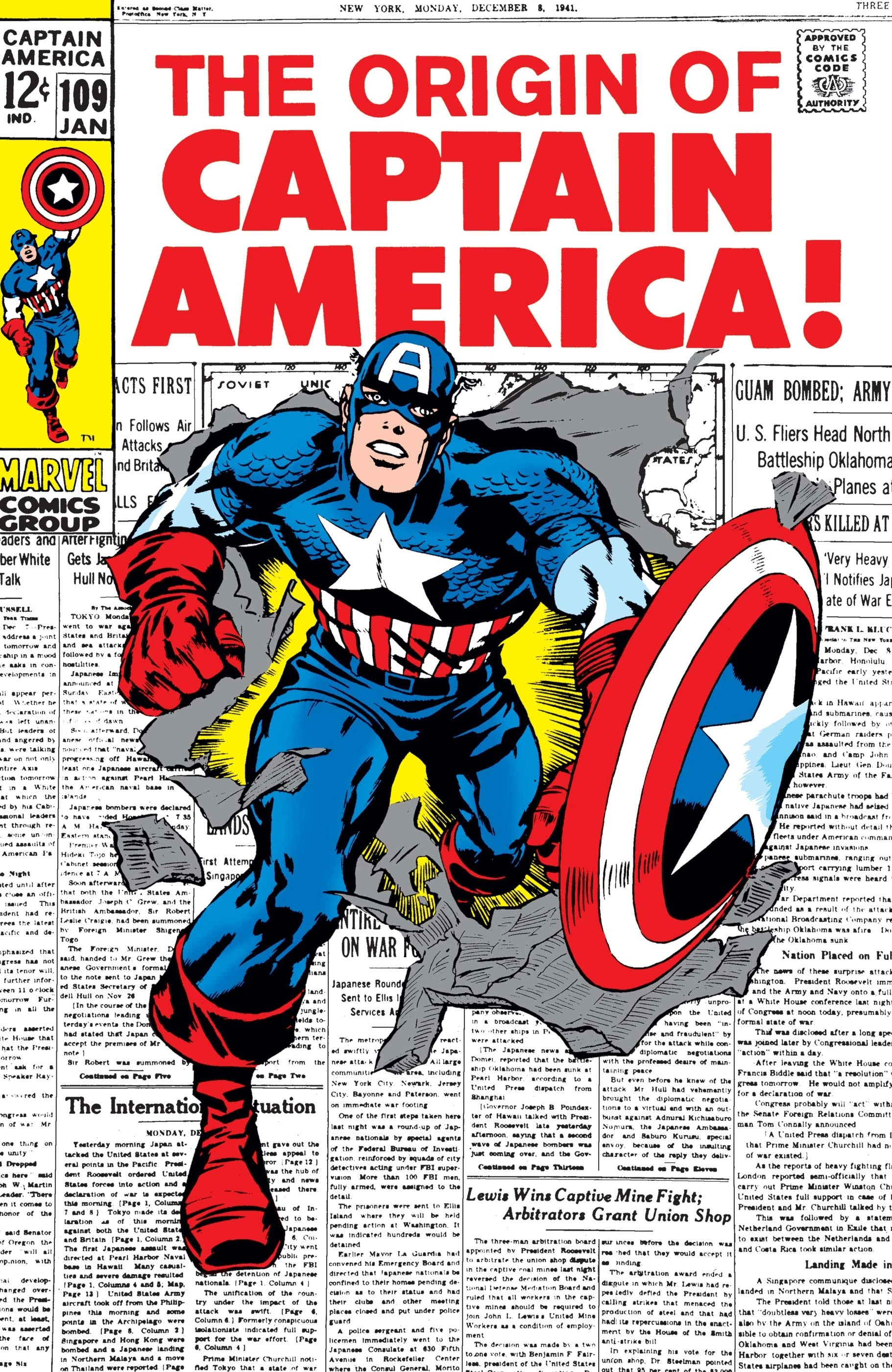
Marvel·Captain America·#109·Silver Age·ID-3229168
| Grade | Census & Float Distribution | Role | FMV | Total Value | Multiple |
|---|---|---|---|---|---|
| 9.8 | 60 of 2,788 slabs (2.2%) | SOV | $1,999.00 | $119,940.00 | (38.1x) |
| 9.6 | 166 of 2,788 slabs (6.0%) | $775.00 | $128,650.00 | (14.8x) | |
| 9.4 | 220 of 2,788 slabs (7.9%) | $499.50 | $109,890.00 | (9.5x) | |
| 9.2 | 236 of 2,788 slabs (8.5%) | $369.00 | $87,084.00 | (7.0x) | |
| 9.0 | 284 of 2,788 slabs (10.2%) | ANC | $226.11 | $64,215.24 | (4.3x) |
| RAW | 247,212 ungraded (250,000 printed − 2,788 graded) | RAW | $52.50 | $12,978,630.00 | (1.0x Base) |
Assumes raw copies grade like the copies already in the CGC census (which skews to copies owners chose to submit). Fees: CGC Vintage tier by graded value ($30–$105, 4% above $1,000), insured shipping shared across 10 books; pre-screen reject $14; eBay 13.25%. Not financial advice.
Underlying: CGC 9.0 (Liquid Center) · Spot $226.11 · Model IV 42.8% · Open Contracts: 0
| Calls (Right to Buy 1 Copy) | Strike | Puts (Right to Sell 1 Copy) | ||||||||
|---|---|---|---|---|---|---|---|---|---|---|
| OCC Contract | Premium | Intr / Time | IV · Δ | Θ/d · ν | Strike $ | OCC Contract | Premium | Intr / Time | IV · Δ | Θ/d · ν |
| CA109-261218C180 | $46.81 | $46.11 + $0.70 | 49.2% · 0.97 | -0.05 · 0.04 | $180.00 | CA109-261218P180 | $0.30 | $0.00 + $0.30 | 49.2% · -0.03 | -0.04 · 0.04 |
| CA109-261218C200 | $28.25 | $26.11 + $2.14 | 45.7% · 0.87 | -0.13 · 0.12 | $200.00 | CA109-261218P200 | $1.70 | $0.00 + $1.70 | 45.7% · -0.13 | -0.11 · 0.12 |
| CA109-261218C210 | $20.14 | $16.11 + $4.03 | 44.4% · 0.77 | -0.18 · 0.17 | $210.00 | CA109-261218P210 | $3.57 | $0.00 + $3.57 | 44.4% · -0.23 | -0.16 · 0.17 |
| CA109-261218C230 | $8.15 | $0.00 + $8.15 | 42.8% · 0.47 | -0.22 · 0.23 | $230.00ATM | CA109-261218P230 | $11.53 | $3.89 + $7.64 | 42.8% · -0.53 | -0.20 · 0.23 |
| CA109-261218C240 | $4.58 | $0.00 + $4.58 | 42.3% · 0.31 | -0.19 · 0.20 | $240.00 | CA109-261218P240 | $17.94 | $13.89 + $4.05 | 42.3% · -0.69 | -0.17 · 0.20 |
| CA109-261218C250 | $2.37 | $0.00 + $2.37 | 42.0% · 0.19 | -0.14 · 0.15 | $250.00 | CA109-261218P250 | $25.71 | $23.89 + $1.82 | 42.0% · -0.81 | -0.12 · 0.15 |
| CA109-261218C270 | $0.52 | $0.00 + $0.52 | 41.9% · 0.05 | -0.06 · 0.06 | $270.00 | CA109-261218P270 | $43.89 | $43.89 + $0.00 | 41.9% · -0.95 | -0.03 · 0.06 |
Empirical cash settlement intelligence, cross-grade elasticity curve, and secondary liquidation velocity.
Empirical step multipliers between adjacent condition tiers. Pinpoints the exponential premium transition and capital efficiency frontier.
Realized turnover cadence and capital absorption depth across certified auction comps.
Autonomous institutional strategies, financial equilibrium, scarcity modeling, and algorithmic risk profiling.
Market operates purely on organic buyer and seller auction discovery. Zero artificial price interventions or emergency liquidity halts on record.
Verified historical transaction line with quarterly equilibrium baseline anchor.
Understand how physical sales, invested dollars, and liquidity friction divide across grades.
Completed market sales by grade
Relative market value allocation
Estimated execution friction
Bibliographic provenance, creator credits, historical significance, and multimedia documentation.
Stan Lee
?; ? (photographs)
?; ? (photographs)
N/A
Artie Simek
Stan Lee
Home of Spider-Man, X-Men, Avengers, and the Marvel Cinematic Universe.
Marvel revolution. Stan Lee, Jack Kirby, and Steve Ditko create the modern superhero. Spider-Man, Fantastic Four, X-Men debut.
The sweet spot for collectors — significant enough to be culturally important, scarce enough to be valuable. 9.8 copies are extremely rare.
Silver Age (1956–1970) — the era that redefined the superhero genre. Scientific themes, moral complexity, and Stan Lee's Marvel revolution define this period. High-grade copies command aggressive premiums.
Inspectable mathematical proof, blockchain/ledger provenance, data integrity validation, and asset taxonomy.
In illiquid alternative asset markets, sovereign blue-chip holdings trade at an exponential multiple over mid-grade float due to institutional accumulation and inelastic seller reservation prices.
Captain America has a visit from Nick Fury, and tells the S.H.I.E.L.D. operative an old war story from 1944, in which he and Bucky worked together to take down a Nazi coastal gun control unit so that Allied Forces could launch another beach assault in the war effort. This story once more leads Cap into his lamentations over Bucky's death, and how guilt ridden he is that he managed to outlive his young partner. Fury is not that sympathetic about Bucky's loss and points out that Captain America at least still has his youth and fighting spirit and that even back during World War II he made Fury's Howling Commandos look like amateurs in battle. Captain America explains to Nick that in order for Captain America to live, it had to come at the sacrifice of Steve Rogers, and begins telling the tale of how he became Captain America: In the early days of World War II, before America got involved in the war, frail Steven Rogers attempted to apply for the military. However, he would not pass his physical, and he would be rejected when he would attempt to volunteer. Overhearing this conversation was a military Colonel, who would offer him the chance to test a new experiment that might make him fit for joining the army and fighting in the war. As Steve Rogers was led away, off America's shores a Nazi submarine would get past America's sea mine defense and release a spy who was about to infiltrate the secret experiment called Operation: Rebirth. Under absolute secrecy, Steve Rogers is taken to an antique shop which was really a front for the secret operation and eventually he would meet the scientist behind the super-soldier serum: Professor Reinstein. Before an audience of military brass (and the Nazi spy), Rogers would be injected with the serum and then exposed to Vita-Rays that would speed up the process of transforming Steve Rogers from a frail young man into that of man at the peak of human perfection. After the experiment Reinstein would be shot by the Nazi spy and in his death the secret behind the serum would be lost. Steve would then attack and ultimately kill the Nazi spy in stopping him from assassinating him as well. With America's only super-soldier, the US army would set up Steve as Captain America and have him fight crime in America until the United States officially entered World War II. They would set Steve up under the command of Sgt. Duffy, and under orders of the War Department, Steve was to keep his double identity a secret. To cover for this, Steve would act as a first class bungler when not operating as Captain America. Steve would make fast friends with Bucky Barnes, his platoon's mascot who's father was killed in the line of duty. It would be Bucky who would first learn Captain America's true identity and use that information to force Cap to allow Bucky to be his sidekick. Cap finishes up his story that by the war's end Bucky's luck ran out and he died. With his story done, Steve thanks Nick for letting him get things off his chest. As Fury walks out the door to go and resume his work at S.H.I.E.L.D., he tells Cap that losses like that are hard to forget, but recommends that Steve go out there and have a few laughs. With Fury gone, Steve considers that perhaps after all these years, he's forgotten how to.
Each cover variant, retailer incentive, and subsequent printing represents an independent atomic tradeable instrument with unique supply elasticity, barcode registration, and secondary market demand.
Strict algorithmic segregation separating clean single-issue Cover A sales from multi-issue lot bundles, retailer exclusives, and foreign variants.
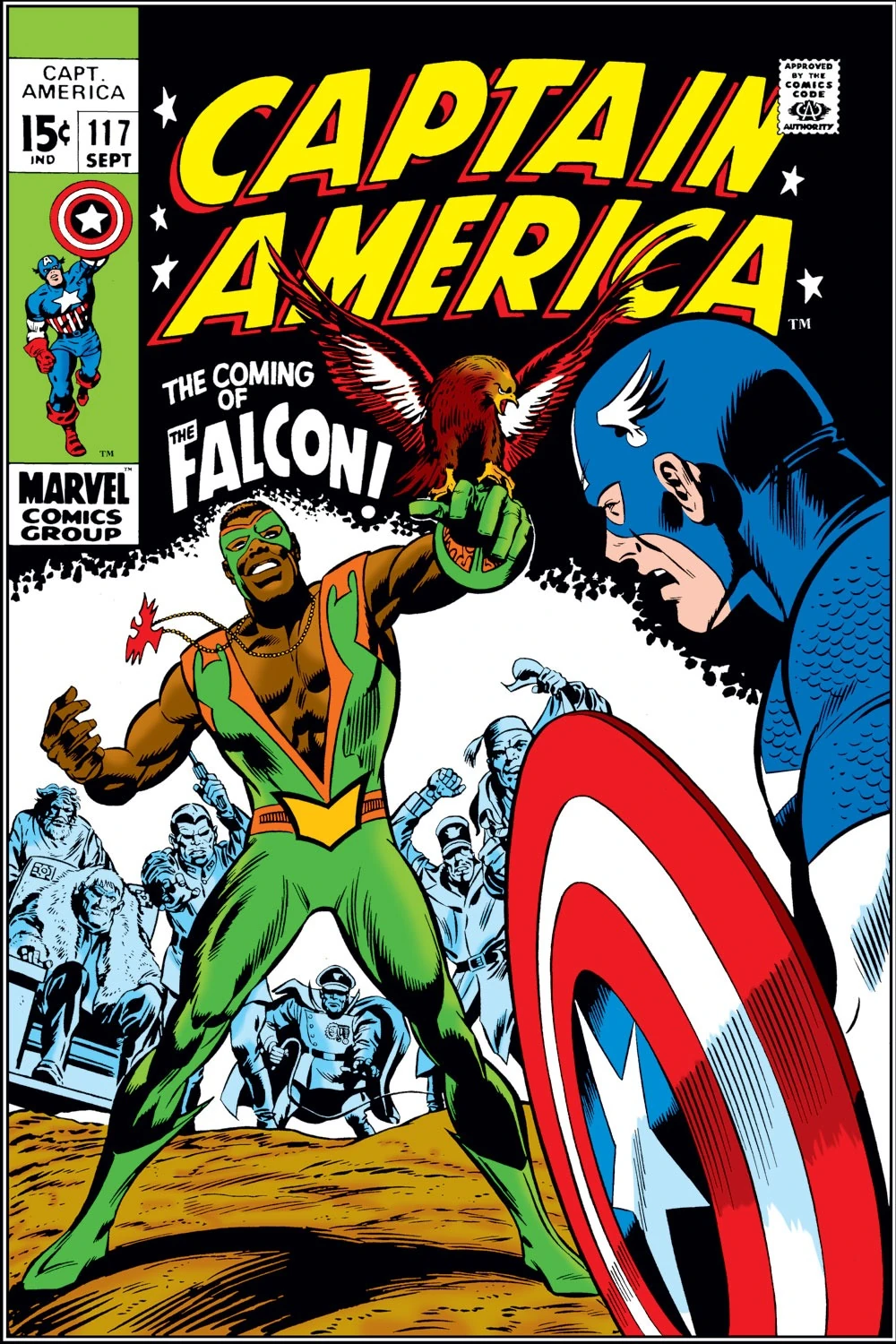
Captain America #117
9.8
$10,842.32
9.6
$4,177.79
9.4
$2,410.00
RAW
$128.45
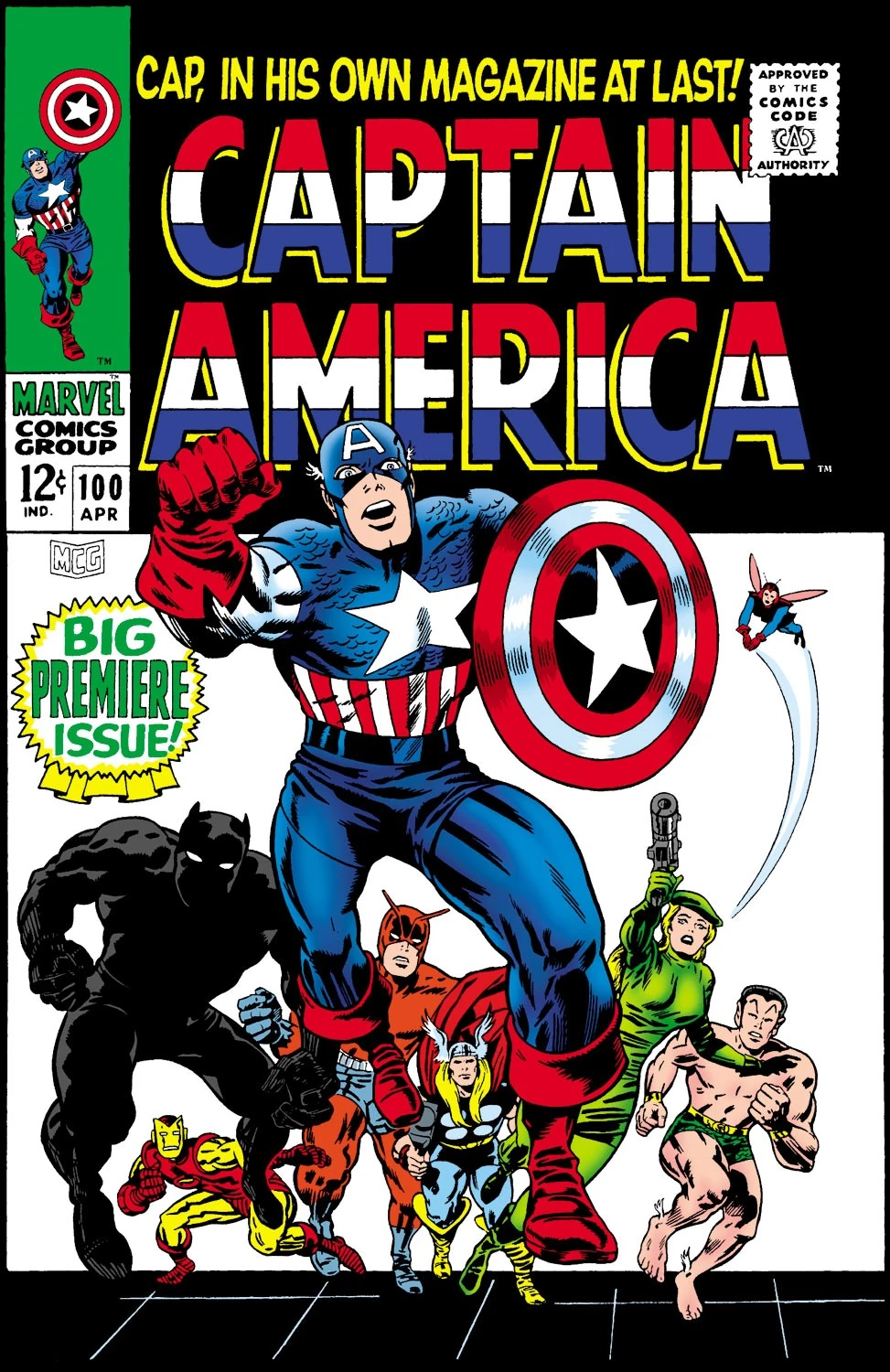
Captain America #100
9.8
$8,353.38
9.6
$3,414.20
9.4
$1,525.00
RAW
$178.25
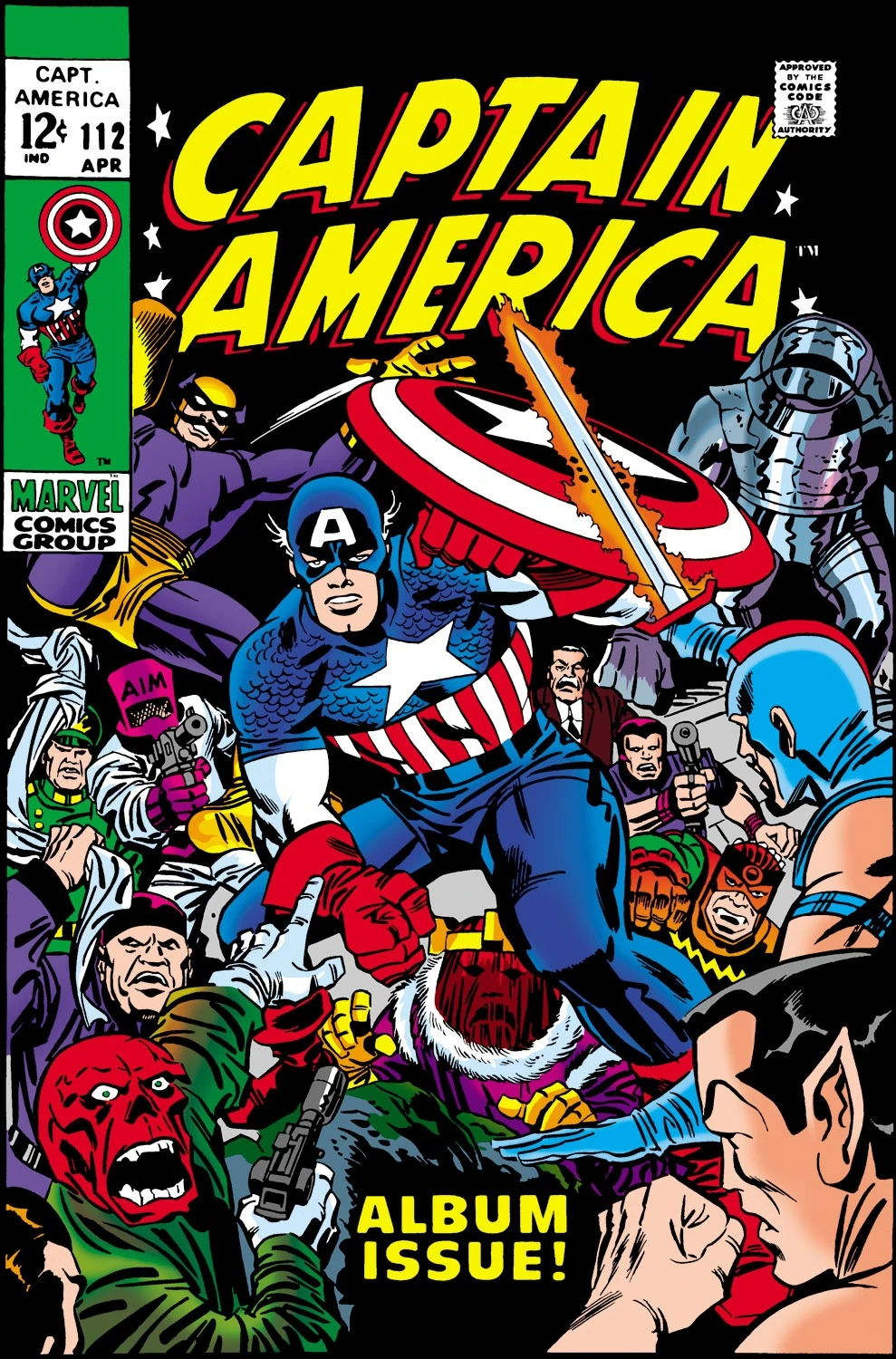
Captain America #112
9.8
$6,000.00
9.6
$417.78
9.4
$295.00
RAW
$20.50
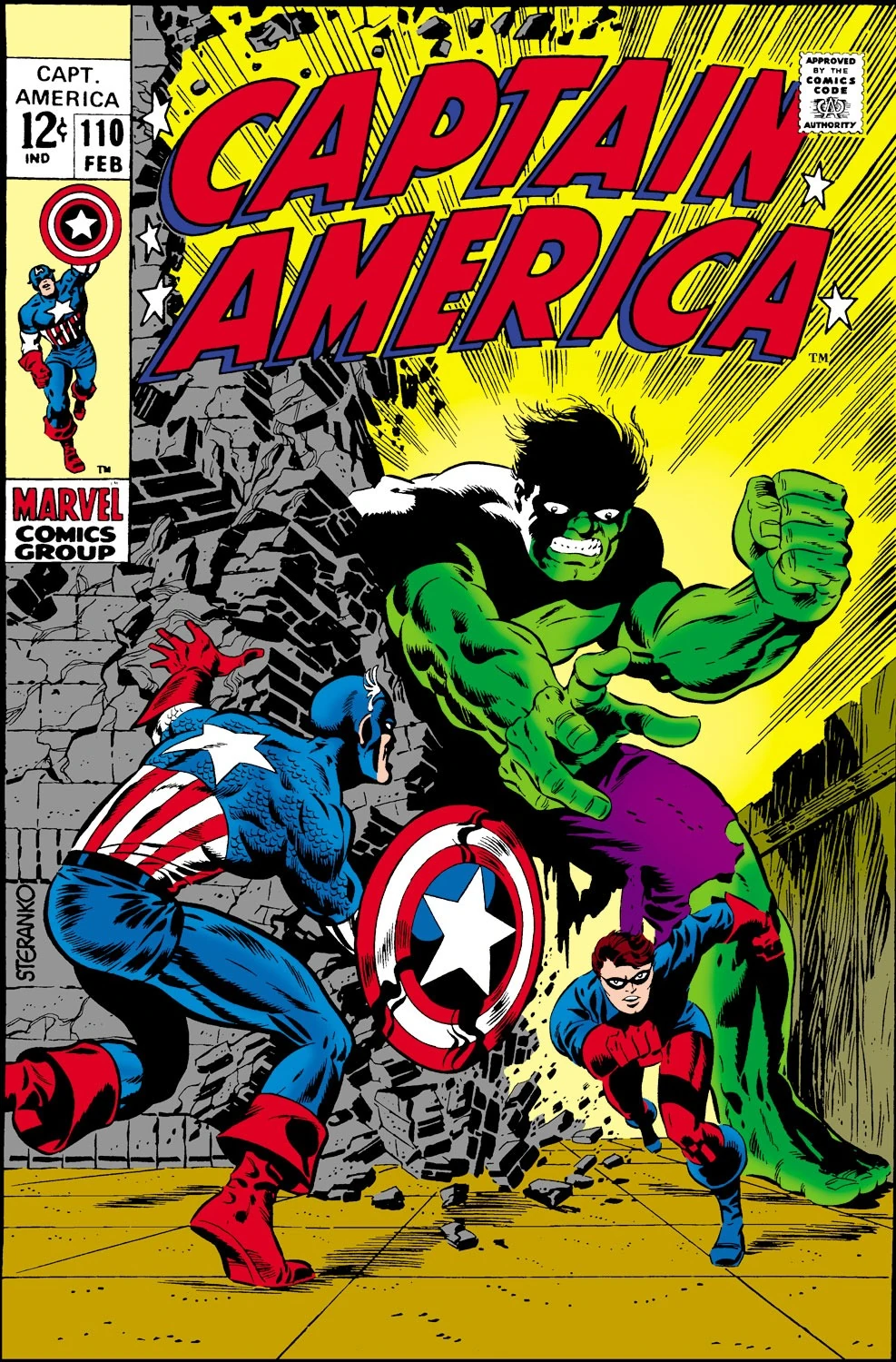
Captain America #110
9.8
$2,950.00
9.6
$912.00
9.4
$662.50
RAW
$54.64
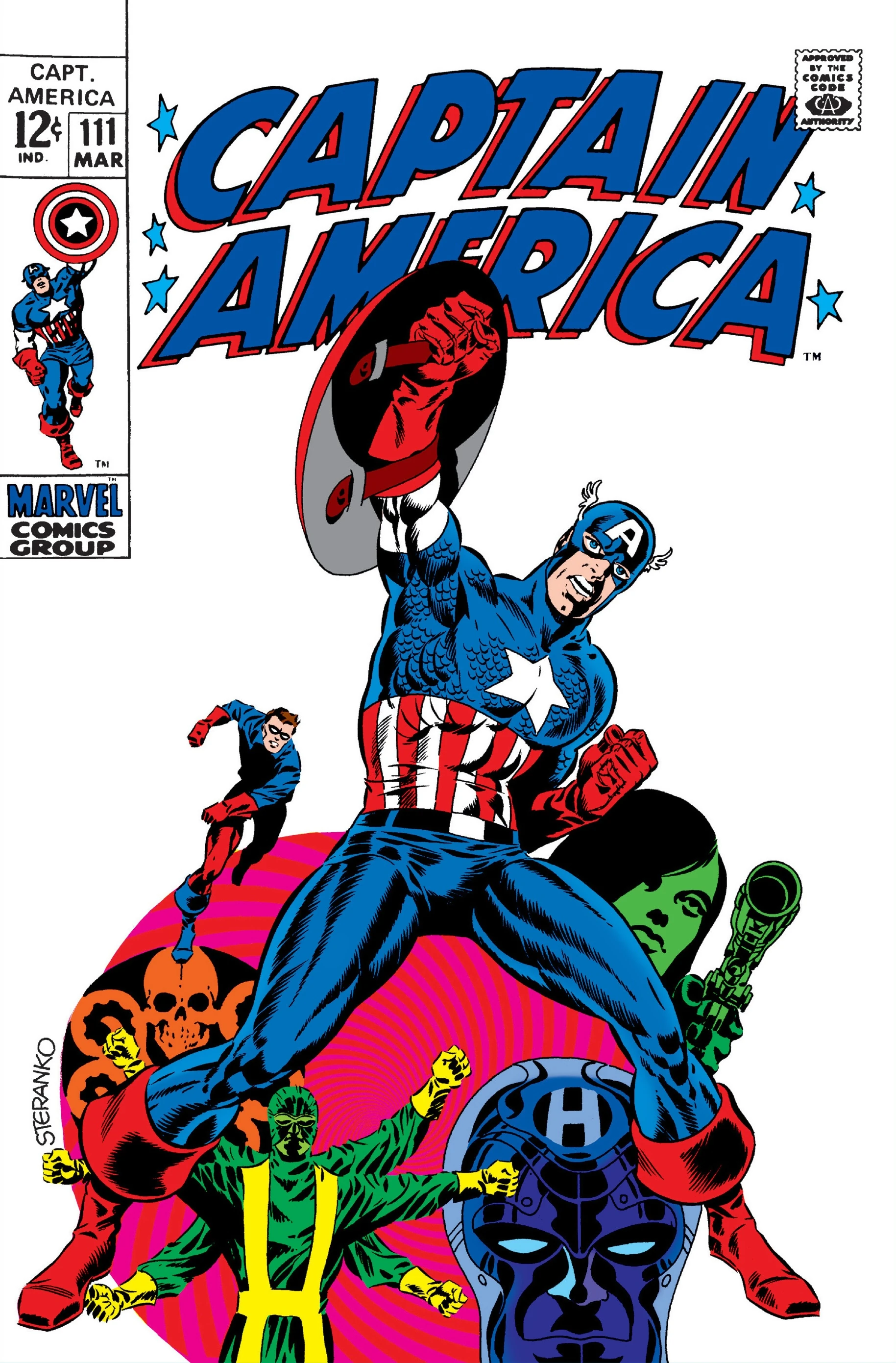
Captain America #111
9.8
$2,500.00
9.6
$751.23
9.4
$449.50
RAW
$64.80
Captain America tells Nick Fury his origin.
Send for free booklet on how to finish high school at home.
Captain America has a visit from Nick Fury, and tells the S.H.I.E.L.D. operative an old war story from 1944, in which he and Bucky worked together to take down a Nazi coastal gun control unit so that Allied Forces could launch another beach assault in the war effort. This story once more leads Cap into his lamentations over Bucky's death, and how guilt ridden he is that he managed to outlive his young partner. Fury is not that sympathetic about Bucky's loss and points out that Captain America at least still has his youth and fighting spirit and that even back during World War II he made Fury's Howling Commandos look like amateurs in battle. Captain America explains to Nick that in order for Captain America to live, it had to come at the sacrifice of Steve Rogers, and begins telling the tale of how he became Captain America:
In the early days of World War II, before America got involved in the war, frail Steven Rogers attempted to apply for the military. However, he would not pass his physical, and he would be rejected when he would attempt to volunteer. Overhearing this conversation was a military Colonel, who would offer him the chance to test a new experiment that might make him fit for joining the army and fighting in the war.
As Steve Rogers was led away, off America's shores a Nazi submarine would get past America's sea mine defense and release a spy who was about to infiltrate the secret experiment called Operation: Rebirth. Under absolute secrecy, Steve Rogers is taken to an antique shop which was really a front for the secret operation and eventually he would meet the scientist behind the super-soldier serum: Professor Reinstein. Before an audience of military brass (and the Nazi spy), Rogers would be injected with the serum and then exposed to Vita-Rays that would speed up the process of transforming Steve Rogers from a frail young man into that of man at the peak of human perfection. After the experiment Reinstein would be shot by the Nazi spy and in his death the secret behind the serum would be lost. Steve would then attack and ultimately kill the Nazi spy in stopping him from assassinating him as well.
With America's only super-soldier, the US army would set up Steve as Captain America and have him fight crime in America until the United States officially entered World War II. They would set Steve up under the command of Sgt. Duffy, and under orders of the War Department, Steve was to keep his double identity a secret. To cover for this, Steve would act as a first class bungler when not operating as Captain America. Steve would make fast friends with Bucky Barnes, his platoon's mascot who's father was killed in the line of duty. It would be Bucky who would first learn Captain America's true identity and use that information to force Cap to allow Bucky to be his sidekick.
This issue's story further expands Captain America's origin story from Tales of Suspense Vol 1 63, adding several new details: It is revealed that Steve Rogers was rejected by U.S. Army, and later contacted by Operation Rebirth's (here named Project Super-Soldier) General Phillips. He then met the Project's head, Professor Reinstein, who brought Steve to Project Super-Soldier Facility in Washington, D.C. According to this account, Steve's body has been enhanced by the Vita Rays, invisible rays created by Professor Reinstein himself, received by Steve through an apposite chamber. Some elements and particulars from this issue's account had been retconned or modified in later tellings of Captain America's origin: Professor Reinstein has been already named Dr. Erskine in Tales of Suspense Vol 1 63; in Giant-Size Invaders Vol 1 1, Reinstein is revealed to be a codename used to cover Dr. Erskine's identity. In Captain America Vol 1 255, the Professor's complete name is revealed as Abraham Erskine. According to Captain America Vol 1 255, Steve did not meet Dr. Erskine at the U.S. Army Recruiting Center in New York City, but he did at the Project's facility after have being brought there by General Phillips. * Captain America Vol 1 255's account revealed that Steve received the Super-Soldier Serum through an injection (as originally shown in Captain America Comics Vol 1 1), then assumed an oral compound (shown in Tales of Suspense Vol 1 63) and was later bombarded by the Vita Rays.
Cap finishes up his story that by the war's end Bucky's luck ran out and he died. With his story done, Steve thanks Nick for letting him get things off his chest. As Fury walks out the door to go and resume his work at S.H.I.E.L.D., he tells Cap that losses like that are hard to forget, but recommends that Steve go out there and have a few laughs. With Fury gone, Steve considers that perhaps after all these years, he's forgotten how to.