COMICBOOKSTOCKEXCHANGE.COM·
UTC LIVE TIMEDEAL RADAR
MARKET CLOCKS
HOME OFFICEHOME OFFICE--:--
NYSENew York--:--
LSELondon--:--
JPX / NIKKEITokyo--:--
DFM / ADXDubai--:--
WORLD / UTC--:--
Gold Key·Walt Disney Showcase·#54·Bronze Age·ID-3378421
| Grade | Census & Float Distribution | Role | FMV | Total Value | Multiple |
|---|---|---|---|---|---|
| 9.6 | 5 of 13 slabs (38.5%) | — | — | — | |
| 9.2 | 2 of 13 slabs (15.4%) | SOV | $104.00 | $208.00 | (10.4x) |
| RAW | 109,987 ungraded (110,000 printed − 13 graded) | RAW | $9.99 | $1,098,770.13 | (1.0x Base) |
Underlying: CGC 9.2 (Liquid Center) · Spot $104.00 · Model IV 12.8% · Open Contracts: 0
| Calls (Right to Buy 1 Copy) | Strike | Puts (Right to Sell 1 Copy) | ||||||||
|---|---|---|---|---|---|---|---|---|---|---|
| OCC Contract | Premium | Intr / Time | IV · Δ | Θ/d · ν | Strike $ | OCC Contract | Premium | Intr / Time | IV · Δ | Θ/d · ν |
| WDS54-261218C85 | $19.19 | $19.00 + $0.19 | 14.3% · 1.00 | -0.01 · 0.00 | $85.00 | WDS54-261218P85 | $0.00 | $0.00 + $0.00 | 14.3% · -0.00 | -0.00 · 0.00 |
| WDS54-261218C95 | $9.21 | $9.00 + $0.21 | 13.3% · 1.00 | -0.01 · 0.00 | $95.00 | WDS54-261218P95 | $0.00 | $0.00 + $0.00 | 13.3% · -0.00 | -0.00 · 0.00 |
| WDS54-261218C100 | $4.38 | $4.00 + $0.38 | 13.0% · 0.90 | -0.02 · 0.05 | $100.00 | WDS54-261218P100 | $0.16 | $0.00 + $0.16 | 13.0% · -0.10 | -0.01 · 0.05 |
| WDS54-261218C105 | $0.98 | $0.00 + $0.98 | 12.8% · 0.42 | -0.03 · 0.10 | $105.00ATM | WDS54-261218P105 | $1.75 | $1.00 + $0.75 | 12.8% · -0.58 | -0.02 · 0.10 |
| WDS54-261218C110 | $0.06 | $0.00 + $0.06 | 12.6% · 0.05 | -0.01 · 0.02 | $110.00 | WDS54-261218P110 | $6.00 | $6.00 + $0.00 | 12.6% · -0.95 | 0.00 · 0.02 |
| WDS54-261218C115 | $0.00 | $0.00 + $0.00 | 12.5% · 0.00 | -0.00 · 0.00 | $115.00 | WDS54-261218P115 | $11.00 | $11.00 + $0.00 | 12.5% · -1.00 | 0.01 · 0.00 |
| WDS54-261218C125 | $0.00 | $0.00 + $0.00 | 12.5% · 0.00 | -0.00 · 0.00 | $125.00 | WDS54-261218P125 | $21.00 | $21.00 + $0.00 | 12.5% · -1.00 | 0.01 · 0.00 |
Empirical cash settlement intelligence, cross-grade elasticity curve, and secondary liquidation velocity.
Empirical step multipliers between adjacent condition tiers. Pinpoints the exponential premium transition and capital efficiency frontier.
Realized turnover cadence and capital absorption depth across certified auction comps.
Autonomous institutional strategies, financial equilibrium, scarcity modeling, and algorithmic risk profiling.
Market operates purely on organic buyer and seller auction discovery. Zero artificial price interventions or emergency liquidity halts on record.
Verified historical transaction line with quarterly equilibrium baseline anchor.
Understand how physical sales, invested dollars, and liquidity friction divide across grades.
Completed market sales by grade
Relative market value allocation
Estimated execution friction
Bibliographic provenance, creator credits, historical significance, and multimedia documentation.
No narrative synopsis recorded in GCD for this sequence.
No creator data on record for this issue.
Western Publishing imprint succeeding Dell Comics with Magnus Robot Fighter, Solar, Turok, and licensed icons.
Comics grow darker and more socially aware. Wolverine, Punisher, Swamp Thing debut. Creator-driven storytelling emerges.
Newsstand variants carry meaningful scarcity premiums. First appearances from this era are blue-chip investments.
Bronze Age (1970–1984) — comics grew darker and more socially aware. The era of classic runs, creator-driven storytelling, and the birth of serious collecting culture. Newsstand variants carry a meaningful scarcity premium.
Inspectable mathematical proof, blockchain/ledger provenance, data integrity validation, and asset taxonomy.
A pricing discrepancy between an auction listing and the prevailing cleared consensus value across organized exchanges, allowing rapid liquidity capture before market equilibrium reconverges.
Strict algorithmic segregation separating clean single-issue Cover A sales from multi-issue lot bundles, retailer exclusives, and foreign variants.
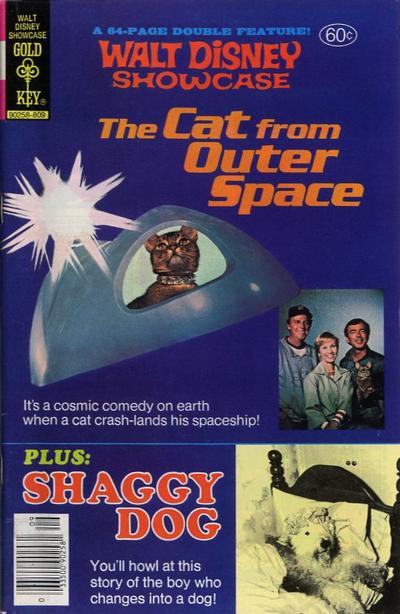
Walt Disney Showcase #46
9.8
$396.83
9.6
—
9.4
—
RAW
$10.38
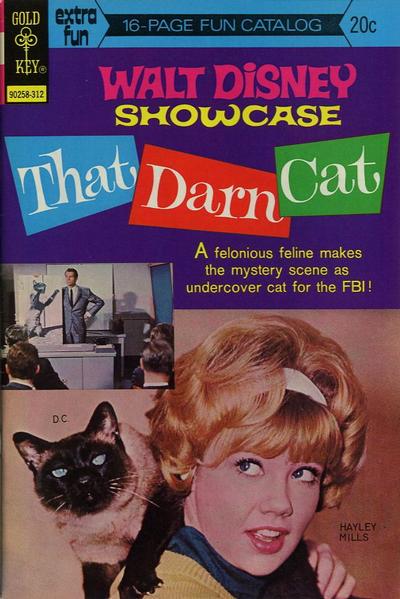
Walt Disney Showcase #19
9.2
$384.00
9.6
—
9.4
—
RAW
$7.74
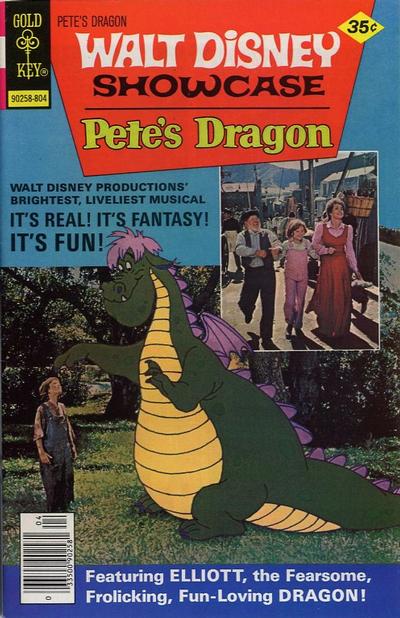
Walt Disney Showcase #43
9.8
$320.70
9.6
—
9.4
—
RAW
$7.98

Walt Disney Showcase #1
9.4
$312.00
9.6
—
9.4
$312.00
RAW
$4.49

Walt Disney Showcase #16
9.2
$174.99
9.6
—
9.4
—
RAW
$8.90
The Black Hole is a 1979 science-fiction film. It is notable for being the first Disney film to be rated "PG", as well as one of the first Disney films to feature CGI. The film was originally titled Space Station One.
An exploratory spaceship, the U.S.S. Palomino, is returning from a deep space exploration mission. The crew consists of: Captain Dan Holland, First Officer Lieutenant Charlie Pizer, journalist Harry Booth, ESP-sensitive scientist Dr. Kate McCrae, the expedition's civilian leader Dr. Alex Durant, and the robot V.I.N.CENT ("Vital Information Necessary CENTralized").
During its journey, the Palomino's crew is alerted to the existence of a nearby black hole and, near it, find a derelict ship somehow defying the hole's gravitational pull. The ship is identified as the long-lost , a ship McCrae's father, Ensign Frank McCrae, served aboard when it was reported missing. Deciding to investigate, the Palomino encounters a mysterious null gravity field surrounding the Cygnus. The ship is then damaged when it drifts away from the Cygnus and into the black hole's intense gravity field. The Palomino manages to move back to the Cygnus and finds itself able to dock with it.
Trivia: *This was considered by many fans to be an unofficial spinoff of Star Wars, as both stories take place in space and feature droids. This is the first Disney film to be rated "PG". This movie came out the exact same year Alien and Star Trek: The Motion Picture, and a year before Star Wars Episode V: The Empire Strikes Back. • Details included in the original script (available online at the Internet Archive) but not included in the final film (and therefore not necessarily canon): • The film begins on Christmas Eve. Reportedly a reference to Christmas was filmed but cut from the final movie. • A voiceover narration by Harry Booth (Ernest Borgnine) would have explained that the Palomino was concluding an unsuccessful five-year mission to find habitable planets "in the last uncharted area of the galaxy"; a physical impossibility given the size of the galaxy even if the ship had faster-than-light capability, of which no indication is given. This backstory is also mentioned in the opening narration of The Story of the Black Hole, the Disneyland Records 12" LP featuring a condensed version of the film story using original soundtrack dialogue recordings. The final film retains Kate's reference to the mission being to "discover habitable life" but contains to mention of its elapsed duration or outcome. • In the final film, V.I.N.cent says several of his fellow robots had been assigned to "Project Black Hole." In the original script he mentions that the robots were victims of black holes, an entirely different meaning. • The script has Kate describe the mission of Reinhart's ship as "To discover habitable planetary life in outer space," only slightly less nonsensical than the final film's "To discover habitable life in outer space."
The Palomino crew encounters an android crew and Dr. Hans Reinhardt, a prominent scientist and the Cygnus's commander. They also meet Reinhardt's second-in-command, the hulking robot Maximilian. Reinhardt explains that after his ship encountered a meteoroid field and was disabled, he ordered the crew to return to Earth, but Kate's father (Ensign McCrae) chose to remain aboard and has since died. To the incredulity of the Palomino's crew, Reinhardt reveals that he intends to fly the Cygnus through the black hole. Only Durant believes it possible and asks to accompany Reinhardt on the trip.
The rest of the Palomino crew grow suspicious of the faceless drones' human-like behavior: Booth sees a robot limping and Holland witnesses a robot funeral and discovers the Cygnuscrew's personal items in the ship's living quarters. Old B.O.B. (BiO-Sanitation Batallion), a battered earlier model robot similar to V.I.N.CENT, explains that the faceless drones are in fact the crew, who mutinied when Reinhardt refused to return to Earth. They have since been lobotomized and "reprogrammed" to serve him. McCrae's father had led the mutiny and was killed. Using telepathy, V.I.N.CENT tells Kate the truth about what happened. When Kate tells Durant, he removes the reflective faceplate from a "robot" to reveal the face of a crew member. Durant tries to flee the bridge with Kate, but Maximilian kills him, contrary to Reinhardt's wishes. Reinhardt takes Kate prisoner, ordering her to be taken to the hospital to be lobotomized.
As the process begins, Holland finds and rescues Kate, along with V.I.N.CENT and B.O.B. Meanwhile, fearing the situation is escalating into dangerous territory, Booth panics and attempts to escape alone in the Palomino. Reinhardt orders the craft shot down, but the weapons fire sends the ship crashing into the Cygnus, destroying its port-side anti-gravity forcefield generator. A meteor storm then destroys the starboard generator. Without its null-gravity bubble, the Cygnus starts to be torn apart by the black hole.
Reinhardt and the Palomino survivors separately plan their escape aboard a Probe Ship used to study the black hole. Maximilian goes to prepare the probe ship shortly before Reinhardt is pinned by falling debris. His lobotomized crew stand motionless as he struggles. Maximilian confronts the others and fatally cripples Old B.O.B. moments before he is crippled by V.I.N.CENT and drifts out of the ship. Holland, Pizer, McCrae and V.I.N.CENT reach the probe, only to discover it's stuck in the gravity field of the black hole. It then goes through the black hole and plunges across the hole's event horizon.
In a dialogue-free epilogue, the travelers exit the hole and, possibly viewed through Kate's ESP vision, enter [[wikipedia:Hell|Hell and then Heaven, Reinhardt and Maximilian merge and stand on a high rock overlooking a burning, hellish landscape – possibly the remains of the Cygnus – populated by robed figures resembling the drones. Next, a floating, ethereal figure with flowing long hair passes through a cathedral-like crystal arched tunnel. The probe then emerges from a white hole in another universe and is seen near a star and planet. The last shot shows the probe flying toward the planet.