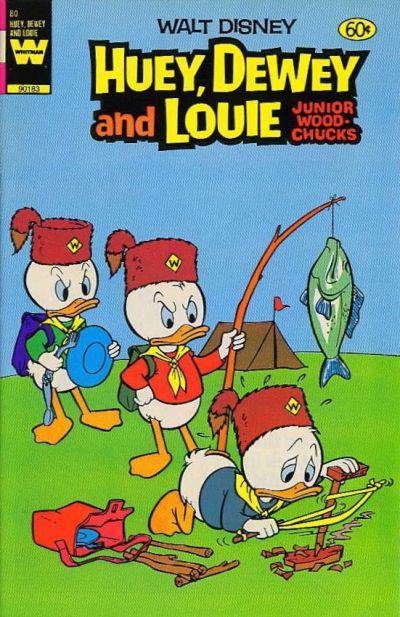
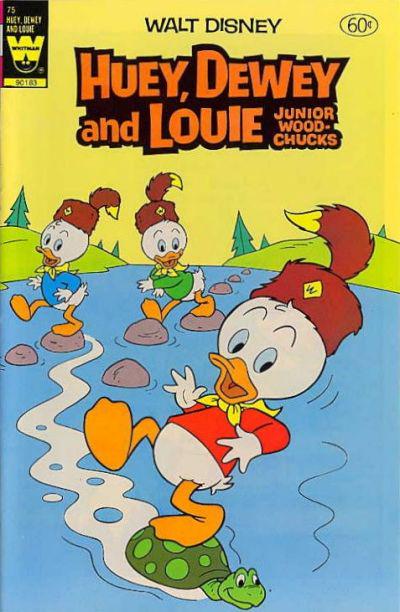
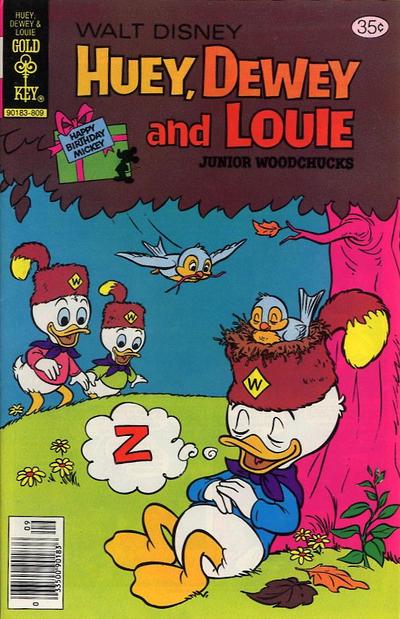
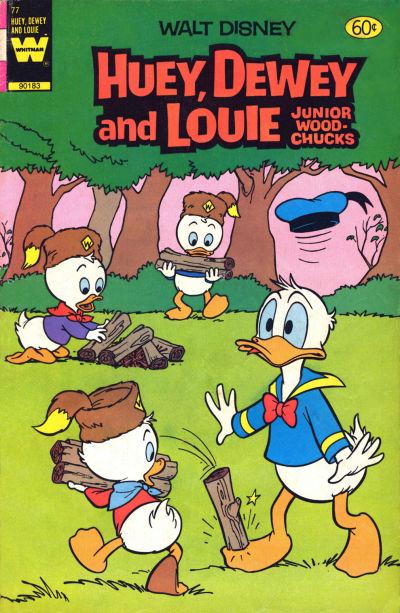
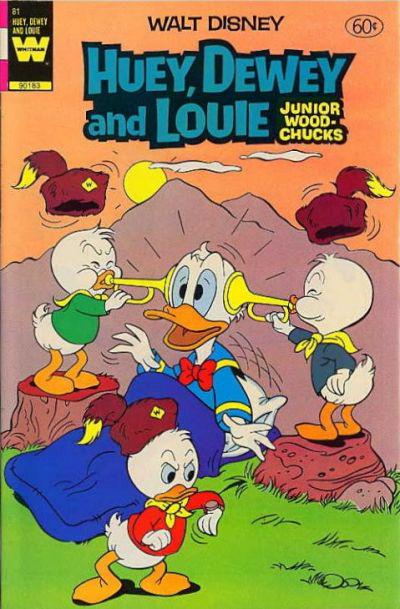
Walt Disney Huey, Dewey and Louie Junior Woodchucks #19 (1973) Capital Math: Raw ($13.68) → CGC 4.0 ($25.31)
ISSUE-SPECIFIC GRADING & COST BASIS (Walt Disney Huey, Dewey and Louie Junior Woodchucks #19):1. Surviving Condition Reality: For Walt Disney Huey, Dewey and Louie Junior Woodchucks #19 (1973, Bronze Age), an average ungraded raw copy at $13.68 corresponds to a surviving 4.0 condition specimen—never a CGC 9.8 (zero CGC 9.8 copies exist on the census).2. CGC Vintage ($45 tier) Fee Schedule: Encapsulating at $25.31 FMV incurs $45.00 CGC grading + $30.00 CCS pressing + $55.00 insured transit ($130.00 total grading hurdle), establishing an all-in cost basis of $143.68.3. Net Realized Spread: Clearing a certified CGC 4.0 at $25.31 ($-3.44 net after eBay fee of $3.75 and insured shipping) generates -$147.12 (-102.4%)realized gain while eliminating uncertified restoration risk.
SECONDARY MARKET REALITY & BUYER STRATEGY:• OPTIMAL ENTRY TIER: Target Universal Blue Label CGC 4.0 ($25.31) to CGC 4.0 ($25.31) slabs. Buying raw at $13.68 exposes capital to color-touch, trimming, or married-page restoration rejection unless inspected in person.• CLEARINGHOUSE DEPTH: Secondary benchmark pricing spans from $13.68 (Raw) through $25.31 (CGC 4.0 modal anchor) to $0.00 (Apex 9.8).• ELASTICITY & FLOAT: Registered census scarcity stands at Bronze Age surviving population. Stepping from CGC 4.0 ($25.31) to CGC 4.0 ($25.31) commands a 1.00×price discovery multiple.
ISSUE LORE, CREATOR CANON & MACRO DRIVERS:• Bibliographic Authority: Published in 1973 by Gold Key, Walt Disney Huey, Dewey and Louie Junior Woodchucks #19 is published by Gold Key, featuring Huey alongside Dewey, Louie, Junior Woodchucks. Lead story: "Wonders in the Woods". Given some rare free time by the Junior Woodchucks Grand and Gloriously Exalted High Mogul on the condition that they "read intellectually stimulating woodlore literature" or ...• Float Lockup & Catalyst Horizon: Driven by Gold Key cross-media licensing and collector demand for Walt Disney Huey, Dewey and Louie Junior Woodchucks and permanent scarcity (tight surviving float), institutional collectors treat mid-to-high grade Universal slabs as core key issue holdings.
Longitudinal statistical envelope compiled across all verified transactions for certified Universal copies.
Click any metric card to expand details
All-Time High
$13.68
Historical Peak
All-Time Low
$13.68
Historical Floor
Max Drawdown
—
Single Sale
Price Dispersion (CV)
—
Need ≥ 2 Sales
Avg Recovery Time
—
Single Sale
Historical Data Span
Single Sale
0 Observations
Grade Census & Liquidity Breakdown
Grade Census & Liquidity Radial DecompositionBENCHMARK DEFINITION
Multi-axis radial distribution comparing trade velocity, capital weight, and bid-ask spread drag across certified grades.
Understand how physical sales, invested dollars, and liquidity friction divide across grades.
1. Liquid Float Anchor
$13.68 CGC 9.8
Modal CGC Census Liquidity Center (CGC 9.8)
2. Sovereign Benchmark
$13.68 CGC 9.8
Top-Pop Trophy Asset (Rare Census Slabs)
3. Ungraded Raw Copies
175,000 Copies
Print run minus all CGC graded | — Universal Slabs
4. Trailing 12M Sales
— Trades
Verified Blue Label Universal & Raw comps on file
Filter Grade:
EMERALD LIQUIDITY
Sales Volume
Historical price records
UNINDEXED COHORT VOLUMENo secondary auction fills or census distribution recorded.
HOT PINK CAPITAL
Capital Weight
Relative market value allocation
$13.68LATTICE BENCHMARK SUM
FLAME FRICTION
Spread Drag
Estimated execution friction
38%AVG SPREAD COST
1. Sales Volume Share (Velocity)Identifies which grade tiers trade most frequently. High-volume tiers offer rapid liquidity and tight turnaround.
2. Capital Weight (AUM Concentration)Demonstrates where the total invested dollars sit. High grades (9.6–9.8) command the majority of total capital pool.
3. Spread Drag (Execution Cost)Reveals the dealer bid-ask spread friction for each grade, highlighting transaction cost penalties before committing capital.
Bibliographic provenance, creator credits, historical significance, and multimedia documentation.
Story Arc & Synopsis
Lead Story Title
“Wonders in the Woods”
anthropomorphic-funny animals
Given some rare free time by the Junior Woodchucks Grand and Gloriously Exalted High Mogul on the condition that they "read intellectually stimulating woodlore literature" or "take educational nature hikes, intent on the wonders of the woods", Huey, Dewey, and Louie opt for the latter and find some inexplicably odd "wonders of the woods".
Video Intelligence & Archival Media▲
Curated Market & Review Videos0 Verified Clips
Loading video intelligence…
Creators▲
No creator data on record for this issue.
Publisher▲
Gold Key
1962
Poughkeepsie, NY
Western Publishing imprint succeeding Dell Comics with Magnus Robot Fighter, Solar, Turok, and licensed icons.
KEY CHARACTERS
Donald DuckTurokDoctor SolarMagnus
Era Intelligence▲
Bronze Age1970–1984
Comics grow darker and more socially aware. Wolverine, Punisher, Swamp Thing debut. Creator-driven storytelling emerges.
INVESTMENT NOTES
Newsstand variants carry meaningful scarcity premiums. First appearances from this era are blue-chip investments.
Bronze Age (1970–1984) — comics grew darker and more socially aware. The era of classic runs, creator-driven storytelling, and the birth of serious collecting culture. Newsstand variants carry a meaningful scarcity premium.
Audit Trail & Verified Provenance
CRYPTOGRAPHIC AUDIT
Inspectable mathematical proof, blockchain/ledger provenance, data integrity validation, and asset taxonomy.
The recovery of third-party encapsulation and grading expenditures when an asset is acquired at a discount below the physical cost of replacement grading fees, shipping, and insurance.
Direct Asset Application (Walt Disney Huey, Dewey and Louie Junior Woodchucks #19):Standard third-party slabbing fees and insurance average $45–$65 per book. At an entry valuation of $13.68, the grading expense represents a substantial built-in subsidy, providing downside protection against raw comic volatility.
Given some rare free time by the Junior Woodchucks Grand and Gloriously Exalted High Mogul on the condition that they "read intellectually stimulating woodlore literature" or "take educational nature hikes, intent on the wonders of the woods", Huey, Dewey, and Louie opt for the latter and find some inexplicably odd "wonders of the woods".
The Great W.A.F.E.R. W.A.V.E.R. (Woodchuck leader)
Uncle Scrooge
aggressive reporters
Scrooge's pilot
various Inner Monghoulians
various Outer Monghoulians
Sing Song Long (restaurateur)
foreign currency collector
The Junior Woodchucks are tasked with sneaking Scrooge past an army of aggressive reporters so that he may dine at an old favorite restaurant in Outer Monghoulia.
Wonders in the Woods
8 pages
Featured Characters & Entities
HueyDeweyLouie [Junior Woodchucks]other Junior WoodchucksThe Grand and Gloriously Exalted High Mogul (Woodchuck leader)Hermit Hal
Given some rare free time by the Junior Woodchucks Grand and Gloriously Exalted High Mogul on the condition that they "read intellectually stimulating woodlore literature" or "take educational nature hikes, intent on the wonders of the woods", Huey, Dewey, and Louie opt for the latter and find some inexplicably odd "wonders of the woods".
Collectible Due Diligence Dossier · Junior Woodchucks Guidebook
The '''Junior Woodchuck's Guidebook'*, or the "Woodchuck book" for short, is a fictional book featured in the Donald Duck comic book stories and both versions of DuckTales. As the title suggests, it is the guidebook used by the Junior Woodchucks and appears to contain information and advice on every possible subject. Huey, Dewey, and Louie frequently consult a volume of the set to get themselves and their uncles Donald Duck and Scrooge McDuck out of dangerous situations (see deus ex machina). It was first mentioned in The Secret of Atlantis by Carl Barks in 1954. Its history was later discussed in *Guardians of the Lost Library'' by Don Rosa in 1993.
According to Don Rosa, the Guidebook was written by the Guardians of the lost Library of Alexandria, compiling the essence of all the knowledge that was unique to the Library. It was later found by , who gave the book to his son who, in turn, was inspired to found The Junior Woodchucks as a continuation of the Guardians of the Library. One story that is not by Don Rosa says that the Guidebook is updated by an unknown author.
The Woodchuck book seems almost magical in its breadth of information; it almost never fails to provide the required information and yet is small enough to fit into a Junior Woodchuck's backpack (though many stories reveal that the Guidebook consists of a great number of volumes, the full collection being stored at the Junior Woodchucks' Headquarters. However the Woodchucks have an uncanny knack for always having the right volume with them for the task at hand). In particular, the Guidebook contains information on lost treasure, a complete survival guide, extensive historical and technical information and phrase books for various more or less common languages (like a minimal lizard phrase book), and many more. However, it does not contain information that a Junior Woodchuck is already supposed to know, such as the location of the Cape of Good Hope, nor does it contain information on allegedly non-existent things. (In the DuckTales episode "The Golden Fleecing", the three nephews faced a dragon and when they consulted the Guidebook, the entry on dragons read that since dragons did not exist, there was no reason to include information on them. However, in the story on which that episode was based, the guidebook did have an entry on dragons.) On the other hand, the Guidebook does have information on Martian technology, despite the fact that in the DuckTales universe, Martians had not been discovered when the book was printed. In short, it is a minimal encyclopedia (although the subset of articles is extraordinarily well-chosen), available only to Junior Woodchucks.
Information is readily available by searching the extensive index; a key skill of a Junior Woodchuck is being able to retrieve information quickly from the Woodchuck book in the midst of a dangerous situation, such as a bear attack, an earthquake, falling out of an airplane sans parachute, or being swallowed by a crocodile.
Due to the incredible amount of information the book contains, it is considered highly troubling when a situation occurs and the book does not have the necessary information. In the Don Rosa comic issue ''The Old Castle's Other Secret or A Letter from Home'', Huey, Dewey, and Louie panicked at the necessary information being unavailable.
Just as the Junior Woodchucks are based on the Boy Scouts of America, their Guidebook is inspired by the Boy Scout Handbook. The real Handbook (at least in the 1950s) was the same size as the Guidebook and was believed by all Scouts to contain all necessary information. In this respect, the almost limitless and sometimes esoteric knowledge the Junior Woodchuck Guidebook offers is a gently satirical comment on the "Scout Bible", as the original Scouting For Boys by Baden-Powell was sometimes known, a book giving advice on a vast range of subjects, including "Smoking", "How the Empire Must Be Held", "Courtesy to Women" and "How to Revive a Suicide".
That guide was the inspiration for the "Junior Woodchucks Guidebook" (Il Manuale delle Giovani Marmotte), a series of several Disney books with tips, advice, general culture, and curious facts about nature and life, released in Italy by Mondadori in seven volumes between 1969 and 1974, and later translated into several languages.
In the comic book adaptation of the Darkwing Duck pilot, "Darkly Dawns the Duck", it is shown that Darkwing, apparently having been a Junior Woodchuck in his youth, has a copy of the Junior Woodchuck Guidebook. However, in the actual episode, the book is instead referred to as "a boy scout handbook."
An anthropomorphic Junior Woodchucks Guidebook also appeared in the DuckTales Season 3 episode, "Challenge of the Senior Junior Woodchucks!", voiced by Stephen Root. He serves as Huey's conscience to help him beat Violet Sabrewing during a competition to be promoted to a Senior Junior Woodchuck. During the final challenge to help Louie get promoted, he argues with the Guidebook that he is not helping him win against Violet. Later after the suspension bridge in the volcano collapses and Huey makes a tightrope to get to the finish line as Violet continues processing to win, the Guidebook tells him that the only way he can be helped is to get to the finish line himself. Just before he can continue helping Huey, the Guidebook ultimately eradicates after being hit by a hopping lava drop just as the rope Huey is standing on snaps after getting hit by lava. Ultimately after Violet wins, the Guidebook conscience reappears as a ghost watching over Violet's victory.
The same episode establishes that Isabella Finch created the organization, and that the book is based on her own journal. And as established in the series' finale episode "The Last Adventure!", Finch's grandson Bradford Buzzard became the first ever Junior Woodchuck, and secondary user of the book, according to the reboot show's narrative.