COMICBOOKSTOCKEXCHANGE.COM·
UTC LIVE TIMEDEAL RADAR
MARKET CLOCKS
HOME OFFICEHOME OFFICE--:--
NYSENew York--:--
LSELondon--:--
JPX / NIKKEITokyo--:--
DFM / ADXDubai--:--
WORLD / UTC--:--
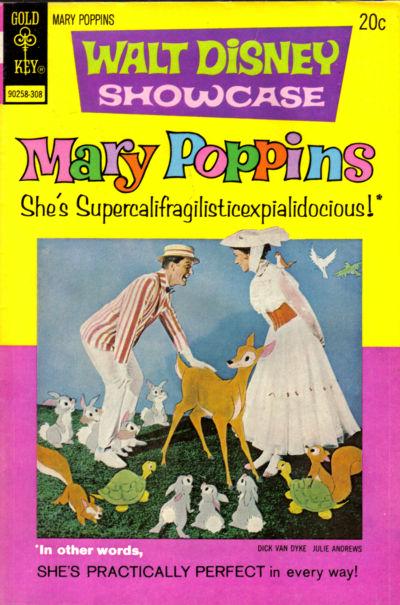
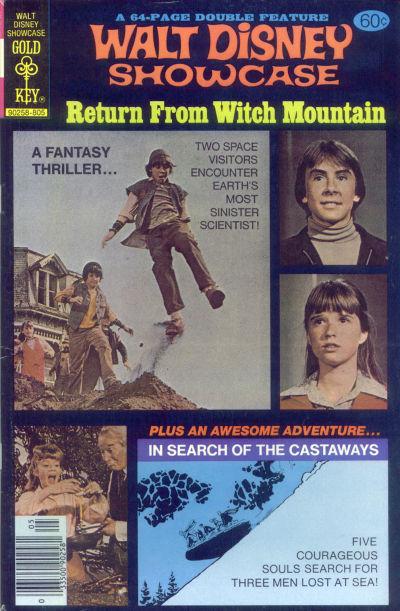
Gold Key·Walt Disney Showcase·#45·Bronze Age·ID-3378411
| Grade | Census & Float Distribution | Role | FMV | Total Value | Multiple |
|---|---|---|---|---|---|
| 9.8 | 0 slabs | SOV | $8.65 | — | (1.0x) |
| 9.6 | 1 of 6 slabs (16.7%) | — | — | — | |
| 9.4 | 4 of 6 slabs (66.7%) | — | — | — | |
| 9.2 | 1 of 6 slabs (16.7%) | — | — | — | |
| RAW | 109,994 ungraded (110,000 printed − 6 graded) | RAW | $8.65 | $951,448.10 | (1.0x Base) |
Underlying: CGC 9.8 (Liquid Center) · Spot $8.65 · Model IV 37.4% · Open Contracts: 0
| Calls (Right to Buy 1 Copy) | Strike | Puts (Right to Sell 1 Copy) | ||||||||
|---|---|---|---|---|---|---|---|---|---|---|
| OCC Contract | Premium | Intr / Time | IV · Δ | Θ/d · ν | Strike $ | OCC Contract | Premium | Intr / Time | IV · Δ | Θ/d · ν |
| WDS45-261218C7.0 | $1.67 | $1.65 + $0.02 | 42.0% · 0.98 | -0.00 · 0.00 | $7.00 | WDS45-261218P7.0 | $0.01 | $0.00 + $0.01 | 42.0% · -0.02 | -0.00 · 0.00 |
| WDS45-261218C8.0 | $0.76 | $0.65 + $0.11 | 38.5% · 0.81 | -0.01 · 0.01 | $8.00 | WDS45-261218P8.0 | $0.09 | $0.00 + $0.09 | 38.5% · -0.19 | -0.00 · 0.01 |
| WDS45-261218C8.5 | $0.41 | $0.15 + $0.26 | 37.4% · 0.60 | -0.01 · 0.01 | $8.50ATM | WDS45-261218P8.5 | $0.24 | $0.00 + $0.24 | 37.4% · -0.40 | -0.01 · 0.01 |
| WDS45-261218C9.0 | $0.19 | $0.00 + $0.19 | 36.7% · 0.36 | -0.01 · 0.01 | $9.00 | WDS45-261218P9.0 | $0.52 | $0.35 + $0.17 | 36.7% · -0.64 | -0.01 · 0.01 |
| WDS45-261218C9.5 | $0.07 | $0.00 + $0.07 | 36.4% · 0.17 | -0.00 · 0.01 | $9.50 | WDS45-261218P9.5 | $0.90 | $0.85 + $0.05 | 36.4% · -0.83 | -0.00 · 0.01 |
| WDS45-261218C10 | $0.02 | $0.00 + $0.02 | 36.2% · 0.06 | -0.00 · 0.00 | $10.00 | WDS45-261218P10 | $1.35 | $1.35 + $0.00 | 36.2% · -0.94 | -0.00 · 0.00 |
Empirical cash settlement intelligence, cross-grade elasticity curve, and secondary liquidation velocity.
Empirical step multipliers between adjacent condition tiers. Pinpoints the exponential premium transition and capital efficiency frontier.
Realized turnover cadence and capital absorption depth across certified auction comps.
Autonomous institutional strategies, financial equilibrium, scarcity modeling, and algorithmic risk profiling.
Market operates purely on organic buyer and seller auction discovery. Zero artificial price interventions or emergency liquidity halts on record.
Verified historical transaction line with quarterly equilibrium baseline anchor.
Understand how physical sales, invested dollars, and liquidity friction divide across grades.
Historical price records
Relative market value allocation
Estimated execution friction
Bibliographic provenance, creator credits, historical significance, and multimedia documentation.
No narrative synopsis recorded in GCD for this sequence.
No creator data on record for this issue.
Western Publishing imprint succeeding Dell Comics with Magnus Robot Fighter, Solar, Turok, and licensed icons.
Comics grow darker and more socially aware. Wolverine, Punisher, Swamp Thing debut. Creator-driven storytelling emerges.
Newsstand variants carry meaningful scarcity premiums. First appearances from this era are blue-chip investments.
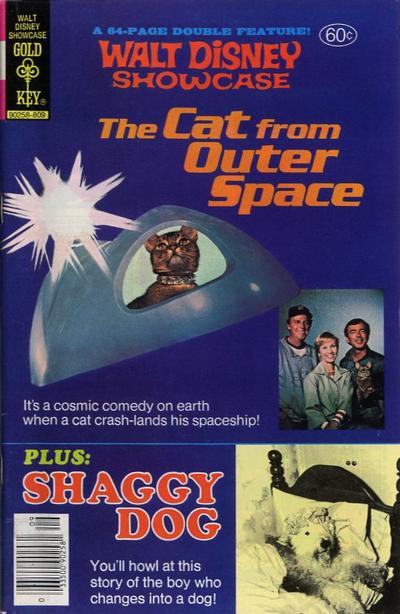
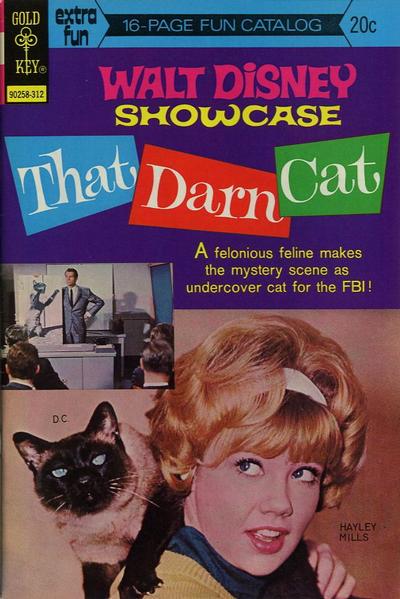
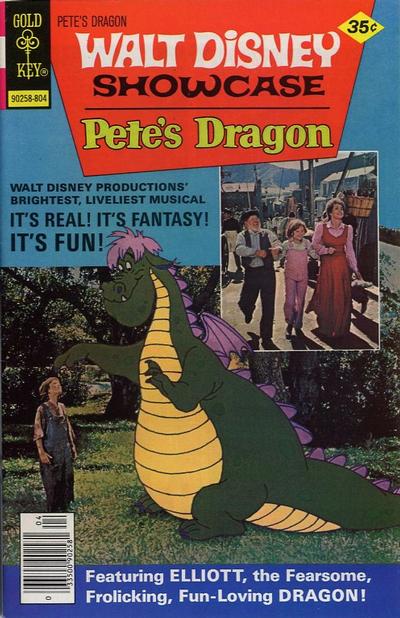

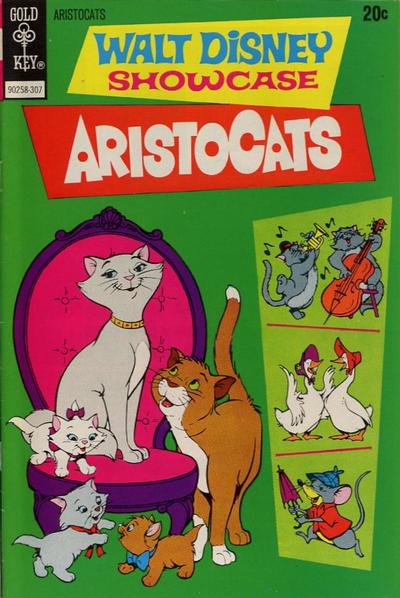


Bronze Age (1970–1984) — comics grew darker and more socially aware. The era of classic runs, creator-driven storytelling, and the birth of serious collecting culture. Newsstand variants carry a meaningful scarcity premium.
Inspectable mathematical proof, blockchain/ledger provenance, data integrity validation, and asset taxonomy.
The recovery of third-party encapsulation and grading expenditures when an asset is acquired at a discount below the physical cost of replacement grading fees, shipping, and insurance.
Strict algorithmic segregation separating clean single-issue Cover A sales from multi-issue lot bundles, retailer exclusives, and foreign variants.
Walt Disney Showcase #46
9.8
$396.83
9.6
—
9.4
—
RAW
$10.38
Walt Disney Showcase #19
9.2
$384.00
9.6
—
9.4
—
RAW
$7.74
Walt Disney Showcase #43
9.8
$320.70
9.6
—
9.4
—
RAW
$7.98
Walt Disney Showcase #1
9.4
$312.00
9.6
—
9.4
$312.00
RAW
$4.49
Walt Disney Showcase #16
9.2
$174.99
9.6
—
9.4
—
RAW
$8.90
“The Jungle is JUMPIN'!”
— Tagline
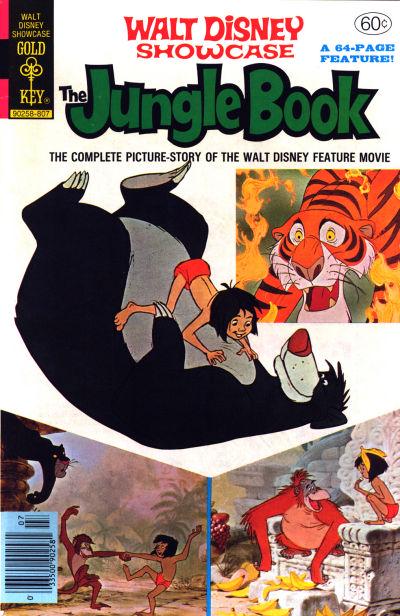
The Jungle Book is a 1967 American animated musical adventure comedy film produced by Walt Disney Productions and released by Buena Vista Distribution. It is the 19th feature in the Disney Animated Canon, and is based on the "Mowgli" stories from Rudyard Kipling's 1894 book of the same name and its 1895 sequel. The film was directed by Wolfgang Reitherman, and the story was adapted by Larry Clemmons, Ralph Wright, Ken Anderson, and Vance Gerry. It features the voices of Phil Harris, , , , and .
Legacy: Elements of The Jungle Book were recycled in the Disney feature film Robin Hood, such as Baloo being inspiration for Little John (who not only was a bear, but also voiced by Phil Harris). Many characters from the film appear in anthropomorphic form in the 1990-1991 animated series TaleSpin. Between 1996 and 1998, the TV series Jungle Cubs told the stories of Baloo, Hathi, Bagheera, Louie, Kaa, and Shere Khan when they were children. Disney made a live-action remake of the movie, which was more of a realistic action-adventure film with somewhat more adult themes. The film, released in 1994, differs even more from the book than its animated counterpart and was a box-office success. A second theatrical live-action remake was produced by Disney in 2016, which combines elements of both its animated counterpart and the original books, and follows much more closely to the tone of the original Rudyard Kipling books than the previous two Jungle Book theatrical films. There are two video games based on the film. was a platformer released in - for Master System, Mega Drive, Game Gear, Super NES, Game Boy, and PC. A version for the Game Boy Advance was released in . was a dance mat game released in for PlayStation and PlayStation 2. and made cameo appearances in another Disney video game, . A world based on the film was planned to be included in the Kingdom Hearts Birth by Sleep video game for the PSP, but was dropped out due to the similarities of the Deep Jungle world based on . On , , in Australia released a sequel titled , in which runs away from the man village he moved into at the end of the first film, to see his animal friends, unaware of the danger he's facing with Shere Khan, who is more determined to kill him than ever, due to embarrassing him earlier. This film earned $47,901,582 at the box office. Since the film's release, many of the film's characters appeared in , , , , , and . *A copyright renewal for the film was registered on , . The copyright to the story it is based on was also renewed in the U.S., but it is now in the public domain. This film is extremely popular in Germany and remains the highest-grossing animated film in that country. Originally the film was going to be darker in tone and somewhat closer to Kipling's works. However, Walt Disney was not interested in the book's dark tone and instead wanted a more lighthearted character-driven musical in which Mowgli has to accept his inevitable manhood. *In the game files for , there exists locations for a deleted world based on . These location are available for exploration via cheats. The voice actors who did the characters from also did the voices for the characters in this film. Bruce Reitherman who did the voice for (albeit in American accent), did the voice of Mowgli. Sebastian Cabot, who did the voice of the narrator in that same featurette, did the voice of Bagheera. Sterling Holloway, who was the voice of , did the voice of Kaa. And Hal Smith, who was the voice of , did the voice of one of the elephants. In addition to Hal Smith doing the voice of Owl, he also did the voice of Winnie the Pooh, taking over for Sterling Holloway starting from 1981 to 1983. *This film was rated G by the Motion Picture Association of America. It was the last Disney animated film to include the 1945 MPAA logo, as well as the last animated Disney film to be released during the Hays Office Code before its elimination in . Following , is the second Disney film to have the most live-action adaptations made by with three live-action films (, ). *This is the tenth Disney animated classic to have the logo with just at the end of the movie, on current releases. *This is Disney animator 's favorite film. He has cited it as what inspired him to become an animator. Ralph Breaks the InternetKing Louie's laugh when Baloo tickles him is actually reused from 's laugh from the "Laughing Place" sequence of . The Jungle BookThis is the first program to air on on , . The Little MermaidLady and the TrampPeter Pan* (that also even extended to the latter's subsequent 2002 Special Edition DVD and VHS release).
The Jungle Book is noted for being the last film project to be approved by Walt Disney himself, who died during its production, along with The Aristocats. However, Disney did work on a few projects before his death as well, most notably the majority of Disney's animated films that came out in the 1970s. This is also the first animated feature released after Disney's death. The film contains a number of classic songs, including "The Bare Necessities" and "I Wan'na Be Like You". Most of the songs were written by Richard M. Sherman and Robert B. Sherman.
The Jungle Book was released to theaters on October 18, 1967. The film grossed over $73 million in the United States in its first release, and as much again from three re-releases. It stands as one of the most popular Disney movies of all time; in its initial release, the popularity was comparable to that of The Lion King or Frozen, making it a great influence for some of today's biggest names in animation (such as Andreas Deja and Brad Bird). However, Disney wouldn't receive a similar success until The Little Mermaid in 1989. Though it should be noted that Disney did have a few successful films during that time period, most notably The Rescuers in 1977 and The Great Mouse Detective in 1986.
After the film's success, Disney released a theatrical sequel and a live-action remake.
Mowgli is found in a basket as a baby in the deep jungles of Madhya Pradesh, India by Bagheera, the black panther. He promptly takes him to an Indian wolf who has just had cubs. She raises him along with her own cubs and Mowgli soon becomes well acquainted with jungle life. Ten years later, Mowgli visits the wolves and gets his face licked eagerly when he arrives. While Bagheera and the wolves are pleased with how content the boy is with jungle life, they are also aware that he may have to return to his own kind eventually. That moment comes one night when the wolf pack elders gather at Council Rock, having learned that Shere Khan, a man-hating Bengal tiger, has returned to their part of the jungle. They realize that Mowgli must leave the pack, as the tiger is notorious for his prejudice toward humans (due to his fear of guns and fire), and will kill the boy and anyone who tries to protect him. Bagheera steps in, offering to take him to a "man-village" where he will find refuge from the tiger, to which the council agrees.
They leave that very night, but Mowgli is determined to stay in the jungle, as he is against the idea of abandoning the only home he has ever known for a village of strangers (being unsure of his own humanity as a result of never meeting other humans), and is certain that he can take Shere Khan. They spend the night on a large tree, where they encounter Kaa, a python who hypnotizes Mowgli and wraps him in his coils in order to eat him. Bagheera stops him, and he and Mowgli go to sleep.
The next morning, Mowgli tries to join the Indian elephant patrol led by Colonel Hathi. Bagheera finds Mowgli and they argue; Mowgli runs away from Bagheera. The boy soon meets up with the fun-loving bear Baloo, who shows Mowgli the fun of having a care-free life and promises not to take him to the man village (as Baloo believes that the villagers there will "ruin" the boy and "make a man out of him").
Mowgli now wants to stay in the jungle more than ever. Before long, Mowgli is caught by a gang of monkeys and taken to their leader, King Louie the orangutan, who makes a deal with Mowgli that if he tells him the secret of making fire like a human, then he will make it so he can stay in the jungle. However, since he was not raised by humans, Mowgli doesn't know how to make fire. Bagheera and Baloo arrive at the palace, unseen and try to plan a way to rescue Mowgli, but the catchy beat of the song distracts Baloo and he wanders off dancing. Soon, however, he appears dressed in banana skins and coconut shells posing as a female orangutan, which fools the King. But soon, Baloo's disguise is revealed and there begins a mad chase between the monkeys and Baloo and Bagheera over Mowgli. The King accidentally knocks down a pillar and holds up the temple the best he can until he struggles when Baloo begins to tickle him frantically under the arms. The monkeys manage to stop Baloo's tickling but end up bouncing the king onto the other pillar instead, causing the temple to collapse in a rumble. Mowgli is rescued from King Louie by Bagheera and Baloo. Later that night, Bagheera explains to Baloo that the jungle isn't safe when Shere Khan is around. While Baloo points out Mowgli is still a child and couldn't possibly be a threat, Bagheera points out that is exactly why Shere Khan would attack him. Baloo admits that he cares about Mowgli and would hate for anything to happen to him, Bagheera tells him, if he does care, he'll take Mowgli back to the village as he would listen to him only. As morning arrives, Baloo reluctantly explains to Mowgli that the Man Village is best for him, but Mowgli accuses him of breaking his promise and runs away in the deepest part of the jungle. Bagheera (after Baloo explains to him) then finds the Elephant Patrol and tells Hathi of Mowgli running away with Shere Khan himself overhearing. Hathi then organizes a special search mission for all his herd. Later, Kaa hypnotizes Mowgli into a deep and peaceful sleep and traps him in his coils again (after tricking him that Mowgli can trust him). Thanks to the intervention of Shere Khan, Mowgli escapes before Kaa can eat him.
Saddened, Mowgli encounters a group of solemn vultures (who closely resemble The Beatles, and they say they'll be his friend. The vultures argue and continually sidetrack Mowgli with their pointless arguments. When they see how sad Mowgli is they ask if he's alone and he doesn't have anyone he admits this, they explain they are also alone as no one likes them but they are still animals with feelings. They try to cheer him up with a song (That's What Friends are For). Shere Khan appears shortly after and challenges Mowgli to a fight. He tries to fight back, but soon loses his nerve upon seeing how truly frightening the tiger is. Baloo then rushes to the rescue, but is knocked unconscious and Mowgli (at the advice of the Vultures that Shere Khan is scared of fire) ties a flaming branch onto Shere Khan's tail in order to get rid of the ruthless tiger. Baloo then wakes up and he and Bagheera take Mowgli to the edge of a man-village, but Mowgli is still hesitant to go in. His mind soon changes when a young girl from the village comes down by the riverside to fetch water and sings. After noticing the boy, she "accidentally" drops her water pot, and Mowgli retrieves it for her and follows her into the man village. Realizing that the man-village may not be as bad as he thought, Mowgli chooses to stay there. While initially saddened by this, Baloo and Bagheera then accept Mowgli's departure and head back into the jungle together.