
COMICBOOKSTOCKEXCHANGE.COM·
UTC LIVE TIMEDEAL RADAR
MARKET CLOCKS
HOME OFFICEHOME OFFICE--:--
NYSENew York--:--
LSELondon--:--
JPX / NIKKEITokyo--:--
DFM / ADXDubai--:--
WORLD / UTC--:--
Independent·Hood·#1·Independent·ID-31080
Empirical cash settlement intelligence, cross-grade elasticity curve, and secondary liquidation velocity.
Empirical step multipliers between adjacent condition tiers. Pinpoints the exponential premium transition and capital efficiency frontier.
Realized turnover cadence and capital absorption depth across certified auction comps.
Capital Math Ground Truth: $88.00 all-in slabbing hurdle + $18.74 raw acquisition stacks the breakeven cost basis at $106.74. Anything cleared above $106.74 is an operational win; anything under is a capital loss. At current 9.8 market pricing of $133.74, successful CPR yield generates +$27.00 (+25%) in positive capital expansion above cost basis. Furthermore, falling to a 9.6 drops to ~$63.07 (an immediate ~$43.67 / ~41% loss on capital spent). PRE-SCREEN PROTOCOL: Savvy traders deploy a $9.00 Pre-Screen threshold (+$9.00 pro-rated freight = $18.00 total reject exposure). If CGC grades it a 9.6, the book is rejected raw, saving $40+ in wasted encapsulation costs and protecting portfolio cash. This high-stakes grading asymmetry is why the asset commands a disciplined accumulate (buy with caution) rating.
The secondary market mathematically supports this hurdle: recent sales cleared at $153.80 (yielding +$47.06 net profit over capital floor), while peak historical auction comps reached $192.25. Realized high-water comps prove that smart accumulation capital willingly pays the premium when verified pristine copies emerge from a tight 50-copy census.
Macro tailwinds—including cinematic adaptation cycles for Silver Surfer, generational collector reverence, and tight 50-slab registered census float—support sustained institutional demand over a 3-year investment horizon.
Autonomous institutional strategies, financial equilibrium, scarcity modeling, and algorithmic risk profiling.
Market operates purely on organic buyer and seller auction discovery. Zero artificial price interventions or emergency liquidity halts on record.
Verified historical transaction line with quarterly equilibrium baseline anchor.
Understand how physical sales, invested dollars, and liquidity friction divide across grades.
Completed market sales by grade
Relative market value allocation
Estimated execution friction
Bibliographic provenance, creator credits, historical significance, and multimedia documentation.
Brian K. Vaughan
Kyle Hotz
Eric Powell
Avalon Studios' Brian Haberlin
Randy Gentile
Tom Brevoort
No narrative synopsis recorded in GCD for this sequence.
Publisher profile coming soon
Outside the Marvel/DC duopoly. Often creator-owned with outsized cultural impact and far greater natural scarcity.
No returnable copies, no overprint buffer. True scarcity with potential for explosive growth on media adaptation news.
Inspectable mathematical proof, blockchain/ledger provenance, data integrity validation, and asset taxonomy.
A pricing discrepancy between an auction listing and the prevailing cleared consensus value across organized exchanges, allowing rapid liquidity capture before market equilibrium reconverges.
Parker Robbins visited his mother in a Psychiatric Care Center, and realized he needed to make more money so that she could move somewhere else. On his way home, he met up with his cousin John King to talk about possible robbery jobs. While at the bar, they see Electro, and briefly talked about how Parker would like to be a super-villain for all the women. As they're talking about the bar being a possible super-villain hangout, a man approached them with a proposition. He handed them a card with the Hydra logo on it, and asked to speak with them outside. In the alley, the man offered John and Parker jobs with Hydra, but they beat the crap out of him instead, claiming payback against the Terrorist organization for the recent 9/11 incident. (Though Hydra didn't have anything to do with it). As John peed on the unconscious man, Parker stole his shoes, disappointed that the man's suit was ruined, along with his . They agreed to meet back up later that night for a job John was tipped off on. Parker headed to the apartment of his regular prostitute, Gro, before going home to his pregnant girlfriend, Sara. At home, he lied about finding a night watchman job, and left to meet John. The two men broke into the warehouse John was told about, surprised to find nothing but a satanic logo scrawled into the ground and candles lit. As they were about to leave, a demon jumped out, and Parker shot and seemed to kill it. As John panicked and ran, Parker stole the demon's cloak and boots, not wanting to leave the job empty handed. On his way home again, Parker was jumped in an alleyway by a roving gang for his shoes. As they were too small for his own feet anyway, Parker threw the Hydra agent's shoes in the men's faces and ran away, frantically trying to put on the demon's boots along the way. Once he finally has them on, he was astonished to find they allow him to walk on air!
Simulate authentic head-to-head clashes between People (Superheroes & Supervillains), Gadgets, Abilities, or Places.
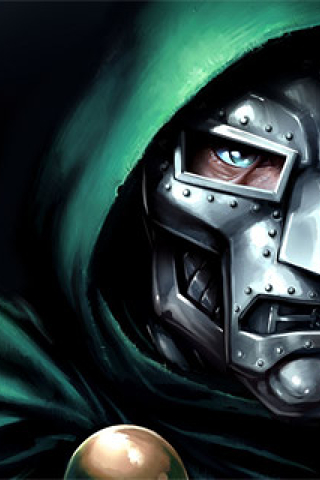
Victor von Doom
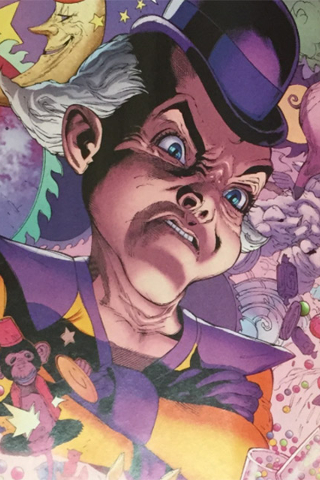
Mr. Mxyzptlk
TACTICAL VERDICT: Abe Sapien triumphs with an estimated 58% win probability. The primary decider was the stark differential in martial combat execution (85 vs 64).
Abe Sapien dictates early tempo, utilizing superior speed and reflexes (35 vs 17) to evade initial advances and land decisive precision strikes.
An apocalyptic kinetic collision rocks the arena as A-Bomb and Abe Sapien's signature arsenals collide in a deadlocked shockwave.
Exploiting an opening in the late exchanges, Abe Sapien's elite martial execution (85 Combat) overwhelms A-Bomb, landing the closing blow to claim the battle.