
COMICBOOKSTOCKEXCHANGE.COM·
UTC LIVE TIMEDEAL RADAR
MARKET CLOCKS
HOME OFFICEHOME OFFICE--:--
NYSENew York--:--
LSELondon--:--
JPX / NIKKEITokyo--:--
DFM / ADXDubai--:--
WORLD / UTC--:--
Paperback
Marvel·Thor·God of Thunder·#3·Independent·ID-2411178
Empirical cash settlement intelligence, cross-grade elasticity curve, and secondary liquidation velocity.
Empirical step multipliers between adjacent condition tiers. Pinpoints the exponential premium transition and capital efficiency frontier.
Realized turnover cadence and capital absorption depth across certified auction comps.
Autonomous institutional strategies, financial equilibrium, scarcity modeling, and algorithmic risk profiling.
Market operates purely on organic buyer and seller auction discovery. Zero artificial price interventions or emergency liquidity halts on record.
Verified historical transaction line with quarterly equilibrium baseline anchor.
Understand how physical sales, invested dollars, and liquidity friction divide across grades.
Historical price records
Relative market value allocation
Estimated execution friction
Bibliographic provenance, creator credits, historical significance, and multimedia documentation.
Simulate head-to-head clashes between this issue's lead hero, villains, rival factions, superpowers, or historic places.
Simulate authentic head-to-head clashes between People (Superheroes & Supervillains), Gadgets, Abilities, or Places.
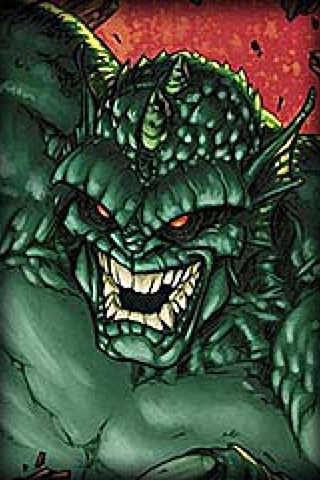
Emil Blonsky
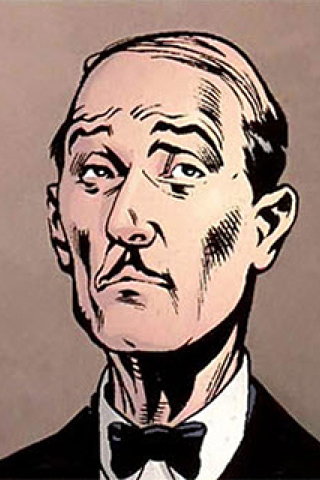
Alfred Thaddeus Crane Pennyworth
TACTICAL VERDICT: Abomination triumphs with an estimated 74% win probability. The primary decider was the stark differential in martial combat execution (95 vs 55).
Abomination seizes immediate spatial superiority with superior kinetic velocity (53 vs 17), circling Alfred Pennyworth and testing perimeter defenses.
Abomination unleashes full destructive capacity (62 Power rating), forcing Alfred Pennyworth onto the back foot with overwhelming concussive force.
In the grueling war of attrition, Abomination's supreme hand-to-hand discipline (95 Combat) and endurance (90 Durability) break Alfred Pennyworth's posture, securing a definitive victory.
Jason Aaron
? (photograph)
? (photograph)
? (photograph)
typeset
No narrative synopsis recorded in GCD for this sequence.
Home of Spider-Man, X-Men, Avengers, and the Marvel Cinematic Universe.
Outside the Marvel/DC duopoly. Often creator-owned with outsized cultural impact and far greater natural scarcity.
No returnable copies, no overprint buffer. True scarcity with potential for explosive growth on media adaptation news.
Inspectable mathematical proof, blockchain/ledger provenance, data integrity validation, and asset taxonomy.
The recovery of third-party encapsulation and grading expenditures when an asset is acquired at a discount below the physical cost of replacement grading fees, shipping, and insurance.
Arriving in Omnipotence City - a divine metropolis built to serve as a parliament for pantheons from across the cosmos - Thor visits the Halls of All-Knowing. Recognizing him from when Odin had visited the city millennia ago, the Lord Librarian irritably recalls Thor had been a brat and wonders what he could possibly want now. Apologizing for the folly of his youth, Thor - putting up with several disparaging interruptions - explains that he has come seeking the names of gods who have mysteriously vanished. The Lord Librarian shows him to the Hall of the Lost, Thor is shocked and appalled by the countless number of books, tomes, and scrolls regarding vanished gods. The Lord Librarian brusquely remarks that gods come and go, and that most pantheons couldn't care less what became of rival groups - grumbling under his breath that he hopes Thor is among the forgotten. Thor informs him that many of the gods in the Hall of the Lost have been murdered, the Lord Librarian irritably snapping that the Hall of Murder has an entire wing devoted to his family. When Thor states he has to warn the Parliament, the Lord Librarian retorts that they're a 200-year waiting list. Using Mjolnir as a light source, Thor scans the thousands of tomes, wondering if the God Butcher was responsible for all of the gods chronologued therein disappearing. Seeking out the Oaken King and Sequoia Queen of Glenglavenglade - who have been missing for 2000 years - he finds them nailed to their divine tree and is promptly attacked by another monster made of living darkness. He next seeks out the War Fairies of Wendigorge, who were last seen 1200 years ago, finding their home reduced to a gore-strewn wasteland and fighting a third minion of the God Butcher. Each of the missing gods Thor seeks out turns out to be a victim of the God Butcher, who leaves a monster to guard their corpses. The carnage Thor witnesses - and the apathy of the other gods towards it - leads him to undergo an existential crisis regarding the worthiness of gods - himself included. Coming across the body of an alien god he'd known - Falligar, dead only five years - Thor blames himself for not killing the God Butcher when he had the chance. Slaughtering the monster left to guard Falligar's corpse, Thor shakes the solar system with his rage, vowing to make the God Butcher regret ever leaving him alive. In the past, the young Thor awakens in a tent, surrounded by his Viking friends. One of them informs him that they found Thor grievously injured and alone, and that it took seven days for him to recover. Informed that the God Butcher survived, Thor leaves in search of him; ignoring his Viking followers proclaiming that Odin and the armies of Asgard will march forth and bring their wrath down upon the one who foolishly attacked the Prince of Asgard. Hearing a voice call out to him, Thor comes across the mortally-wounded Hinkon, the Siberian God of the Hunt, who tells Thor that the God Butcher ambushed him and left him alive to tell Thor that he was waiting for Thor in a cave along the lake. Hirkon tells Thor he should not have come alone and asks Thor to put him out of his misery. Vowing to avenge him, Thor complies. In the present, Thor returns to Lake Ladoga, Russia, accompanied by Iron Man - who uses his suit's sensors to locate the specific cave Thor is looking for. Stark asks Thor if he needs the Avengers to back him up, unnerved by the fear in Thor's gaze, before remarking that Thor is probably going to tell him this business concerns only the divine. Thor tells him to wait, saying that the last time he was there he went alone out of foolish pride and nearly died, telling Iron Man he does need his help before sending him to warn the Olympian pantheon and other gods of Earth. Lamenting he hoped to never see this place again, Thor enters the cave. Flashing back to his first visit there, Thor notes that despite his relative youth he has lived for thousands of years and that many of his memories have faded; admitting he's ashamed to have forgotten many of the mortals he befriended during his petulant youth. Entering the cave of the God Butcher for the first time in a thousand years, Thor bitterly thinks to himself that he will remember this cave until the end of time. Contacting Freyja, Thor tries to warn her about the God Butcher, but is distracted by the sound of stones being disturbed and attacks. In the 9th century, the young Thor stands at the mouth of the cave and calls out to the God Butcher to face him. Mocking him for his arrogance in coming alone, the God Butcher attacks Thor with tendrils of living darkness - restraining him and pulling him into the cave. In the present, Thor grabs a four-eyed alien god with pale green skin, initially mistaking him for the God Butcher due to their similar appearance. The god explains he was hiding from the God Butcher - real name Gorr - in the last place he'd think to look; telling Thor that everything Gorr is doing is because of what Thor did to him. In the distant future, Thor dives into the black ocean of Gorr's minions. He fights valiantly but is overcome, his body sinking beneath the tide of living darkness.
Valuation parity across physical collectible manifestations for Thor: God of Thunder #3.
CGC, CBCS, PSA Universal certified high-grade specimens (9.8 / 9.6 / 9.4). The gold standard for institutional alternative investment.
Official witnessed creator-signed slabs (Yellow label). Valued based on creator historical stature and inscription provenance.
Certified specimens from landmark historical collections (Edgar Church / Mile High, White Mountain, Kansas City, Pacific Coast).
Original newsstand barcode distribution copies. Extremely scarce in high grade due to newsstand rack wear and unsold return pulping.
Regional price test market copies (Canadian 75¢/95¢ variants, Marvel 30¢/35¢ test variants). Highly coveted micro-population rarities.
Exclusively allocated copies requiring retailer orders of 1:25, 1:50, 1:100, or 1:500 standard copies. Immediate manufactured scarcity.
Unslabbed collector copies inspected under standard Overstreet physical guidelines. The primary pool for grading arbitrage.
Alternative artistic interpretations, virgin covers, metal foil, and convention exclusives with dedicated collector followings.
Standard specialty comic shop printings sold through non-returnable distribution. The baseline circulation foundation.
Green label copies with significant manufacturing flaws, unwitnessed signatures, or missing coupons that do not affect the main story.
Purple label copies with professional or amateur color touch, tear seals, piece fill, or spine rebuilds.
Blue/Grey label copies treated exclusively with archival preservation techniques (leaf-casting, rice paper tear reinforcement, solvent wash).
Official second, third, or later printings released to satisfy secondary market sellouts. Distinct cover art and trade dress.
International editions licensed by La Prensa (Mexico), Editora Abril (Brazil), Panini (Europe), or Titan (UK).
Certified printing oddities (missing foil, inverted interior, double covers, foil color error). Unique curiosity pieces.
Advance promotional black-and-white booklets, ashcans created to secure trademark rights, and preview giveaways.
Each cover variant, retailer incentive, and subsequent printing represents an independent atomic tradeable instrument with unique supply elasticity, barcode registration, and secondary market demand.
?
?, ? (photograph)
?, ? (photograph)
?, ? (photograph)
typeset
Simulate authentic head-to-head clashes between People (Superheroes & Supervillains), Gadgets, Abilities, or Places.
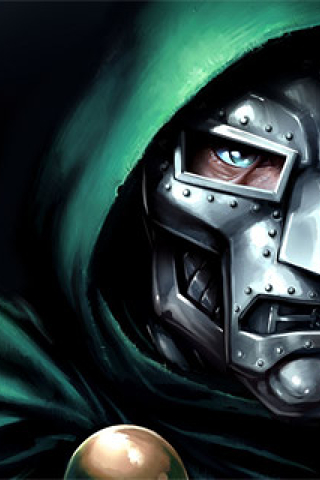
Victor von Doom
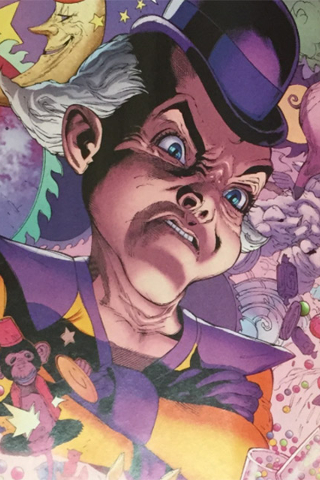
Mr. Mxyzptlk
TACTICAL VERDICT: Abe Sapien triumphs with an estimated 58% win probability. The primary decider was the stark differential in martial combat execution (85 vs 64).
Abe Sapien dictates early tempo, utilizing superior speed and reflexes (35 vs 17) to evade initial advances and land decisive precision strikes.
An apocalyptic kinetic collision rocks the arena as A-Bomb and Abe Sapien's signature arsenals collide in a deadlocked shockwave.
Exploiting an opening in the late exchanges, Abe Sapien's elite martial execution (85 Combat) overwhelms A-Bomb, landing the closing blow to claim the battle.