COMICBOOKSTOCKEXCHANGE.COM·
UTC LIVE TIMEDEAL RADAR
MARKET CLOCKS
HOME OFFICEHOME OFFICE--:--
NYSENew York--:--
LSELondon--:--
JPX / NIKKEITokyo--:--
DFM / ADXDubai--:--
WORLD / UTC--:--
Independent·Amazing Adventures·#18·Bronze Age·ID-2409646
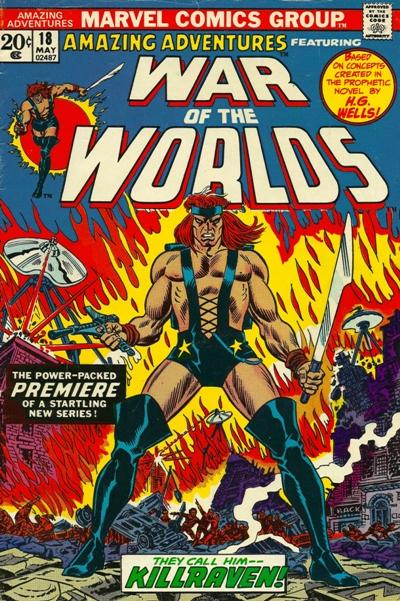 Variant #26202ACTIVE
| Grade | Census & Float Distribution | Copies / Slabs | Role | FMV | Sales | Total Value | Multiple |
|---|---|---|---|---|---|---|---|
| 9.8 | 15 of 398 slabs (3.8%) | 15 | SOV | $549.00 | 2 | $8,235 | (61.0x) |
| 9.6 | 48 of 398 slabs (12.1%) | 48 | $199.99 | 18 | $9,600 | (22.2x) | |
| 9.4 | 74 of 398 slabs (18.6%) | 74 | ANC | $64.00 | 16 | $4,736 | (7.1x) |
| 9.2 | 58 of 398 slabs (14.6%) | 58 | $84.00 | 14 | $4,872 | (9.3x) | |
| 9.0 | 50 of 398 slabs (12.6%) | 50 | $60.00 | 3 | $3,000 | (6.7x) | |
| RAW | Raw Uncertified Copies | 39,957 | RAW | $9.00 | 24 | $359,613 | (1.0x Base) |
Assumes raw copies grade like the copies already in the CGC census (which skews to copies owners chose to submit). Fees: CGC Vintage tier by graded value ($30–$105, 4% above $1,000), insured shipping shared across 10 books; pre-screen reject $14; eBay 13.25%. Not financial advice.
Empirical cash settlement intelligence, cross-grade elasticity curve, and secondary liquidation velocity.
Empirical step multipliers between adjacent condition tiers. Pinpoints the exponential premium transition and capital efficiency frontier.
Realized turnover cadence and capital absorption depth across certified auction comps.
Autonomous institutional strategies, financial equilibrium, scarcity modeling, and algorithmic risk profiling.
Market operates purely on organic buyer and seller auction discovery. Zero artificial price interventions or emergency liquidity halts on record.
Verified historical transaction line with quarterly equilibrium baseline anchor.
Understand how physical sales, invested dollars, and liquidity friction divide across grades.
Completed market sales by grade
Relative market value allocation
Estimated execution friction
Bibliographic provenance, creator credits, historical significance, and multimedia documentation.
Roy Thomas
Neal Adams
Frank Chiaramonte
Petra Goldberg
Roy Thomas
Publisher profile coming soon
Comics grow darker and more socially aware. Wolverine, Punisher, Swamp Thing debut. Creator-driven storytelling emerges.
Newsstand variants carry meaningful scarcity premiums. First appearances from this era are blue-chip investments.
Bronze Age (1970–1984) — comics grew darker and more socially aware. The era of classic runs, creator-driven storytelling, and the birth of serious collecting culture. Newsstand variants carry a meaningful scarcity premium.
Inspectable mathematical proof, blockchain/ledger provenance, data integrity validation, and asset taxonomy.
In illiquid alternative asset markets, sovereign blue-chip holdings trade at an exponential multiple over mid-grade float due to institutional accumulation and inelastic seller reservation prices.
New York City, 2018 AD. Killraven fights his way through a subway tunnel against a gang led by Scrapper. He enters an empty Grand Central Station to find the Keeper, who unleashes a few mutants against him. Killraven blasts a hole in the Keeper's wall, thus emptying his weapon. While the Keeper shoots at him, he throws a sharp piece of machinery and impales his enemy. Astonishingly, the man thanks him and tells him a story. In 1901 the Martians invaded Earth. Despite their technological advantage, they failed to account for illnesses against which they had no immunity, and the invaders all died. In 2001 they invaded again. This time they had a defense against terrestrial disease and even against nuclear weapons. The second war of the worlds ended quickly. Humans fled the cities, among them Maureen Raven with her two sons. On Welfare Island they met Doctor Ann Carver, who sheltered them in a hospital for two weeks. A chopper arrived with three humans inside, but instead of rescuing them, a soldier shot the two women. Doctor Raker (later the Keeper) took the older brother, Jonathan, while a soldier named Saunders was supposed to kill the younger. Killraven knows the rest of the story. Jonathan Raven grew up a gladiator, fighting for the amusement of the Martians, and took the name Killraven. Seven years ago he escaped. He spent a year in Queens, where he learned about human civilization from books. He also learned to avoid even looking at sirens, women to whom the Martians gave the ability to bewitch men. One day he accidentally killed a chieftain's friend in Brooklyn Heights. He fled to Staten Island, joined a group of freemen, and eventually became their leader. Raker confesses that the Martians used some kind of mind control on him, but now that he is dying, their control is broken. "You can... destroy them... you have the power," he says. Puzzled, Killraven doesn't detect the mutant who attacks him from behind, but he quickly disposes of it. Another sound alerts him to a new menace. He turns to confront three sirens... and he has already looked at them...
Each cover variant, retailer incentive, and subsequent printing represents an independent atomic tradeable instrument with unique supply elasticity, barcode registration, and secondary market demand.
Strict algorithmic segregation separating clean single-issue Cover A sales from multi-issue lot bundles, retailer exclusives, and foreign variants.
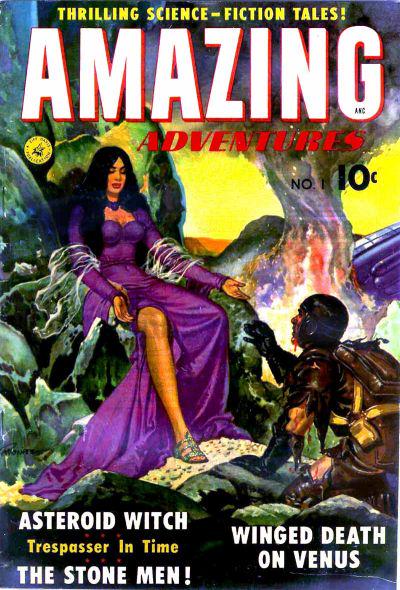
Amazing Adventures #1
9.8
$60,875.83
9.6
—
9.4
—
RAW
$135.32
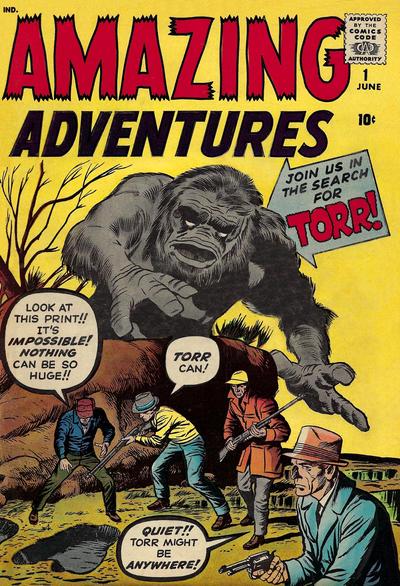
Amazing Adventures #1
9.8
$35,810.73
9.6
—
9.4
—
RAW
$274.82
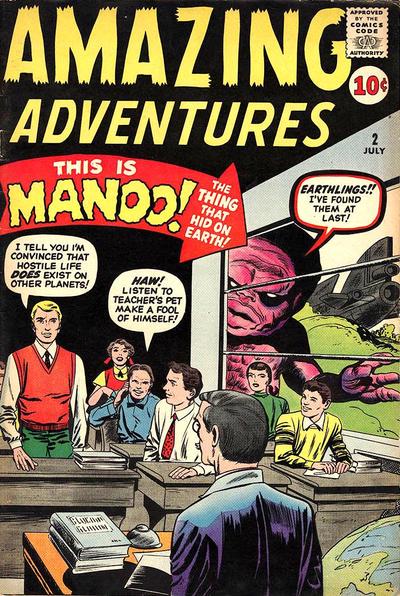
Amazing Adventures #2
9.8
$17,329.38
9.6
—
9.4
—
RAW
$107.47
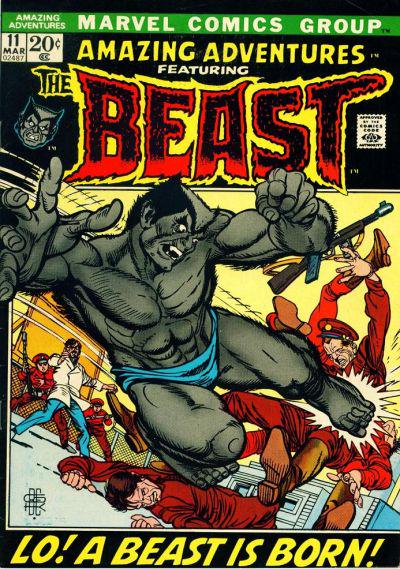
Amazing Adventures #11
9.8
$5,000.00
9.6
—
9.4
—
RAW
$44.49
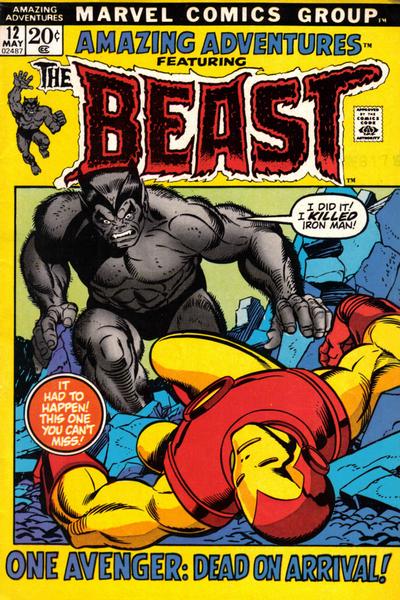
Amazing Adventures #12
9.8
$822.00
9.6
—
9.4
—
RAW
$19.99
Killraven gets his revenge on the Keeper but discovers that it is a hollow victory.
Describes the creative process that led to the Killraven story. No letters this issue.
“They taught us all the ancient arts—swordplay, karate, savate, wrestling—at first we thought it a game—a game with deadly results.”
New York City, 2018 AD. Killraven fights his way through a subway tunnel against a gang led by Scrapper. He enters an empty Grand Central Station to find the Keeper, who unleashes a few mutants against him. Killraven blasts a hole in the Keeper's wall, thus emptying his weapon. While the Keeper shoots at him, he throws a sharp piece of machinery and impales his enemy. Astonishingly, the man thanks him and tells him a story.
In 1901 the Martians invaded Earth. Despite their technological advantage, they failed to account for illnesses against which they had no immunity, and the invaders all died. In 2001 they invaded again. This time they had a defense against terrestrial disease and even against nuclear weapons. The second war of the worlds ended quickly. Humans fled the cities, among them Maureen Raven with her two sons. On Welfare Island they met Doctor Ann Carver, who sheltered them in a hospital for two weeks. A chopper arrived with three humans inside, but instead of rescuing them, a soldier shot the two women. Doctor Raker (later the Keeper) took the older brother, Jonathan, while a soldier named Saunders was supposed to kill the younger.
Killraven knows the rest of the story. Jonathan Raven grew up a gladiator, fighting for the amusement of the Martians, and took the name Killraven. Seven years ago he escaped. He spent a year in Queens, where he learned about human civilization from books. He also learned to avoid even looking at sirens, women to whom the Martians gave the ability to bewitch men. One day he accidentally killed a chieftain's friend in Brooklyn Heights. He fled to Staten Island, joined a group of freemen, and eventually became their leader.
Raker confesses that the Martians used some kind of mind control on him, but now that he is dying, their control is broken. "You can... destroy them... you have the power," he says.
Puzzled, Killraven doesn't detect the mutant who attacks him from behind, but he quickly disposes of it. Another sound alerts him to a new menace. He turns to confront three sirens... and he has already looked at them...