
COMICBOOKSTOCKEXCHANGE.COM·
UTC LIVE TIMEDEAL RADAR
MARKET CLOCKS
HOME OFFICEHOME OFFICE--:--
NYSENew York--:--
LSELondon--:--
JPX / NIKKEITokyo--:--
DFM / ADXDubai--:--
WORLD / UTC--:--
Newsstand
Marvel·Captain America·#334·Copper Age·ID-3441953
Empirical cash settlement intelligence, cross-grade elasticity curve, and secondary liquidation velocity.
Empirical step multipliers between adjacent condition tiers. Pinpoints the exponential premium transition and capital efficiency frontier.
Realized turnover cadence and capital absorption depth across certified auction comps.
Autonomous institutional strategies, financial equilibrium, scarcity modeling, and algorithmic risk profiling.
Market operates purely on organic buyer and seller auction discovery. Zero artificial price interventions or emergency liquidity halts on record.
Verified historical transaction line with quarterly equilibrium baseline anchor.
Understand how physical sales, invested dollars, and liquidity friction divide across grades.
Completed market sales by grade
Relative market value allocation
Estimated execution friction
Bibliographic provenance, creator credits, historical significance, and multimedia documentation.
Mark Gruenwald
Tom Morgan
Dave Hunt
Ken Feduniewicz
Don Daley
Home of Spider-Man, X-Men, Avengers, and the Marvel Cinematic Universe.
The direct market matures. Dark Knight Returns, Watchmen redefine the medium. Speculator boom begins.
High print runs mean condition is the key differentiator. 9.8 census numbers matter more than total prints.
Copper Age (1984–1991) — the speculator boom begins. Direct market matures, prestige formats launch. First appearances from this era have become blue chips. High print runs mean condition is the differentiator.
Inspectable mathematical proof, blockchain/ledger provenance, data integrity validation, and asset taxonomy.
The recovery of third-party encapsulation and grading expenditures when an asset is acquired at a discount below the physical cost of replacement grading fees, shipping, and insurance.
John continues his training to become the new Cap but when he has trouble mastering the shield throw, the government brings in an expert tutor--the Taskmaster. When Thurm threatens to sell the identity of the new Cap to a tabloid, John and Lemar steal Guardsmen uniforms to bully him into silence and end up wrecking a diner in the process.
Each cover variant, retailer incentive, and subsequent printing represents an independent atomic tradeable instrument with unique supply elasticity, barcode registration, and secondary market demand.
Strict algorithmic segregation separating clean single-issue "Newsstand" sales from multi-issue lot bundles, retailer exclusives, and foreign variants.

Captain America #1
9.8
$229.99
9.6
—
9.4
—
RAW
$2.49
Captain America #1
9.8
$175.00
9.6
—
9.4
—
RAW
$63.00
Captain America #1
9.8
$143.53
9.6
—
9.4
—
RAW
$55.87
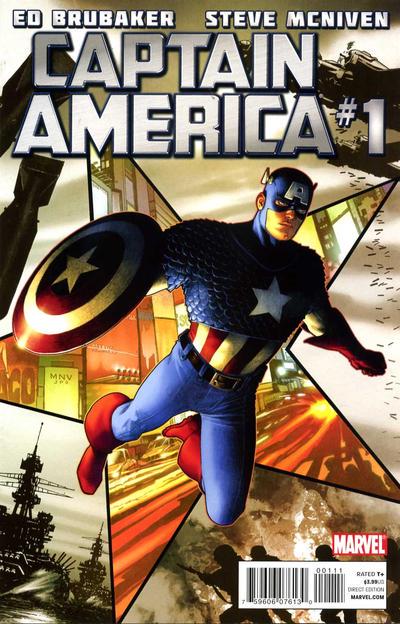
Captain America #1
9.8
$112.50
9.6
—
9.4
—
RAW
$8.99
Captain America #1
9.8
$109.98
9.6
—
9.4
—
RAW
$4.84
John continues his training to become the new Cap but when he has trouble mastering the shield throw, the government brings in an expert tutor--the Taskmaster. When Thurm threatens to sell the identity of the new Cap to a tabloid, John and Lemar steal Guardsmen uniforms to bully him into silence and end up wrecking a diner in the process.
“Well, I'm Captain America now, and I've got to live up to the highest code of honor I can.”
| Solicit = The new Captain America undergoes basic training— and wait'll you see how tough it is! Guest-staring: the Taskmaster and the Blob!
This issue contains a letters page, American Graffiti. Letters are published from: Bill Climer, Scott Fulkerson, Stephen Cade, Luther Barthalow, James Roman, and Leonard Richardson. Another new logo debuts this issue with the "new" Captain America John Walker and "Bucky" Lemar Hoskins. This logo will be used, with slight alterations through Captain America Vol 1 349. This story is reprinted in trade paperback.