COMICBOOKSTOCKEXCHANGE.COM·
UTC LIVE TIMEDEAL RADAR
MARKET CLOCKS
HOME OFFICEHOME OFFICE--:--
NYSENew York--:--
LSELondon--:--
JPX / NIKKEITokyo--:--
DFM / ADXDubai--:--
WORLD / UTC--:--
DC·Justice League Quarterly·#8·Modern Age·ID-8821636
 DirectACTIVE
Autonomous institutional strategies, financial equilibrium, scarcity modeling, and algorithmic risk profiling.
Market operates purely on organic buyer and seller auction discovery. Zero artificial price interventions or emergency liquidity halts on record.
Understand how physical sales, invested dollars, and liquidity friction divide across grades.
Historical price records
Relative market value allocation
Estimated execution friction
Bibliographic provenance, creator credits, historical significance, and multimedia documentation.
Mark Waid
? (illustration)
? [as Smitty]
Gene D'Angelo
Brian Augustyn
Home of Superman, Batman, Wonder Woman, and the Justice League.
Variant cover era. Trade paperback culture. Independent movement flourishes. Digital distribution begins.
Census-registered copies anchor pricing. First appearances of characters adapted to screen drive the market.
Modern Age (1992–present) — foil cover era, variant proliferation, and the independent movement. Strong narrative significance drives key issue demand. Census-registered copies anchor pricing.
Inspectable mathematical proof, blockchain/ledger provenance, data integrity validation, and asset taxonomy.
The recovery of third-party encapsulation and grading expenditures when an asset is acquired at a discount below the physical cost of replacement grading fees, shipping, and insurance.
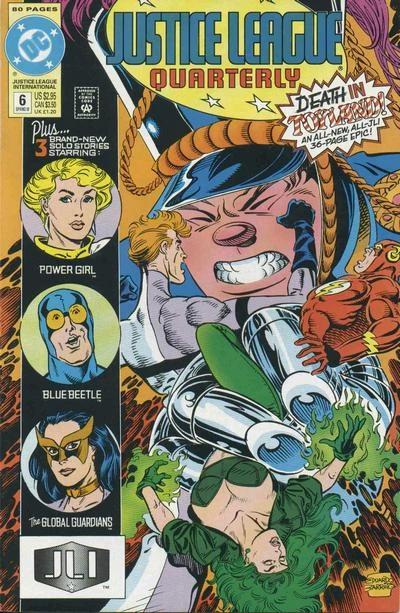
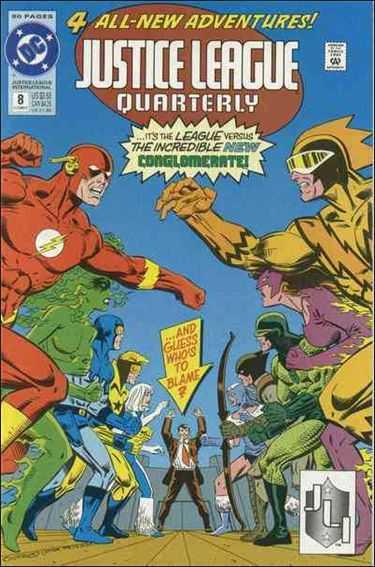
The Conglomerate loses all of its members right before a heavily promoted contest with the Justice League, so an interdimensional band of heroes are recruited. The "heroes" turn out to be villains, and the Justice League has their hands full defeating them.
Each cover variant, retailer incentive, and subsequent printing represents an independent atomic tradeable instrument with unique supply elasticity, barcode registration, and secondary market demand.
Strict algorithmic segregation separating clean single-issue Cover A sales from multi-issue lot bundles, retailer exclusives, and foreign variants.

Justice League Quarterly #5
9.8
$71.07
9.6
—
9.4
—
RAW
$4.16
Justice League Quarterly #1
9.8
$67.00
9.6
—
9.4
—
RAW
$2.62
Justice League Quarterly #16
9.8
$65.23
9.6
—
9.4
—
RAW
$4.94
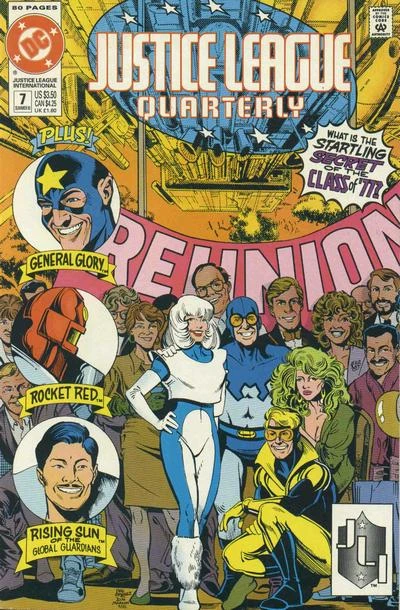
Justice League Quarterly #7
9.8
$64.09
9.6
—
9.4
—
RAW
$3.99
Justice League Quarterly #8
9.8
$63.40
9.6
—
9.4
—
RAW
$3.98
At a celebration banquet, a supervillain crashes the party. Flash and Power Girl have more than their hands full until Thunderbolt lends a hand.
The League tries to help Max reunite with his ex-wife (well, one of them anyway).
The Guardians rescue their teammates from Bialya.
The Conglomerate loses all of its members right before a heavily promoted contest with the Justice League, so an interdimensional band of heroes are recruited. The "heroes" turn out to be villains, and the Justice League has their hands full defeating them.
“| Speaker =”
— | StoryTitle1 = "Double Trouble!
| Synopsis2 =
"Double Trouble!" is the first reference to a Crime Syndicate existing in the post-Crisis DC universe but here they are revealed to have been Qwardians from the Antimatter universe. "The Real Return of the... Global Guardians!" is the first mention of Tasmanian Devil's sexuality, making him one of DC's earliest openly gay superheroes.