COMICBOOKSTOCKEXCHANGE.COM·
UTC LIVE TIMEDEAL RADAR
MARKET CLOCKS
HOME OFFICEHOME OFFICE--:--
NYSENew York--:--
LSELondon--:--
JPX / NIKKEITokyo--:--
DFM / ADXDubai--:--
WORLD / UTC--:--
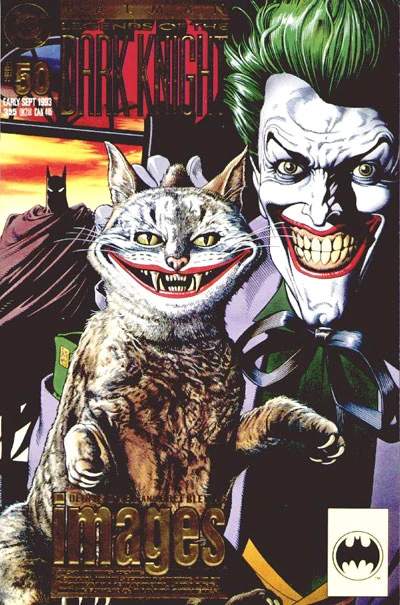
DC·Batman·Legends of the Dark Knight·#50·Modern Age·ID-2425498
 DirectACTIVE
| Grade | Census & Float Distribution | Role | FMV | Total Value | Multiple |
|---|---|---|---|---|---|
| 9.8 | 121 of 505 slabs (24.0%) | SOV | $135.00 | $16,335.00 | (22.9x) |
| 9.6 | 205 of 505 slabs (40.6%) | ANC | $32.00 | $6,560.00 | (5.4x) |
| 9.4 | 89 of 505 slabs (17.6%) | $41.00 | $3,649.00 | (7.0x) | |
| 9.2 | 32 of 505 slabs (6.3%) | $47.32 | $1,514.24 | (8.0x) | |
| 9.0 | 19 of 505 slabs (3.8%) | $35.00 | $665.00 | (5.9x) | |
| RAW | 124,495 ungraded (125,000 printed − 505 graded) | RAW | $5.89 | $733,275.55 | (1.0x Base) |
Assumes raw copies grade like the copies already in the CGC census (which skews to copies owners chose to submit). Fees: CGC Modern tier by graded value ($30–$105, 4% above $1,000), insured shipping shared across 10 books; pre-screen reject $14; eBay 13.25%. Not financial advice.
Underlying: CGC 9.6 (Liquid Center) · Spot $32.00 · Model IV 31.5% · Open Contracts: 0
| Calls (Right to Buy 1 Copy) | Strike | Puts (Right to Sell 1 Copy) | ||||||||
|---|---|---|---|---|---|---|---|---|---|---|
| OCC Contract | Premium | Intr / Time | IV · Δ | Θ/d · ν | Strike $ | OCC Contract | Premium | Intr / Time | IV · Δ | Θ/d · ν |
| BLDK50-261218C26 | $6.07 | $6.00 + $0.07 | 35.5% · 0.99 | -0.00 · 0.00 | $26.00 | BLDK50-261218P26 | $0.01 | $0.00 + $0.01 | 35.5% · -0.01 | -0.00 · 0.00 |
| BLDK50-261218C29 | $3.20 | $3.00 + $0.20 | 33.0% · 0.90 | -0.01 · 0.01 | $29.00 | BLDK50-261218P29 | $0.14 | $0.00 + $0.14 | 33.0% · -0.10 | -0.01 · 0.01 |
| BLDK50-261218C30 | $2.36 | $2.00 + $0.36 | 32.4% · 0.81 | -0.02 · 0.02 | $30.00 | BLDK50-261218P30 | $0.29 | $0.00 + $0.29 | 32.4% · -0.19 | -0.01 · 0.02 |
| BLDK50-261218C32 | $1.04 | $0.00 + $1.04 | 31.5% · 0.53 | -0.02 · 0.03 | $32.00ATM | BLDK50-261218P32 | $0.97 | $0.00 + $0.97 | 31.5% · -0.47 | -0.02 · 0.03 |
| BLDK50-261218C34 | $0.33 | $0.00 + $0.33 | 31.0% · 0.24 | -0.02 · 0.02 | $34.00 | BLDK50-261218P34 | $2.26 | $2.00 + $0.26 | 31.0% · -0.76 | -0.01 · 0.02 |
| BLDK50-261218C35 | $0.17 | $0.00 + $0.17 | 30.8% · 0.14 | -0.01 · 0.02 | $35.00 | BLDK50-261218P35 | $3.09 | $3.00 + $0.09 | 30.8% · -0.86 | -0.01 · 0.02 |
| BLDK50-261218C38 | $0.01 | $0.00 + $0.01 | 30.7% · 0.02 | -0.00 · 0.00 | $38.00 | BLDK50-261218P38 | $6.00 | $6.00 + $0.00 | 30.7% · -0.98 | 0.00 · 0.00 |
Empirical cash settlement intelligence, cross-grade elasticity curve, and secondary liquidation velocity.
Empirical step multipliers between adjacent condition tiers. Pinpoints the exponential premium transition and capital efficiency frontier.
Realized turnover cadence and capital absorption depth across certified auction comps.
Autonomous institutional strategies, financial equilibrium, scarcity modeling, and algorithmic risk profiling.
Market operates purely on organic buyer and seller auction discovery. Zero artificial price interventions or emergency liquidity halts on record.
Verified historical transaction line with quarterly equilibrium baseline anchor.
Understand how physical sales, invested dollars, and liquidity friction divide across grades.
Completed market sales by grade
Relative market value allocation
Estimated execution friction
Bibliographic provenance, creator credits, historical significance, and multimedia documentation.
Dennis O'Neil
Bret Blevins
Bret Blevins
Digital Chameleon
Willie Schubert
Archie Goodwin, Bill Kaplan
Home of Superman, Batman, Wonder Woman, and the Justice League.
Variant cover era. Trade paperback culture. Independent movement flourishes. Digital distribution begins.
Census-registered copies anchor pricing. First appearances of characters adapted to screen drive the market.
Modern Age (1992–present) — foil cover era, variant proliferation, and the independent movement. Strong narrative significance drives key issue demand. Census-registered copies anchor pricing.
Inspectable mathematical proof, blockchain/ledger provenance, data integrity validation, and asset taxonomy.
A pricing discrepancy between an auction listing and the prevailing cleared consensus value across organized exchanges, allowing rapid liquidity capture before market equilibrium reconverges.
In a derelict diner on Gotham City's outskirts, several gangsters are convened by a bizarrely discolored man styled the Joker, who boasts of a new extortion scheme on the city's rich and powerful. Before the scheme can be explained, Batman raids the diner and beats the gangsters senseless; watching in amusement, the Joker claims to be a kidnapped circus clown when questioned, and is allowed to leave. Only afterward does one of the reviving gangsters reveal the truth, mocking Batman for overlooking Gotham's newest criminal. Meanwhile, the Joker rejoins his main accomplice: a brilliant but emotionally arrested chemist named Melvin Reipan. By playing on a number of childhood insecurities (and their bond as cousins), the Joker has manipulated Melvin into creating a highly potent nerve toxin, which forces victims to literally die laughing. After testing the toxin on Melvin's cat, the Joker sends out a tape threatening the life of banker Henry Haight. The threat is intercepted by the police, with Captain James Gordon quickly connecting it to the same "Joker" who had threatened the city reservoir months ago; Batman, in turn, connects both with the man he had freed during the diner raid. Nevertheless, Haight refuses protective custody and insists on speaking at a state fundraiser, forcing the police to comb every inch of site while Batman discreetly attends as Bruce Wayne. Despite these precautions, Haight dies laughing only a few seconds into his speech; too late, it is discovered that his speech-paper had been coated with the Joker's toxin, stirred into his pores through body heat. Chemical analysis of the toxin reveals many unusual compounds, which several Wayne Enterprises personnel are sent to further investigate. This lead, however, does little to improve Batman's spirits; against Alfred's advice, he continues to blame himself for being so easily tricked by the Joker. For his part, the Joker finds himself a rising star in the Gotham underworld, and soon announces his next victim to be businessman George Partridge. Unlike Haight, Partridge immediately accepts protective custody, allowing himself to be locked inside a bank vault guarded by dozens of SWAT officers; even this, however, fails to prevent his appointed death. Only belatedly does Batman deduce that Partridge had been killed by a delayed-action toxin, injected long before the threat. Giddy with success, the Joker has Melvin move their operations into the city proper. By sheer chance, their vehicle is spotted by Bruce Wayne, who - having learned of Melvin's existence and background from his personnel - gives chase as Batman. In the ensuing chaos, the Joker and Melvin plunge off a bridge; a search of the waters below recovers what seems to be the Joker's corpse, but Batman identifies it as Melvin's, crudely disguised with makeup and dye. Thinking his trail covered, the Joker assembles several new accomplices and begins his first proper extortion, covertly demanding a quarter-million dollars from tycoon Otto Drexel. This backfires, however, when Drexel starts selling his most valuable possessions in a blind panic, piquing Batman's suspicions. After confirming the situation with Drexel, Batman apprehends and impersonates one of the Joker's accomplices, infiltrates the carefully-planned exchange, and corners the Joker on a rooftop. At first unfazed - even cheerfully admitting his former identity as the "Red Hood" robber Batman had pursued through a chemical refinery several months ago - the Joker flies into a rage when mocked for his lack of technique. In response, Batman lays him flat with one blow and leaves him to the police. Some time later, Bruce Wayne arranges a lavish burial for Melvin Reipan, solemnly (and naively) believing that the Joker's threat has been ended for good.
Each cover variant, retailer incentive, and subsequent printing represents an independent atomic tradeable instrument with unique supply elasticity, barcode registration, and secondary market demand.
Strict algorithmic segregation separating clean single-issue Cover A sales from multi-issue lot bundles, retailer exclusives, and foreign variants.
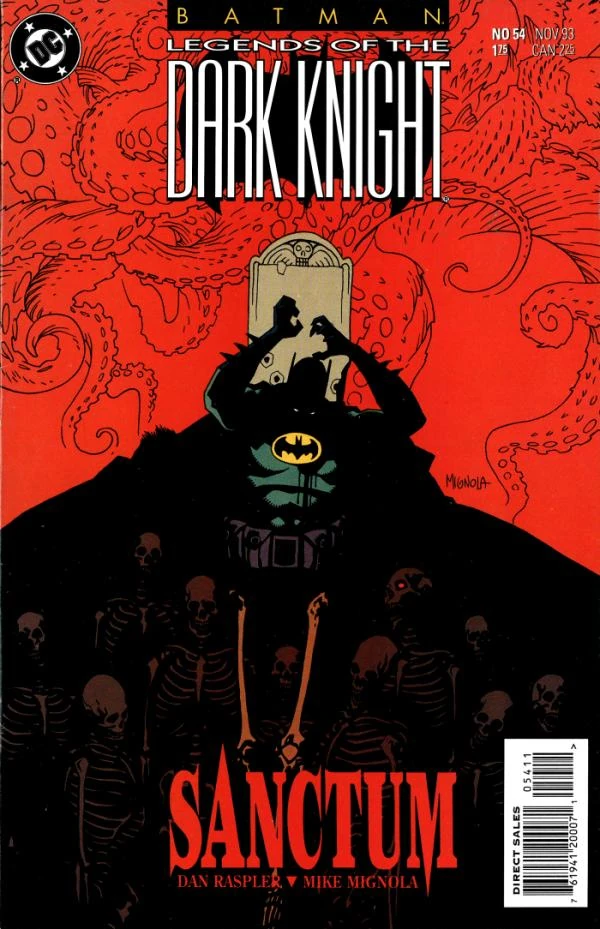
Batman: Legends of the Dark Knight #54
9.8
$151.78
9.6
$99.98
9.4
—
RAW
$24.92
Batman: Legends of the Dark Knight #50
9.8
$135.00
9.6
$32.00
9.4
$41.00
RAW
$5.89
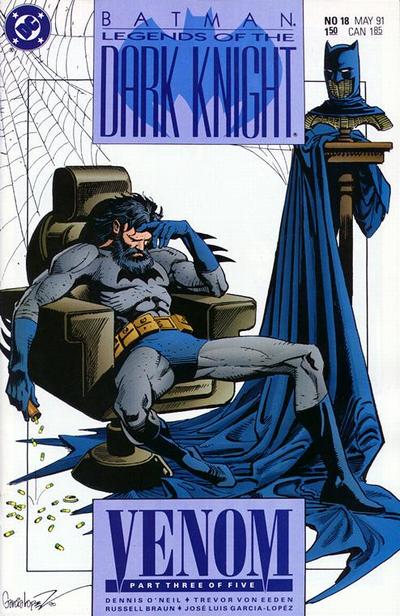
Batman: Legends of the Dark Knight #18
9.8
$110.00
9.6
—
9.4
—
RAW
$3.66

Batman: Legends of the Dark Knight #10
9.8
$107.37
9.6
—
9.4
—
RAW
$6.05
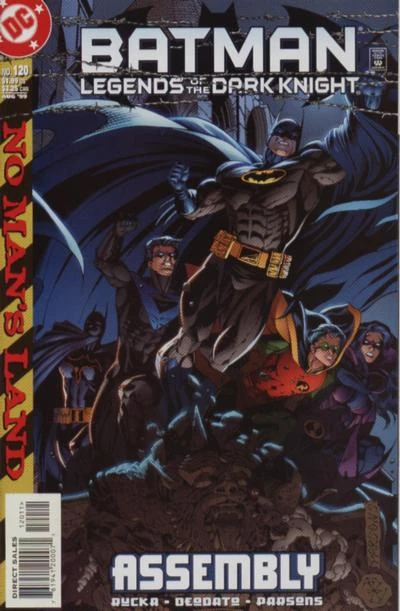
Batman: Legends of the Dark Knight #120
9.8
$100.00
9.6
$50.37
9.4
$28.88
RAW
$10.25
Retelling of first meeting of Batman & Joker in post-Crisis universe.
“Like the fella says, money can't buy friends, but it gives you a better class of enemies.”
— Joker
In a derelict diner on Gotham City's outskirts, several gangsters are convened by a bizarrely discolored man styled the Joker, who boasts of a new extortion scheme on the city's rich and powerful. Before the scheme can be explained, Batman raids the diner and beats the gangsters senseless; watching in amusement, the Joker claims to be a kidnapped circus clown when questioned, and is allowed to leave. Only afterward does one of the reviving gangsters reveal the truth, mocking Batman for overlooking Gotham's newest criminal.
Meanwhile, the Joker rejoins his main accomplice: a brilliant but emotionally arrested chemist named Melvin Reipan. By playing on a number of childhood insecurities (and their bond as cousins), the Joker has manipulated Melvin into creating a highly potent nerve toxin, which forces victims to literally die laughing. After testing the toxin on Melvin's cat, the Joker sends out a tape threatening the life of banker Henry Haight.
The threat is intercepted by the police, with Captain James Gordon quickly connecting it to the same "Joker" who had threatened the city reservoir months ago; Batman, in turn, connects both with the man he had freed during the diner raid. Nevertheless, Haight refuses protective custody and insists on speaking at a state fundraiser, forcing the police to comb every inch of site while Batman discreetly attends as Bruce Wayne.
Opening quote ("So we beat on, boats against the current...") adopted from the closing line of F. Scott Fitzgerald's The Great Gatsby. "Images" serves as a Post-Crisis retelling of Batman's first encounter with the Joker, loosely adapting events from Batman #1 into the status quo set by Batman: Year One. "Images" also adopts some minor elements from Batman: The Killing Joke, particularly the composition of its Red Hood flashbacks. "Images" is reprinted in: The Joker: 80 Years of the Clown Prince of Crime: The Deluxe Edition (Collected) * Batman: Dark Legends (Collected)
Despite these precautions, Haight dies laughing only a few seconds into his speech; too late, it is discovered that his speech-paper had been coated with the Joker's toxin, stirred into his pores through body heat. Chemical analysis of the toxin reveals many unusual compounds, which several Wayne Enterprises personnel are sent to further investigate. This lead, however, does little to improve Batman's spirits; against Alfred's advice, he continues to blame himself for being so easily tricked by the Joker.
For his part, the Joker finds himself a rising star in the Gotham underworld, and soon announces his next victim to be businessman George Partridge. Unlike Haight, Partridge immediately accepts protective custody, allowing himself to be locked inside a bank vault guarded by dozens of SWAT officers; even this, however, fails to prevent his appointed death. Only belatedly does Batman deduce that Partridge had been killed by a delayed-action toxin, injected long before the threat.
Giddy with success, the Joker has Melvin move their operations into the city proper. By sheer chance, their vehicle is spotted by Bruce Wayne, who — having learned of Melvin's existence and background from his personnel — gives chase as Batman. In the ensuing chaos, the Joker and Melvin plunge off a bridge; a search of the waters below recovers what seems to be the Joker's corpse, but Batman identifies it as Melvin's, crudely disguised with makeup and dye.
Thinking his trail covered, the Joker assembles several new accomplices and begins his first proper extortion, covertly demanding a quarter-million dollars from tycoon Otto Drexel. This backfires, however, when Drexel starts selling his most valuable possessions in a blind panic, piquing Batman's suspicions. After confirming the situation with Drexel, Batman apprehends and impersonates one of the Joker's accomplices, infiltrates the carefully-planned exchange, and corners the Joker on a rooftop.
At first unfazed — even cheerfully admitting his former identity as the "Red Hood" robber Batman had pursued through a chemical refinery several months ago — the Joker flies into a rage when mocked for his lack of technique. In response, Batman lays him flat with one blow and leaves him to the police.
Some time later, Bruce Wayne arranges a lavish burial for Melvin Reipan, solemnly (and naively) believing that the Joker's threat has been ended for good.