
COMICBOOKSTOCKEXCHANGE.COM·
UTC LIVE TIMEDEAL RADAR
MARKET CLOCKS
HOME OFFICEHOME OFFICE--:--
NYSENew York--:--
LSELondon--:--
JPX / NIKKEITokyo--:--
DFM / ADXDubai--:--
WORLD / UTC--:--
DC·Aquaman·#2·Silver Age·ID-2391440
Empirical cash settlement intelligence, cross-grade elasticity curve, and secondary liquidation velocity.
Empirical step multipliers between adjacent condition tiers. Pinpoints the exponential premium transition and capital efficiency frontier.
Realized turnover cadence and capital absorption depth across certified auction comps.
Capital Math Ground Truth: $88.00 all-in slabbing hurdle + $48.00 raw acquisition stacks the breakeven cost basis at $136.00. Anything cleared above $136.00 is an operational win; anything under is a capital loss. At current 9.8 market pricing of $216.00, successful CPR yield generates +$80.00 (+59%) in positive capital expansion above cost basis. Furthermore, falling to a 9.6 drops to ~$75.60 (an immediate ~$60.40 / ~44% loss on capital spent). PRE-SCREEN PROTOCOL: Savvy traders deploy a $9.00 Pre-Screen threshold (+$9.00 pro-rated freight = $18.00 total reject exposure). If CGC grades it a 9.6, the book is rejected raw, saving $40+ in wasted encapsulation costs and protecting portfolio cash. This high-stakes grading asymmetry is why the asset commands a disciplined strong buy (cpr arbitrage) rating.
The secondary market mathematically supports this hurdle: recent sales cleared at $248.40 (yielding +$112.40 net profit over capital floor), while peak historical auction comps reached $310.50. Realized high-water comps prove that smart accumulation capital willingly pays the premium when verified pristine copies emerge from a tight 50-copy census.
Macro tailwinds—including cinematic adaptation cycles for Silver Surfer, generational collector reverence, and tight 50-slab registered census float—support sustained institutional demand over a 3-year investment horizon.
Autonomous institutional strategies, financial equilibrium, scarcity modeling, and algorithmic risk profiling.
Market operates purely on organic buyer and seller auction discovery. Zero artificial price interventions or emergency liquidity halts on record.
Verified historical transaction line with quarterly equilibrium baseline anchor.
Understand how physical sales, invested dollars, and liquidity friction divide across grades.
Completed market sales by grade
Relative market value allocation
Estimated execution friction
Bibliographic provenance, creator credits, historical significance, and multimedia documentation.
Simulate head-to-head clashes between this issue's lead hero, villains, rival factions, superpowers, or historic places.
Simulate authentic head-to-head clashes between People (Superheroes & Supervillains), Gadgets, Abilities, or Places.

Alan Ladd Wellington Scott

Richard Milhouse Jones
TACTICAL VERDICT: Alan Scott triumphs with an estimated 56% win probability. The primary decider was the stark differential in martial combat execution (32 vs 64).
Both combatants exchange lightning opening volleys with near-identical operational reflexes, neither yielding ground in the opening clash.
Alan Scott unleashes full destructive capacity (100 Power rating), forcing A-Bomb onto the back foot with overwhelming concussive force.
In the grueling war of attrition, Alan Scott's supreme hand-to-hand discipline (32 Combat) and endurance (90 Durability) break A-Bomb's posture, securing a definitive victory.
Jack Miller
? (illustrations)
? (illustrations)
typeset
Jack Schiff
Home of Superman, Batman, Wonder Woman, and the Justice League.
Marvel revolution. Stan Lee, Jack Kirby, and Steve Ditko create the modern superhero. Spider-Man, Fantastic Four, X-Men debut.
The sweet spot for collectors — significant enough to be culturally important, scarce enough to be valuable. 9.8 copies are extremely rare.
Inspectable mathematical proof, blockchain/ledger provenance, data integrity validation, and asset taxonomy.
In illiquid alternative asset markets, sovereign blue-chip holdings trade at an exponential multiple over mid-grade float due to institutional accumulation and inelastic seller reservation prices.
Aquaman and Aqualad are out patrolling the ocean searching for the cargo of the ship S.S. Vulcan, during their search they board the ship S.S. Seahawk, owned by Captain Sykes. Sykes explains that he has captured the Vulcan, its cargo and its crew, and refuses to release them to Aquaman until Aquaman gets two items that Sykes is looking for. While searching for the first artifact, they smash open a hollow cavern which exposes a number of sea creatures to a gas which makes them grow in size and attack the two heroes. Thinking quickly, Aqualad exposes himself to the fumes making himself grow in size as well to fight off the fish. Eventually, the fumes wear off and all effected by them revert to normal. The two heroes collect the first artifact: a treasure chest. Their next quest takes them to an island protected by a giant sea monster, which the two heroes sneak past by hiding in a school of fish. On the island they are seized by the natives, who will only allow Aquaman to take the second artifact, a giant-sea shell, if he finds a way to defeat the sea monster. Aquaman manages to trick the monster into chasing after him, and uses electric eels to shock the creature out of the boundaries it protects, causing the creature to disappear. He is then awarded with the sea shell. Taking it back to Sykes, Aquaman refuses to give it to him until he's shown where the Vulcan is hidden. After being taken to the ship, Aquaman gives over the sea shell to Sykes. Sykes explains that the shell controls a flying genie sea-horse that's contained in the box, and plans to use the creature to defeat the two heroes and take whatever he wants. Attempting to use the shell to summon the creature, nothing happens. Aquaman reveals that he suspected something fishy was up, and so switched the sea-shell with a fake. He and Aqualad make short work of Sykes and his goons. After turning them over to the police, Aquaman and Aqualad destroy the real shell so the creature can never be used again.
Valuation parity across physical collectible manifestations for Aquaman #2.
CGC, CBCS, PSA Universal certified high-grade specimens (9.8 / 9.6 / 9.4). The gold standard for institutional alternative investment.
Official witnessed creator-signed slabs (Yellow label). Valued based on creator historical stature and inscription provenance.
Certified specimens from landmark historical collections (Edgar Church / Mile High, White Mountain, Kansas City, Pacific Coast).
Original newsstand barcode distribution copies. Extremely scarce in high grade due to newsstand rack wear and unsold return pulping.
Regional price test market copies (Canadian 75¢/95¢ variants, Marvel 30¢/35¢ test variants). Highly coveted micro-population rarities.
Exclusively allocated copies requiring retailer orders of 1:25, 1:50, 1:100, or 1:500 standard copies. Immediate manufactured scarcity.
Unslabbed collector copies inspected under standard Overstreet physical guidelines. The primary pool for grading arbitrage.
Alternative artistic interpretations, virgin covers, metal foil, and convention exclusives with dedicated collector followings.
Standard specialty comic shop printings sold through non-returnable distribution. The baseline circulation foundation.
Green label copies with significant manufacturing flaws, unwitnessed signatures, or missing coupons that do not affect the main story.
Purple label copies with professional or amateur color touch, tear seals, piece fill, or spine rebuilds.
Blue/Grey label copies treated exclusively with archival preservation techniques (leaf-casting, rice paper tear reinforcement, solvent wash).
Official second, third, or later printings released to satisfy secondary market sellouts. Distinct cover art and trade dress.
International editions licensed by La Prensa (Mexico), Editora Abril (Brazil), Panini (Europe), or Titan (UK).
Certified printing oddities (missing foil, inverted interior, double covers, foil color error). Unique curiosity pieces.
Advance promotional black-and-white booklets, ashcans created to secure trademark rights, and preview giveaways.
Each cover variant, retailer incentive, and subsequent printing represents an independent atomic tradeable instrument with unique supply elasticity, barcode registration, and secondary market demand.
?
? (illustrations), ?
? (illustrations), ?
?
typeset
?
Aquaman and Aqualad must find two treasures created by an ancient wizard for Captain Sykes or he won't release the ship he has captured. Aquaman locates the first treasure (a magic chest) but the gases unleashed from its hiding place turn the nearby sea creatures and Aqualad into mad giants. Eventually the effect of the gas wears off.
To find the next treasure (a magic shell) Aquaman and Aqualad go to Pecos Island. A giant Mosasaur guards the island and keeps the natives there hostage. Realizing the monster was created by the ancient wizard to protect the shell, Aquaman lures it away from the island causing the spell to break and the monster to vanish. The grateful natives give Aquaman their magic shell.
After receiving the magic items, Sykes plans on using the shell to open the chest thus unleashing the Genie-Creature (a huge winged sea-horse). He plans on using this indestructible monster to help him pillage and conquer. However Aquaman swaps out the real shell for a dupe, thwarting Sykes plan. Sykes is defeated, the ship he held hostage is released, and the real shell is destroyed assuring the magic chest will never be opened.
Simulate authentic head-to-head clashes between People (Superheroes & Supervillains), Gadgets, Abilities, or Places.
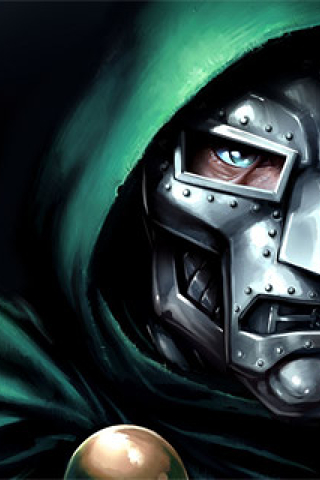
Victor von Doom
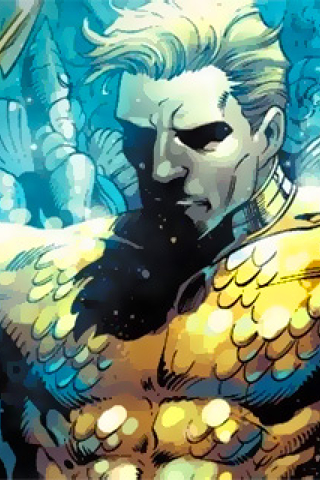
Orin
TACTICAL VERDICT: Aquaman triumphs with an estimated 62% win probability. The primary decider was the stark differential in martial combat execution (80 vs 64).
Aquaman dictates early tempo, utilizing superior speed and reflexes (79 vs 17) to evade initial advances and land decisive precision strikes.
Aquaman counters with devastating offensive potency (100 Power rating), breaking through A-Bomb's forward defensive perimeter.
Exploiting an opening in the late exchanges, Aquaman's elite martial execution (80 Combat) overwhelms A-Bomb, landing the closing blow to claim the battle.