
COMICBOOKSTOCKEXCHANGE.COM·
UTC LIVE TIMEDEAL RADAR
MARKET CLOCKS
HOME OFFICEHOME OFFICE--:--
NYSENew York--:--
LSELondon--:--
JPX / NIKKEITokyo--:--
DFM / ADXDubai--:--
WORLD / UTC--:--
Jock
DC·Future State·Superman of Metropolis·#1·Postmodern Age·ID-3563135
Empirical cash settlement intelligence, cross-grade elasticity curve, and secondary liquidation velocity.
Empirical step multipliers between adjacent condition tiers. Pinpoints the exponential premium transition and capital efficiency frontier.
Realized turnover cadence and capital absorption depth across certified auction comps.
Capital Math Ground Truth: $88.00 all-in slabbing hurdle + $5.56 raw acquisition stacks the breakeven cost basis at $93.56. Anything cleared above $93.56 is an operational win; anything under is a capital loss. At current 9.8 market pricing of $33.46, slabbing this book raw incurs a -$60.10 (-64%) operational drag against the $88 grading hurdle—signaling that collectors should hold raw copies rather than speculatively slabbing. Furthermore, falling to a 9.6 drops to ~$11.71 (an immediate ~$81.85 / ~87% loss on capital spent). PRE-SCREEN PROTOCOL: Savvy traders deploy a $9.00 Pre-Screen threshold (+$9.00 pro-rated freight = $18.00 total reject exposure). If CGC grades it a 9.6, the book is rejected raw, saving $40+ in wasted encapsulation costs and protecting portfolio cash. This high-stakes grading asymmetry is why the asset commands a disciplined hold (market equilibrium) rating.
Secondary transaction volume currently records top comps at $38.48 across a disciplined 50-copy census. Because secondary realized comps remain below the full slabbing cost hurdle ($93.56), institutional liquidity favors holding raw copies until secondary market demand catches up with physical production costs.
Macro tailwinds—including cinematic adaptation cycles for Silver Surfer, generational collector reverence, and tight 50-slab registered census float—support sustained institutional demand over a 3-year investment horizon.
Autonomous institutional strategies, financial equilibrium, scarcity modeling, and algorithmic risk profiling.
Market operates purely on organic buyer and seller auction discovery. Zero artificial price interventions or emergency liquidity halts on record.
Verified historical transaction line with quarterly equilibrium baseline anchor.
Understand how physical sales, invested dollars, and liquidity friction divide across grades.
Completed market sales by grade
Relative market value allocation
Estimated execution friction
Bibliographic provenance, creator credits, historical significance, and multimedia documentation.
Simulate head-to-head clashes between this issue's lead hero, villains, rival factions, superpowers, or historic places.
Simulate authentic head-to-head clashes between People (Superheroes & Supervillains), Gadgets, Abilities, or Places.

Richard Milhouse Jones
Richard Milhouse Jones
TACTICAL VERDICT: A-Bomb triumphs with an estimated 50% win probability. Both contenders demonstrated elite parity, with the margin of victory secured through tactical conditioning and superior durability recovery.
Both combatants exchange lightning opening volleys with near-identical operational reflexes, neither yielding ground in the opening clash.
An apocalyptic kinetic collision rocks the arena as A-Bomb and A-Bomb's signature arsenals collide in a deadlocked shockwave.
In the grueling war of attrition, A-Bomb's supreme hand-to-hand discipline (64 Combat) and endurance (80 Durability) break A-Bomb's posture, securing a definitive victory.
? (interviewer)
John Timms
John Timms
Gabe Eltaeb
typeset
Jamie S. Rich
Home of Superman, Batman, Wonder Woman, and the Justice League.
Deconstructionist storytelling. Trade-first publishing. Creator prestige over character IP.
Value driven by creator reputation and adaptation potential rather than print scarcity.
Inspectable mathematical proof, blockchain/ledger provenance, data integrity validation, and asset taxonomy.
The recovery of third-party encapsulation and grading expenditures when an asset is acquired at a discount below the physical cost of replacement grading fees, shipping, and insurance.
The Metropolis of Tomorrow Metropolis is at war: entrepreneur and inventor Andrej Trojan kicked Lex Luthor out of the city, then created a new technology, called Brain Cells, and started to control people with nanotechnology. He started the Free Republic of Metropolis, and with his zealots he raised war inside the city. When the United States Army came to fight back, Trojan left, with his followers, and the mess, remaining to collide with soldiers. The city is a battlefield, and in this battlefield a child screams in terror. This sound is something that will always make Superman come, no matter who Superman right now is. And so Jon Kent, Superman of Metropolis, comes in aid of the child, stopping both the zealots and the Army, not siding with anyone but with peace. But he is questioned by the Army general standing there: why he still refuses to destroy Brain Cells, the dangerous technology that is ruling Metropolis right now? The answer the Army does not know is that this creature has a bond with both Jon and Kara Zor-El, Supergirl. In his first adventure as the new Superman, he and Kara fought against Brainiac, in what was his final performance. As they defeated him, Trojan got some of Brainiac genetic material: his skin. And with it, he created this mysterious creature, who lives and thinks and acts of her own will. Jon does not want to destroy Brain Cells also because he has a plan: he will bring it out of Metropolis, so that its control on several people in the city will wane. Dragging it away, it will make also the Army leave Metropolis: all they want is to put their hands on Brain Cells, to turn him into a resource for the government. While he escapes with Brain Cells, the creature asks him why they don't just expel the Army from the city: they have the power to do so. But then he tells Jon he knows why: he's just a human with a bit of Kryptonian blood inside. He will never be able to defend Metropolis like his father, or Kara, did. They are, after all, full-blooded Kryptonians. With a surprising move though, Jon activates Operation Glass Houses: a flock of Kelexes appears, shrinking and bottling the whole city of Metropolis thanks to revived Kandor tech. Superman hopes the others will understand why he did this. The Fortress of Solitude While he's in the Fortress of Solitude, Brain Cells questions him: would the original Superman bottle his city? Would he leave his citizens without explanations? Jon will never be his father. But Superman does not care about Brain Cells' opinion: he turned Metropolis into a circuit, depriving humans of their humanity by installing in their body nanotech to control them. The machine tells him he does not want to control, but to give people confidence, something Jon lacks. Then, Supergirl comes inside the fortress: she found out Metropolis disappeared, and she went on a rampage, destroying all of Trojan's bases around the world. Only to speak with the Us Army and find out Superman was the one who moved the city away, bottling it. She really wants to teach Jon some lessons, and she also tells him he will hand Brain Cells over to the Army once they arrive here. Kara's attitude is strange: she is aggressive, far mor aggressive than usual. And she starts talking about her being superior, given she is a full-blooded Kryptonian. It's too late: Brain Cells uses Nirodhium inside his living chips, installed inside other beings. This material, just like Kryptonite, has particular effects on Kryptonian with a pure genetic heritage. And now Kara is controlled by Brain Cells, and on full-assault mode. As they move out of the Fortress, the Army sent a flock of Kryptonite-shooting drones, so things got even worse. The battle starts, and while he fights Jon tries to explain him why he did this: Metropolis was in crisis. The people could not trust the government, could not trust the zealots of Trojan and, suddenly, weren't able to trust Jon and Kara as well. And after seeing a child in the middle of a conflict between the Army and Brain Cells, he had to do something to buy enough time. But deep inside himself, Jon understood he made a wrong choice: taking freedom away from innocents is never the right solution. As an invisible ship of the Army appears, Jon and Kara stop from battling, and go to secure Metropolis, but once inside, Brain Cells absorbed the city unto himself. He is a descendant of Brainiac after all. And after striking Kara down with Nirodhium, he reveals Jon he manipulated him into shrinking Metropolis down, to take it as warranty for survival. And the ship was not of the Army, but something Brain Cells built for himself. He now contains Metropolis and all the people inside him, and can thank Jon for it.
Valuation parity across physical collectible manifestations for Future State: Superman of Metropolis #1.
CGC, CBCS, PSA Universal certified high-grade specimens (9.8 / 9.6 / 9.4). The gold standard for institutional alternative investment.
Official witnessed creator-signed slabs (Yellow label). Valued based on creator historical stature and inscription provenance.
Certified specimens from landmark historical collections (Edgar Church / Mile High, White Mountain, Kansas City, Pacific Coast).
Original newsstand barcode distribution copies. Extremely scarce in high grade due to newsstand rack wear and unsold return pulping.
Regional price test market copies (Canadian 75¢/95¢ variants, Marvel 30¢/35¢ test variants). Highly coveted micro-population rarities.
Exclusively allocated copies requiring retailer orders of 1:25, 1:50, 1:100, or 1:500 standard copies. Immediate manufactured scarcity.
Unslabbed collector copies inspected under standard Overstreet physical guidelines. The primary pool for grading arbitrage.
Alternative artistic interpretations, virgin covers, metal foil, and convention exclusives with dedicated collector followings.
Standard specialty comic shop printings sold through non-returnable distribution. The baseline circulation foundation.
Green label copies with significant manufacturing flaws, unwitnessed signatures, or missing coupons that do not affect the main story.
Purple label copies with professional or amateur color touch, tear seals, piece fill, or spine rebuilds.
Blue/Grey label copies treated exclusively with archival preservation techniques (leaf-casting, rice paper tear reinforcement, solvent wash).
Official second, third, or later printings released to satisfy secondary market sellouts. Distinct cover art and trade dress.
International editions licensed by La Prensa (Mexico), Editora Abril (Brazil), Panini (Europe), or Titan (UK).
Certified printing oddities (missing foil, inverted interior, double covers, foil color error). Unique curiosity pieces.
Advance promotional black-and-white booklets, ashcans created to secure trademark rights, and preview giveaways.
Each cover variant, retailer incentive, and subsequent printing represents an independent atomic tradeable instrument with unique supply elasticity, barcode registration, and secondary market demand.
? (interviewer)
?, typeset
In the future, Jon Kent tries to keep Metropolis from falling under the control of an artificial intelligence by shrinking the city and storing it in a bottle in the Fortress of Solitude. This results in a confrontation with Supergirl, who disagrees with Jon's actions.
Investigating the glass barrier surrounding Metropolis, Shilo Norman is attacked by killer robots.
The Manhattan Guardian tries to calm the citizens of Metropolis, who are panicking because of their city being surrounded by a glass barrier. When Jimmy Olsen is kidnapped, Guardian sets out to track down Honest Mary, who is trying to influence the public by using her brand of honesty.
Interview with John Ridley about Future State: The Next Batman (DC, 2021 series).
Simulate authentic head-to-head clashes between People (Superheroes & Supervillains), Gadgets, Abilities, or Places.
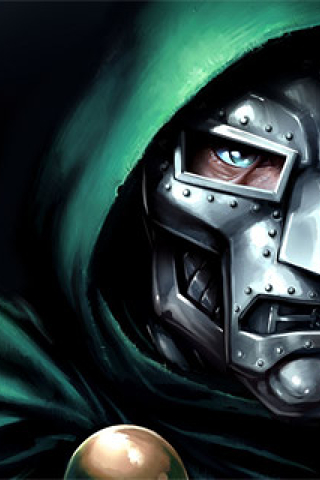
Victor von Doom
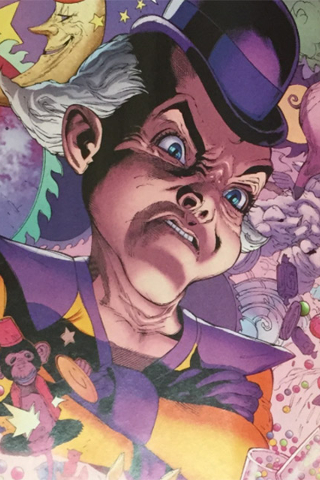
Mr. Mxyzptlk
TACTICAL VERDICT: Abe Sapien triumphs with an estimated 58% win probability. The primary decider was the stark differential in martial combat execution (85 vs 64).
Abe Sapien dictates early tempo, utilizing superior speed and reflexes (35 vs 17) to evade initial advances and land decisive precision strikes.
An apocalyptic kinetic collision rocks the arena as A-Bomb and Abe Sapien's signature arsenals collide in a deadlocked shockwave.
Exploiting an opening in the late exchanges, Abe Sapien's elite martial execution (85 Combat) overwhelms A-Bomb, landing the closing blow to claim the battle.