
COMICBOOKSTOCKEXCHANGE.COM·
UTC LIVE TIMEDEAL RADAR
MARKET CLOCKS
HOME OFFICEHOME OFFICE--:--
NYSENew York--:--
LSELondon--:--
JPX / NIKKEITokyo--:--
DFM / ADXDubai--:--
WORLD / UTC--:--
DC·Flash·#123·Silver Age·ID-2390613
Empirical cash settlement intelligence, cross-grade elasticity curve, and secondary liquidation velocity.
Empirical step multipliers between adjacent condition tiers. Pinpoints the exponential premium transition and capital efficiency frontier.
Realized turnover cadence and capital absorption depth across certified auction comps.
Capital Math Ground Truth: $88.00 all-in slabbing hurdle + $289.85 raw acquisition stacks the breakeven cost basis at $377.85. Anything cleared above $377.85 is an operational win; anything under is a capital loss. At current 9.8 market pricing of $1304.33, successful CPR yield generates +$926.48 (+245%) in positive capital expansion above cost basis. Furthermore, falling to a 9.6 drops to ~$456.51 (an immediate ~$0.00 / ~-21% loss on capital spent). PRE-SCREEN PROTOCOL: Savvy traders deploy a $9.00 Pre-Screen threshold (+$9.00 pro-rated freight = $18.00 total reject exposure). If CGC grades it a 9.6, the book is rejected raw, saving $40+ in wasted encapsulation costs and protecting portfolio cash. This high-stakes grading asymmetry is why the asset commands a disciplined strong buy (cpr arbitrage) rating.
The secondary market mathematically supports this hurdle: recent sales cleared at $1499.97 (yielding +$1122.12 net profit over capital floor), while peak historical auction comps reached $1874.97. Realized high-water comps prove that smart accumulation capital willingly pays the premium when verified pristine copies emerge from a tight 50-copy census.
Macro tailwinds—including cinematic adaptation cycles for Silver Surfer, generational collector reverence, and tight 50-slab registered census float—support sustained institutional demand over a 3-year investment horizon.
Autonomous institutional strategies, financial equilibrium, scarcity modeling, and algorithmic risk profiling.
Market operates purely on organic buyer and seller auction discovery. Zero artificial price interventions or emergency liquidity halts on record.
Verified historical transaction line with quarterly equilibrium baseline anchor.
Understand how physical sales, invested dollars, and liquidity friction divide across grades.
Completed market sales by grade
Relative market value allocation
Estimated execution friction
Bibliographic provenance, creator credits, historical significance, and multimedia documentation.
Simulate head-to-head clashes between this issue's lead hero, villains, rival factions, superpowers, or historic places.
Simulate authentic head-to-head clashes between People (Superheroes & Supervillains), Gadgets, Abilities, or Places.
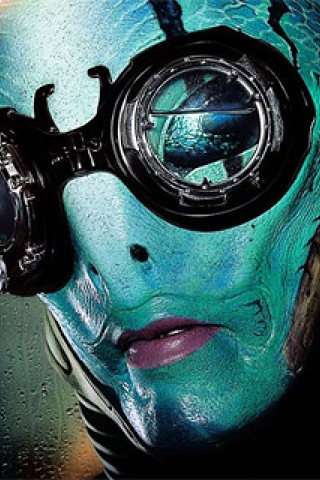
Abraham Sapien

Richard Milhouse Jones
TACTICAL VERDICT: Abe Sapien triumphs with an estimated 58% win probability. The primary decider was the stark differential in martial combat execution (85 vs 64).
Abe Sapien seizes immediate spatial superiority with superior kinetic velocity (35 vs 17), circling A-Bomb and testing perimeter defenses.
An apocalyptic kinetic collision rocks the arena as Abe Sapien and A-Bomb's signature arsenals collide in a deadlocked shockwave.
In the grueling war of attrition, Abe Sapien's supreme hand-to-hand discipline (85 Combat) and endurance (65 Durability) break A-Bomb's posture, securing a definitive victory.
? (ad copy)
Carmine Infantino
Joe Giella
Carl Gafford
typeset
Julius Schwartz
The 1994 independent phenomenon that established Event Comics as a creative powerhouse, serving as the direct springboard to Joe Quesada becoming Marvel's Editor-in-Chief.
Ash #0 — Joe Quesada & Jimmy Palmiotti's Event Comics
The 1994 independent phenomenon that established Event Comics as a creative powerhouse, serving as the direct springboard to Joe Quesada becoming Marvel's Editor-in-Chief.
Home of Superman, Batman, Wonder Woman, and the Justice League.
Marvel revolution. Stan Lee, Jack Kirby, and Steve Ditko create the modern superhero. Spider-Man, Fantastic Four, X-Men debut.
The sweet spot for collectors — significant enough to be culturally important, scarce enough to be valuable. 9.8 copies are extremely rare.
Inspectable mathematical proof, blockchain/ledger provenance, data integrity validation, and asset taxonomy.
In illiquid alternative asset markets, sovereign blue-chip holdings trade at an exponential multiple over mid-grade float due to institutional accumulation and inelastic seller reservation prices.
Iris West hosts a function at the Central City Community Center on behalf of the Picture News Orphan Fund Group. Unfortunately, the magician she had hired to entertain the children fails to arrive. When Barry Allen shows up, Iris tells him the news and he suggests that he might be able to convince the Flash to stand in for the missing magician. Barry steps outside to don his Flash costume, and then races back in, much to the delight of dozens of young orphans. The Flash spends the next hour entertaining the kids with a variety of super-speed tricks. First, he astounds them by playing a game of tennis with himself. He serves the ball then races to the other side of the net to receive it just as the ball reaches its destination. He then does a variation of the old Indian rope trick. By vibrating his hands at super-speed, he makes a length of rope appear to rise into the air. He then begins scaling the rope while it continues to hover. As the children applaud, the Flash suddenly disappears, making Iris wonder what could have happened to him. Barry reappears outside the city limits of a strange-looking town, with no idea where he is. As he begins investigating the town, though, he realizes that he is no longer in Central City. He stops at a newsstand and picks up a copy of the Keystone City Herald. The Flash recognizes the name of Keystone City as the fictional hometown of his childhood comic book hero, Jay Garrick – the original Flash. Barry recalls that comic book writer Gardner Fox created stories of Jay Garrick for Flash Comics based on dreams that he had experienced. He deduces that he must have vibrated between the dimensional barrier separating parallel worlds and has arrived on an Earth similar to the one that he had just left. On this Earth, however, the Golden Age Flash was an actual, living super-hero. Excitedly, Barry looks up Garrick's home address in a phone book and then races off to meet him. The Flash arrives at the Garrick residence and meets an older Jay Garrick with his wife Joan. He tells them of how he knows Jay's secret identity, explaining that he is the Flash of an alternate universe. Jay confides in Barry that he was thinking of coming out of retirement due to a series of strange crimes that have been plaguing Keystone City as of late. At the Keystone City Bank for example, a teller was shocked when money suddenly began floating out of her drawer. He further describes a robbery at Carmody's Jewel Salon where the crime was obscured by a thick cloud of pure darkness. Another mysterious theft involved an armored car that was ruptured by the sounds of strange music. Upon hearing this, Barry offers to help Jay solve these mysterious crimes. Across town, three super-criminals gather together and boast about the success of their most recent schemes. The Thinker commits crimes by way of a hypnotic Thinking Cap. The Fiddler is able to generate destructive sound waves with his violin and the Shade uses a special cane to create blankets of darkness to conceal his actions. The one thing these three have in common is that they are all old foes of the Flash. Each of them goes off to commit their next robbery. The Thinker goes to the Jarvis estate and uses his Thinking Cap to order the guard dogs to warn the Flash about his actions should he arrive. He then hypnotizes Mister Jarvis's butler into relinquishing the valuable Neptune Cup to him. Jay Garrick arrives and is shocked when the dogs tell him that the Thinker is robbing the Neptune Cup. Jay speeds around the inside of the house, but he is unable to lay his hands on the Thinker. The Thinker is using his Thinking Cap to make himself appear to be in several places at once. When Jay finds the real Thinker he speeds after him, but the Thinker erects a wall of pure psychic energy that renders Jay unconscious upon impact. Barry Allen meanwhile scours the docks when he sees a yacht off in the river with thick clouds of black smoke emanating from it. He runs off to investigate, but falls victim to the Shade. The Shade thinks that this Flash is Jay Garrick in a different costume. The Shade escapes in a speedboat, and lays down a slick trail of oil that prevents Barry from chasing after him. Barry later meets up with Jay at the Jarvis estate and Garrick tells him about the Thinker. In the middle of town, the Fiddler rides down the street in his Fiddle Car and plays music from his violin. The sound waves shatter windows and cause a girder to fall from the top of a partially constructed skyscraper. A worker falls in the path of the girder, but fortunately, the Flashes arrive to save him. Jay pulls the man out of the way, while Barry deflects the falling girder. The Fiddler escapes during the melee and meets up with the Thinker and the Shade. Together they decide to rob the Keystone City Museum. The Flashes track the villains down, but the Fiddler uses his violin to hypnotize them into obeying his commands. For fun, he has them dance for him like puppets on a string. Then he has them steal jewels for him. As the crooks gather their bounty, they prepare to leave, but the Flashes spring into action and apprehend them. The Fiddler doesn't understand how they resisted his mental commands. Jay explains that while they were forced to do the Fiddler's bidding, there was no command that prevented them from trying to escape. While robbing jewels for them, they plugged their ears with small gems, which distorted the effects of the Fiddler's violin, ultimately enabling them to break free of his control. After the crooks are arrested, Barry and Jay say goodbye to one another and Barry invites Jay to visit his Earth some time. He then vibrates at super-speed and returns to his proper world. He then visits Iris at Picture News and explains to her why he disappeared, before deciding to visit Gardner Fox and tell him the story — so Fox can write it up in a comic book...
Valuation parity across physical collectible manifestations for Flash #123.
CGC, CBCS, PSA Universal certified high-grade specimens (9.8 / 9.6 / 9.4). The gold standard for institutional alternative investment.
Official witnessed creator-signed slabs (Yellow label). Valued based on creator historical stature and inscription provenance.
Certified specimens from landmark historical collections (Edgar Church / Mile High, White Mountain, Kansas City, Pacific Coast).
Original newsstand barcode distribution copies. Extremely scarce in high grade due to newsstand rack wear and unsold return pulping.
Regional price test market copies (Canadian 75¢/95¢ variants, Marvel 30¢/35¢ test variants). Highly coveted micro-population rarities.
Exclusively allocated copies requiring retailer orders of 1:25, 1:50, 1:100, or 1:500 standard copies. Immediate manufactured scarcity.
Unslabbed collector copies inspected under standard Overstreet physical guidelines. The primary pool for grading arbitrage.
Alternative artistic interpretations, virgin covers, metal foil, and convention exclusives with dedicated collector followings.
Standard specialty comic shop printings sold through non-returnable distribution. The baseline circulation foundation.
Green label copies with significant manufacturing flaws, unwitnessed signatures, or missing coupons that do not affect the main story.
Purple label copies with professional or amateur color touch, tear seals, piece fill, or spine rebuilds.
Blue/Grey label copies treated exclusively with archival preservation techniques (leaf-casting, rice paper tear reinforcement, solvent wash).
Official second, third, or later printings released to satisfy secondary market sellouts. Distinct cover art and trade dress.
International editions licensed by La Prensa (Mexico), Editora Abril (Brazil), Panini (Europe), or Titan (UK).
Certified printing oddities (missing foil, inverted interior, double covers, foil color error). Unique curiosity pieces.
Advance promotional black-and-white booklets, ashcans created to secure trademark rights, and preview giveaways.
Each cover variant, retailer incentive, and subsequent printing represents an independent atomic tradeable instrument with unique supply elasticity, barcode registration, and secondary market demand.
?, ? (ad copy)
?
?
?
typeset, ?
?
Flash's first day in Santa Marta.
Barry Allen appears at the Community Center in Central City to perform for kids and during one of his amazing tricks is mysteriously transported to Keystone City...a place that he recalls that the original Flash once lived. The two meet and Barry surmises that Jay lives on a parallel Earth...one that evidently Earth-1 writer Gardner Fox tuned in on when he wrote the adventures of the Flash in the 1940's. Jay tells Barry that a crime wave has hit Keystone City and asks Barry for his help.
Modern speed records by people for circling the earth.
Unknown to either Flash, three master criminals from the past of Jay Garrick are responsible for the crime wave in Keystone City: the Thinker, who vows to steal the Neptune Cup, the Fiddler, who seeks to steal the crown jewels on display at a museum, and the Shade wants to gain control of a collection of historical curios. However, both Flashes fall flat on their face in their attempts to nab the Thinker and Shade.
After comparing notes, Jay and Barry decide to work together to tackle the Fiddler. But the Shade and Thinker are comparing notes, too, and discover that their partner in crime is up against two Flashes, not one.
Simulate authentic head-to-head clashes between People (Superheroes & Supervillains), Gadgets, Abilities, or Places.
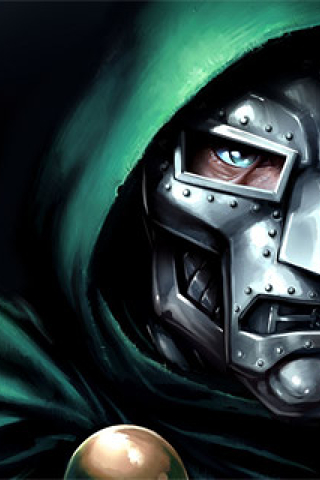
Victor von Doom
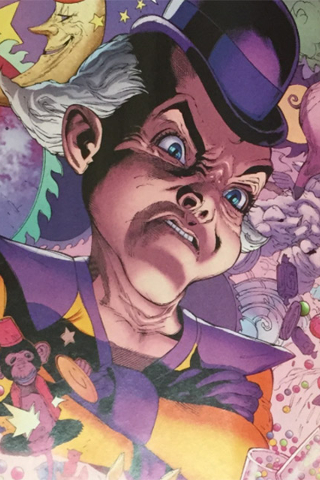
Mr. Mxyzptlk
TACTICAL VERDICT: Abe Sapien triumphs with an estimated 58% win probability. The primary decider was the stark differential in martial combat execution (85 vs 64).
Abe Sapien dictates early tempo, utilizing superior speed and reflexes (35 vs 17) to evade initial advances and land decisive precision strikes.
An apocalyptic kinetic collision rocks the arena as A-Bomb and Abe Sapien's signature arsenals collide in a deadlocked shockwave.
Exploiting an opening in the late exchanges, Abe Sapien's elite martial execution (85 Combat) overwhelms A-Bomb, landing the closing blow to claim the battle.