COMICBOOKSTOCKEXCHANGE.COM·
UTC LIVE TIMEDEAL RADAR
MARKET CLOCKS
HOME OFFICEHOME OFFICE--:--
NYSENew York--:--
LSELondon--:--
JPX / NIKKEITokyo--:--
DFM / ADXDubai--:--
WORLD / UTC--:--
DC·Green Lantern·#18·Silver Age·ID-2355386
| Grade | Census & Float Distribution | Role | FMV | Total Value | Multiple |
|---|---|---|---|---|---|
| 9.8 | 1 of 225 slabs (0.4%) | SOV | $6,216.17 | $6,216.17 | (128.2x) |
| 9.6 | 1 of 225 slabs (0.4%) | $4,197.15 | $4,197.15 | (86.5x) | |
| 9.4 | 8 of 225 slabs (3.6%) | $1,325.00 | $10,600.00 | (27.3x) | |
| 9.2 | 11 of 225 slabs (4.9%) | $388.38 | $4,272.18 | (8.0x) | |
| 9.0 | 16 of 225 slabs (7.1%) | $361.51 | $5,784.16 | (7.5x) | |
| 7.0 | 18 of 225 slabs (8.0%) | ANC | $195.25 | $3,514.50 | (4.0x) |
| RAW | 249,775 ungraded (250,000 printed − 225 graded) | RAW | $48.50 | $12,114,087.50 | (1.0x Base) |
Underlying: CGC 7.0 (Liquid Center) · Spot $195.25 · Model IV 37.2% · Open Contracts: 0
| Calls (Right to Buy 1 Copy) | Strike | Puts (Right to Sell 1 Copy) | ||||||||
|---|---|---|---|---|---|---|---|---|---|---|
| OCC Contract | Premium | Intr / Time | IV · Δ | Θ/d · ν | Strike $ | OCC Contract | Premium | Intr / Time | IV · Δ | Θ/d · ν |
| GL18-261218C155 | $40.69 | $40.25 + $0.44 | 42.7% · 0.99 | -0.03 · 0.02 | $155.00 | GL18-261218P155 | $0.10 | $0.00 + $0.10 | 42.7% · -0.01 | -0.01 · 0.02 |
| GL18-261218C175 | $21.80 | $20.25 + $1.55 | 39.2% · 0.88 | -0.10 · 0.10 | $175.00 | GL18-261218P175 | $1.16 | $0.00 + $1.16 | 39.2% · -0.12 | -0.08 · 0.10 |
| GL18-261218C185 | $13.77 | $10.25 + $3.52 | 38.0% · 0.74 | -0.14 · 0.16 | $185.00 | GL18-261218P185 | $3.12 | $0.00 + $3.12 | 38.0% · -0.26 | -0.13 · 0.16 |
| GL18-261218C195 | $7.61 | $0.25 + $7.36 | 37.2% · 0.53 | -0.17 · 0.19 | $195.00ATM | GL18-261218P195 | $6.93 | $0.00 + $6.93 | 37.2% · -0.47 | -0.15 · 0.19 |
| GL18-261218C210 | $2.34 | $0.00 + $2.34 | 36.5% · 0.23 | -0.12 · 0.15 | $210.00 | GL18-261218P210 | $16.63 | $14.75 + $1.88 | 36.5% · -0.77 | -0.10 · 0.15 |
| GL18-261218C230 | $0.29 | $0.00 + $0.29 | 36.2% · 0.04 | -0.04 · 0.04 | $230.00 | GL18-261218P230 | $34.75 | $34.75 + $0.00 | 36.2% · -0.96 | -0.01 · 0.04 |
Empirical cash settlement intelligence, cross-grade elasticity curve, and secondary liquidation velocity.
Empirical step multipliers between adjacent condition tiers. Pinpoints the exponential premium transition and capital efficiency frontier.
Realized turnover cadence and capital absorption depth across certified auction comps.
Autonomous institutional strategies, financial equilibrium, scarcity modeling, and algorithmic risk profiling.
Market operates purely on organic buyer and seller auction discovery. Zero artificial price interventions or emergency liquidity halts on record.
Verified historical transaction line with quarterly equilibrium baseline anchor.
Understand how physical sales, invested dollars, and liquidity friction divide across grades.
Completed market sales by grade
Relative market value allocation
Estimated execution friction
Bibliographic provenance, creator credits, historical significance, and multimedia documentation.
John Broome
Gil Kane
Joe Giella
?; typeset
Julius Schwartz
Home of Superman, Batman, Wonder Woman, and the Justice League.
Marvel revolution. Stan Lee, Jack Kirby, and Steve Ditko create the modern superhero. Spider-Man, Fantastic Four, X-Men debut.
The sweet spot for collectors — significant enough to be culturally important, scarce enough to be valuable. 9.8 copies are extremely rare.
Silver Age (1956–1970) — the era that redefined the superhero genre. Scientific themes, moral complexity, and Stan Lee's Marvel revolution define this period. High-grade copies command aggressive premiums.
Inspectable mathematical proof, blockchain/ledger provenance, data integrity validation, and asset taxonomy.
In illiquid alternative asset markets, sovereign blue-chip holdings trade at an exponential multiple over mid-grade float due to institutional accumulation and inelastic seller reservation prices.
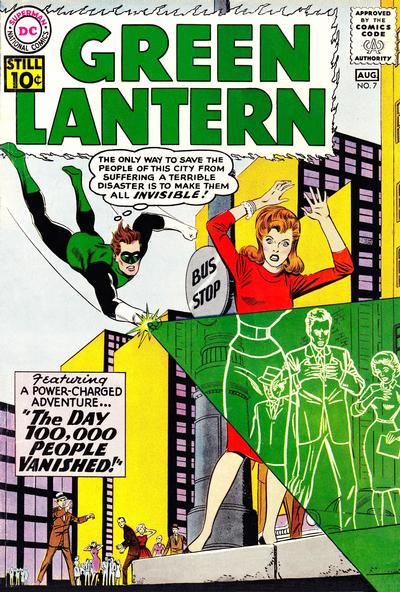
Believeing he is losing control over his power ring when everybody at the Ferris Aircraft Company is frozen still, Green Lantern throws off his power ring. Suddenly Sinestro appears and takes the ring and transports the powerless Green Lantern to Qward. He explains that he got out his last imprisonment by using hypnosis to make Hal believe that Sinestro was trapped, he had since returned to Qward to continue his attempt at being voted the most evil person on Qward. With his plot revealed, Green Lantern suddenly has a power ring appear, and explains that he believed Sinestro was up to something and the ring he had thrown down was a duplicate ring and that the real one was hiding around the whole time. After a brief battle, Hal uses his power ring to shrink Sinestro in size and seal him in a cube. Returning to Earth he restores everyone to normal and tells Pieface about his adventure.
Strict algorithmic segregation separating clean single-issue Cover A sales from multi-issue lot bundles, retailer exclusives, and foreign variants.
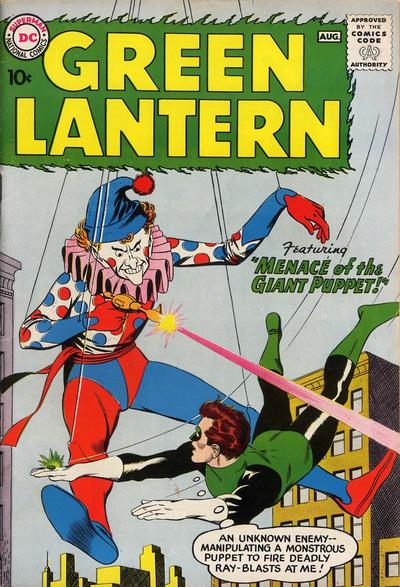
Green Lantern #1
9.4
$50,787.50
9.6
—
9.4
$50,787.50
RAW
$609.00
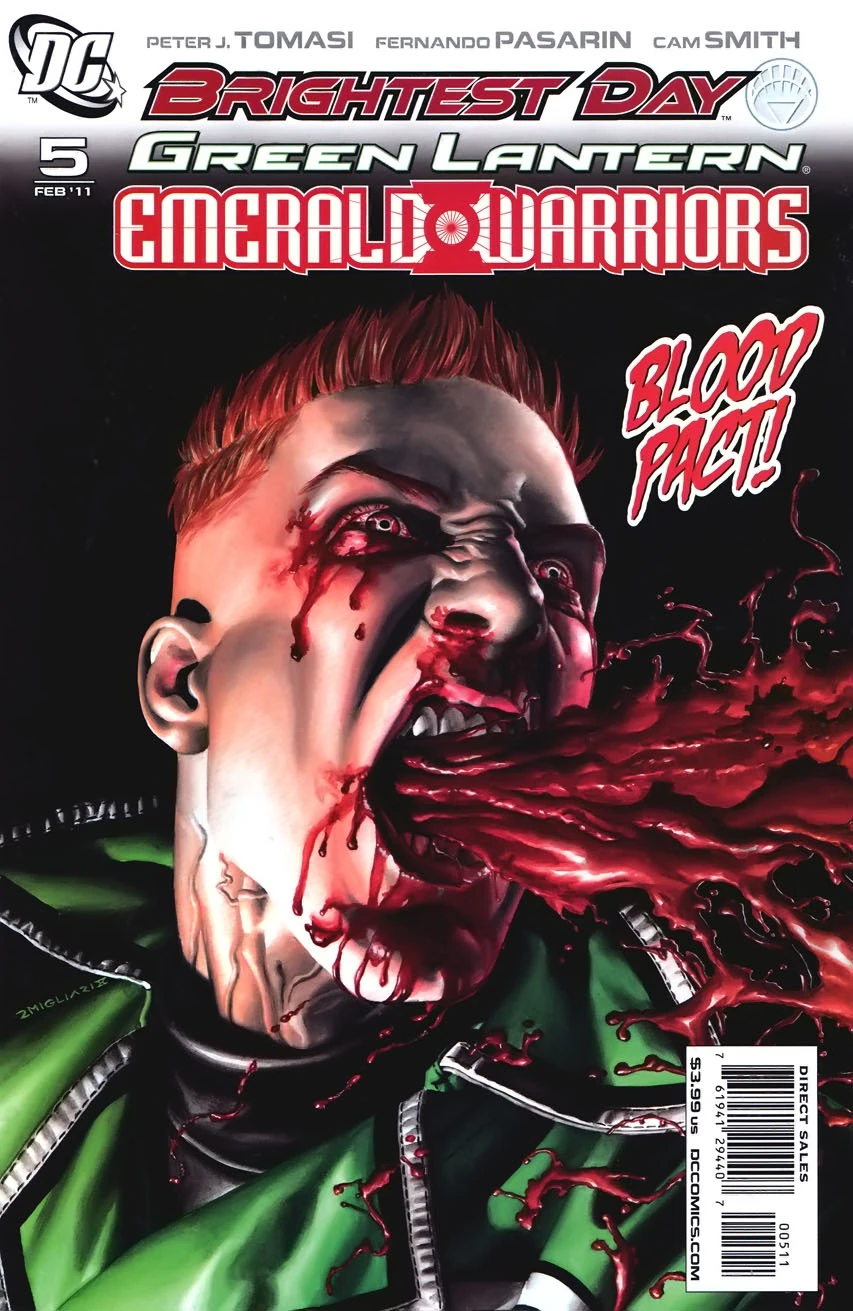
Green Lantern #59
9.8
$13,511.76
9.6
$2,684.00
9.4
$1,805.02
RAW
$191.62

Green Lantern #16
9.6
$12,810.00
9.6
$12,810.00
9.4
$6,405.00
RAW
$144.20
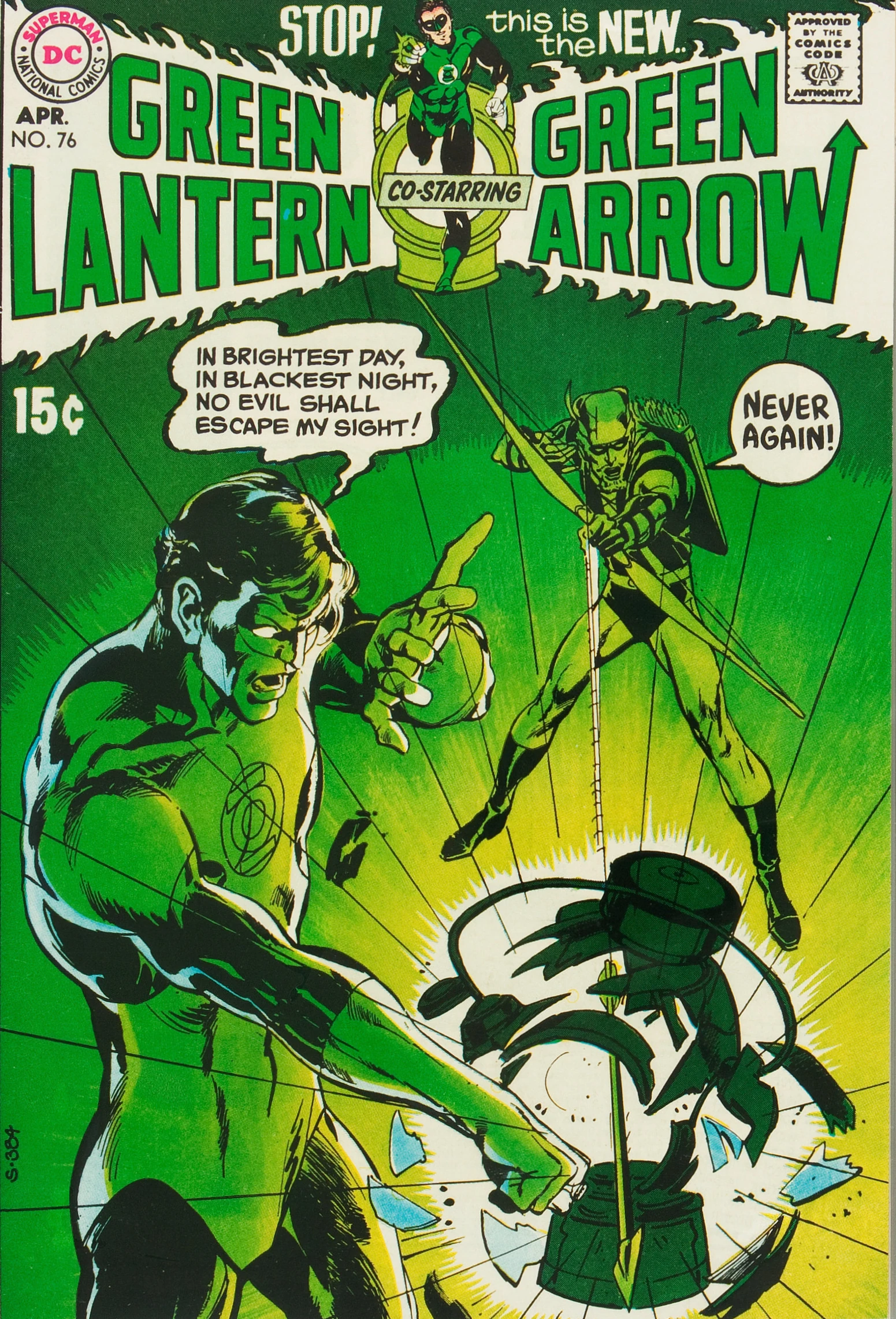
Green Lantern #76
9.8
$12,256.68
9.6
$11,400.00
9.4
$2,614.00
RAW
$236.63

Green Lantern #21
9.8
$6,900.00
9.6
$2,318.00
9.4
$1,140.01
RAW
$35.21
In their last encounter, Sinestro implanted a telepathic command into Hal Jordan's mind, which causes him to release Sinestro from his imprisonment. Sinestro then transports Hal to Qward for a battle, where Hal tricks him into thinking he no longer has his Green Lantern Ring and then imprisons Sinestro again.
Stan learns that his favorite football player also enjoys the fine arts.
During a series of distance control tests, Bill Baggett finds Hal Jordan's ring and uses it for destruction before Hal overcomes him through willpower and regains the ring.
Peter Pike's a rich but unassuming businessman who usually lets his board of directors make the major decisions. He leaves on vacation to revel in his true passion: having his employees dress up as a pirate crew and pretend to raid his own company buildings (so technically doing nothing illegal). His employees plan to kill Pike and keep the spoils for themselves, but have to deal with Alan Scott so he doesn't construct a radio transmission apparatus that might let Pike call for help. As Alan Scott and Doiby drive down a coastal road to where he's supposed to get to work on this new project, the pirate ship attacks the cab. Alan changes to Green Lantern and routes the pirates, but is taken out when a coconut falls and bonks him on the head. They try to locate the crew, but Pike's ship can transform from an ordinary yacht to a pirate ship and back, and the crew take advantage of this ability to shake the heroes. Eventually, the mutinous crew spring their trap on Pike, only for it to turn out two of their number are Green Lantern and Doiby in disguise. In trying to join in the fight, Pike accidentally drops the mast on Green Lantern. Fortunately, the villains were already defeated by then. Pike turns his pretend pirate ship into a vessel for disadvantaged kids to take play tours on, and has learned confidence from his ordeal. After all, he whooped Green Lantern!
Published quarterly by Jolaine Publications, Inc. This issue's Johnny Double character is no relation to the later character to go by that name. Also appearing in this issue of Green Lantern was: Mutt & Jeff*, by Al Smith