COMICBOOKSTOCKEXCHANGE.COM·
UTC LIVE TIMEDEAL RADAR
MARKET CLOCKS
HOME OFFICEHOME OFFICE--:--
NYSENew York--:--
LSELondon--:--
JPX / NIKKEITokyo--:--
DFM / ADXDubai--:--
WORLD / UTC--:--
DC·Green Lantern·#29·Silver Age·ID-2355424
| Grade | Census & Float Distribution | Role | FMV | Total Value | Multiple |
|---|---|---|---|---|---|
| 9.8 | 1 of 338 slabs (0.3%) | SOV | $4,035.68 | $4,035.68 | (134.5x) |
| 9.6 | 14 of 338 slabs (4.1%) | $2,090.00 | $29,260.00 | (69.7x) | |
| 9.4 | 14 of 338 slabs (4.1%) | $1,500.00 | $21,000.00 | (50.0x) | |
| 9.2 | 7 of 338 slabs (2.1%) | $500.00 | $3,500.00 | (16.7x) | |
| 9.0 | 33 of 338 slabs (9.8%) | ANC | $476.83 | $15,735.39 | (15.9x) |
| RAW | 249,662 ungraded (250,000 printed − 338 graded) | RAW | $30.00 | $7,489,860.00 | (1.0x Base) |
Assumes raw copies grade like the copies already in the CGC census (which skews to copies owners chose to submit). Fees: CGC Vintage tier by graded value ($30–$105, 4% above $1,000), insured shipping shared across 10 books; pre-screen reject $14; eBay 13.25%. Not financial advice.
Underlying: CGC 9.0 (Liquid Center) · Spot $476.83 · Model IV 37.1% · Open Contracts: 0
| Calls (Right to Buy 1 Copy) | Strike | Puts (Right to Sell 1 Copy) | ||||||||
|---|---|---|---|---|---|---|---|---|---|---|
| OCC Contract | Premium | Intr / Time | IV · Δ | Θ/d · ν | Strike $ | OCC Contract | Premium | Intr / Time | IV · Δ | Θ/d · ν |
| GL29-261218C380 | $97.92 | $96.83 + $1.09 | 42.5% · 0.99 | -0.07 · 0.04 | $380.00 | GL29-261218P380 | $0.26 | $0.00 + $0.26 | 42.5% · -0.01 | -0.04 · 0.04 |
| GL29-261218C430 | $50.96 | $46.83 + $4.13 | 39.0% · 0.87 | -0.25 · 0.25 | $430.00 | GL29-261218P430 | $3.18 | $0.00 + $3.18 | 39.0% · -0.13 | -0.21 · 0.25 |
| GL29-261218C450 | $34.95 | $26.83 + $8.12 | 38.1% · 0.75 | -0.35 · 0.38 | $450.00 | GL29-261218P450 | $7.13 | $0.00 + $7.13 | 38.1% · -0.25 | -0.30 · 0.38 |
| GL29-261218C480 | $16.72 | $0.00 + $16.72 | 37.1% · 0.50 | -0.41 · 0.48 | $480.00ATM | GL29-261218P480 | $18.83 | $3.17 + $15.66 | 37.1% · -0.50 | -0.36 · 0.48 |
| GL29-261218C500 | $8.99 | $0.00 + $8.99 | 36.7% · 0.33 | -0.36 · 0.43 | $500.00 | GL29-261218P500 | $31.06 | $23.17 + $7.89 | 36.7% · -0.67 | -0.31 · 0.43 |
| GL29-261218C520 | $4.36 | $0.00 + $4.36 | 36.4% · 0.19 | -0.26 · 0.32 | $520.00 | GL29-261218P520 | $46.38 | $43.17 + $3.21 | 36.4% · -0.81 | -0.22 · 0.32 |
| GL29-261218C570 | $0.48 | $0.00 + $0.48 | 36.3% · 0.03 | -0.06 · 0.08 | $570.00 | GL29-261218P570 | $93.17 | $93.17 + $0.00 | 36.3% · -0.97 | -0.01 · 0.08 |
Empirical cash settlement intelligence, cross-grade elasticity curve, and secondary liquidation velocity.
Empirical step multipliers between adjacent condition tiers. Pinpoints the exponential premium transition and capital efficiency frontier.
Realized turnover cadence and capital absorption depth across certified auction comps.
Autonomous institutional strategies, financial equilibrium, scarcity modeling, and algorithmic risk profiling.
Market operates purely on organic buyer and seller auction discovery. Zero artificial price interventions or emergency liquidity halts on record.
Verified historical transaction line with quarterly equilibrium baseline anchor.
Understand how physical sales, invested dollars, and liquidity friction divide across grades.
Completed market sales by grade
Relative market value allocation
Estimated execution friction
Bibliographic provenance, creator credits, historical significance, and multimedia documentation.
John Broome
Gil Kane
Sid Greene
Gaspar Saladino
Julius Schwartz
Home of Superman, Batman, Wonder Woman, and the Justice League.
Marvel revolution. Stan Lee, Jack Kirby, and Steve Ditko create the modern superhero. Spider-Man, Fantastic Four, X-Men debut.
The sweet spot for collectors — significant enough to be culturally important, scarce enough to be valuable. 9.8 copies are extremely rare.
Silver Age (1956–1970) — the era that redefined the superhero genre. Scientific themes, moral complexity, and Stan Lee's Marvel revolution define this period. High-grade copies command aggressive premiums.
Inspectable mathematical proof, blockchain/ledger provenance, data integrity validation, and asset taxonomy.
In illiquid alternative asset markets, sovereign blue-chip holdings trade at an exponential multiple over mid-grade float due to institutional accumulation and inelastic seller reservation prices.
As Green Lantern busts up various crimes, William Hand is on the scene to absorb ambient energy from his power ring in order to power a device which William intends to use to send Green Lantern to another dimension. Taking on the costumed identity of Black Hand, William issues a challenge to the Green Lantern by contacting him directly through his power ring. Meeting the challenge, Green Lantern is shocked when Black Hand begins making his body transport to another dimension, however he stops the process about half way by freezing the devices control knob with his power ring. A battle rages across the city, but Green Lantern is unable to defeat his foe because he is only half as powerful, allowing Black Hand to get away. When he crashes in on a banquet hosted by his brothers, Black Hand reveals his true identity to them and boasts over his superiority. Suddenly, Green Lantern arrives, apparently whole and is able to defeat Black Hand. Revealing that it was a hoax and that he used his power ring and a mirror to make the illusion that he was whole again. Gaining control of Black Hand's Power Rod to restore himself before turning Black Hand over to the police.
Strict algorithmic segregation separating clean single-issue Cover A sales from multi-issue lot bundles, retailer exclusives, and foreign variants.
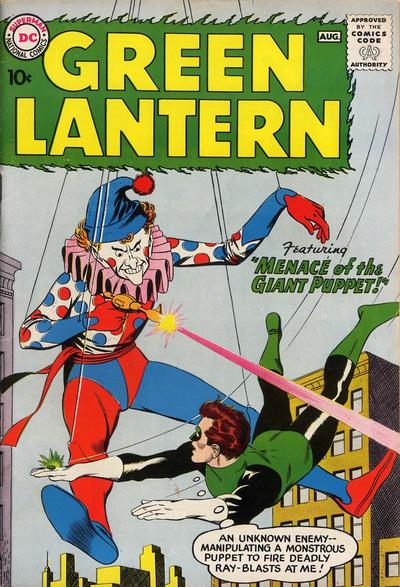
Green Lantern #1
9.4
$50,787.50
9.6
—
9.4
$50,787.50
RAW
$609.00
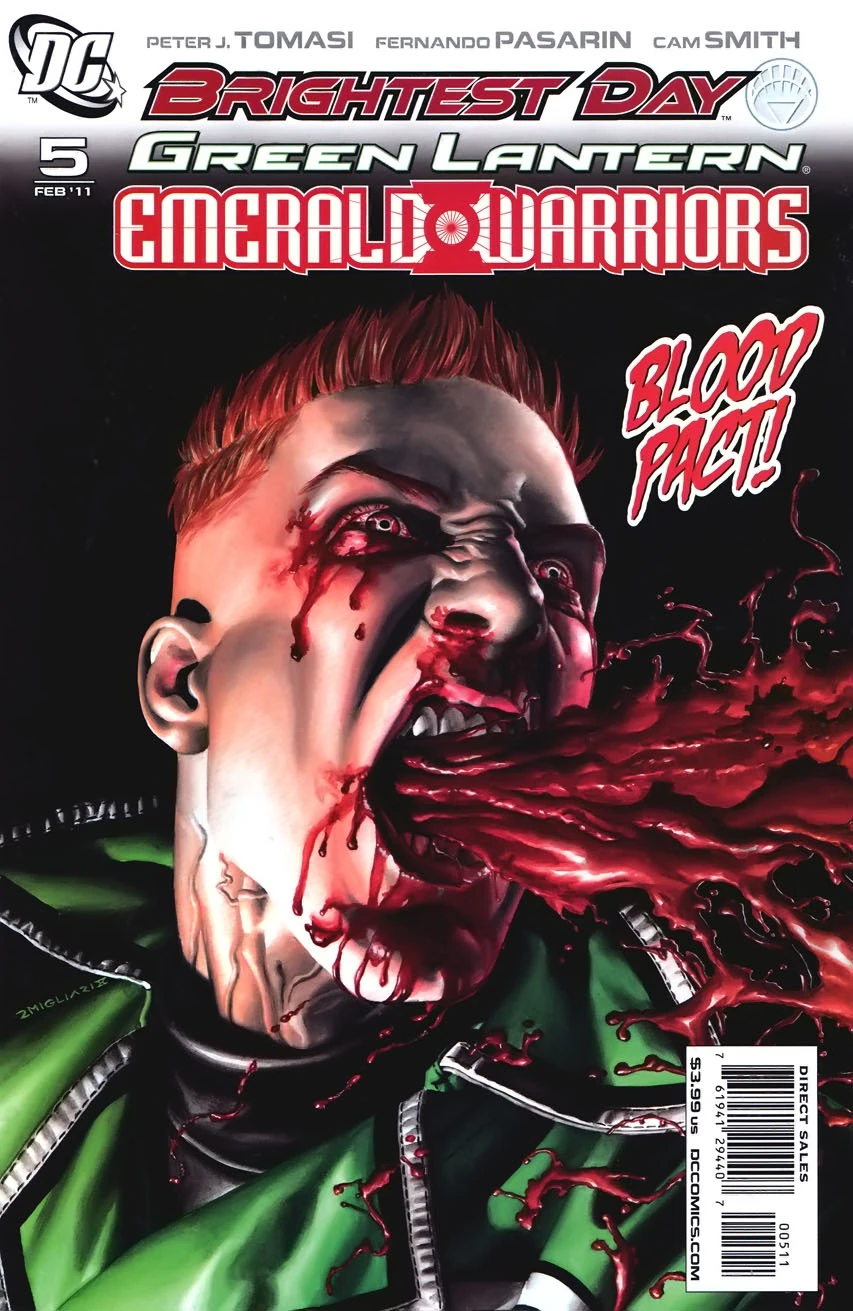
Green Lantern #59
9.8
$13,511.76
9.6
$2,684.00
9.4
$1,805.02
RAW
$191.62

Green Lantern #16
9.6
$12,810.00
9.6
$12,810.00
9.4
$6,405.00
RAW
$144.20
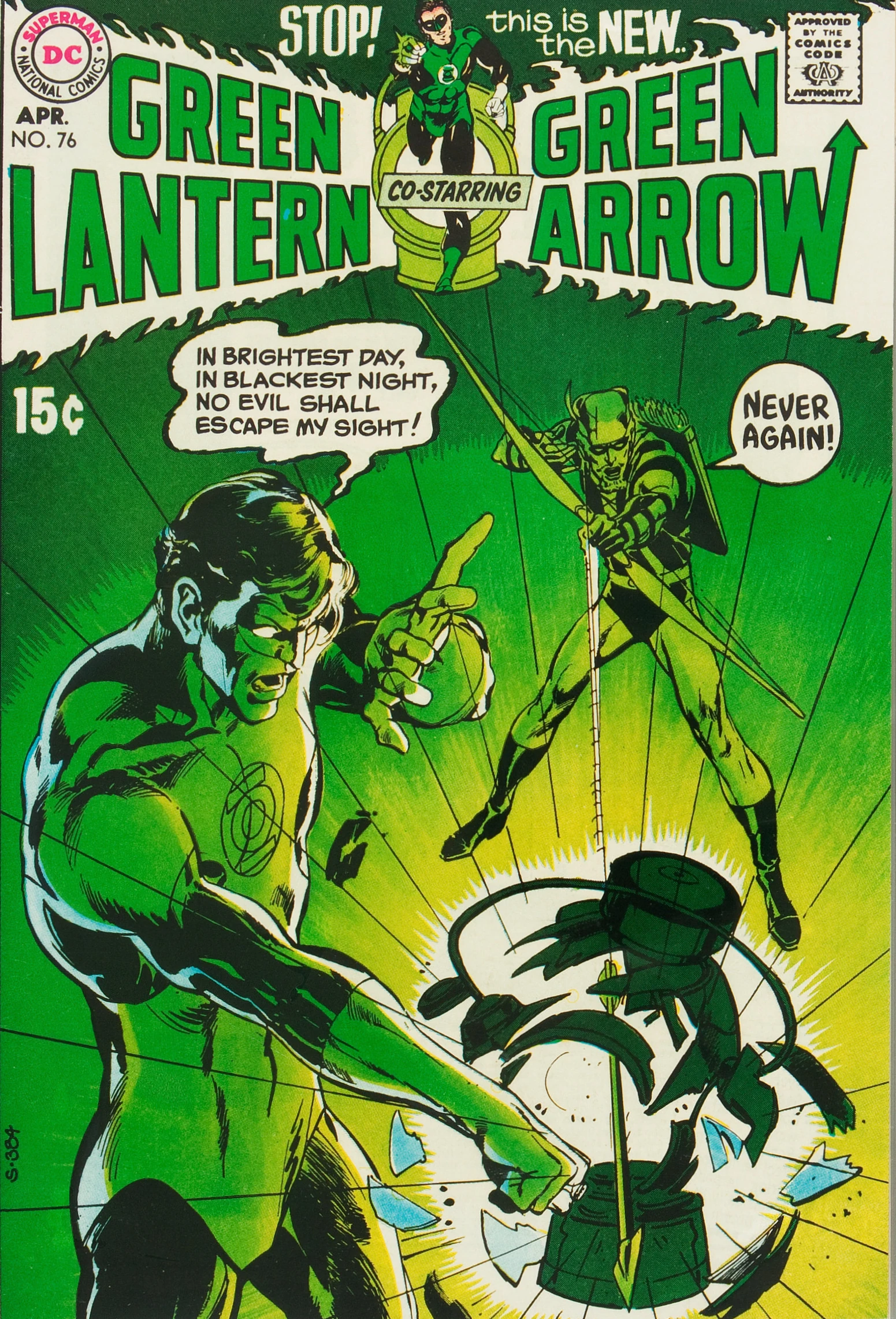
Green Lantern #76
9.8
$12,256.68
9.6
$11,400.00
9.4
$2,614.00
RAW
$236.63

Green Lantern #21
9.8
$6,900.00
9.6
$2,318.00
9.4
$1,140.01
RAW
$35.21
Black Hand has created a device to store Green Lantern's ring energy and tries to use that energy to imprison Green Lantern in another dimension.
A sentient Protonic Force which Green Lantern fought before comes to Earth to conquer the planet.
Alan Scott and Molly Mayne heatedly discuss the dynamic between their alter egos. Molly bets Alan dinner that the Harlequin will get Green Lantern to help her commit a crime before the end of the day. An old lady catches a ride in Doiby's cab, asks about the flare gun he uses to call Green Lantern, and fires it off against his wishes. A bank robbery turns out to be taking place not far from where Doiby stopped off, but when Green Lantern rescues the old lady from being run over by the gangsters' car, she drops her disguise and reveals herself as the Harlequin, with a valise actually full of stolen money. Which, she says, means that he helped her commit a crime. After freeing GL, the Harlequin drives through town with him, still cuffed, convincing everyone who sees them that the hero's gone bad. At her gang's windmill hideout, she refuses to let them kill Green Lantern, saying he loves her because she knows him better than anyone. Harlequin agrees to let them test this theory by leaving her tied to one of the arms of the windmill, sure that Green Lantern will save her.
Green Lantern goes along with the gang to commit a robbery, but they pistol-whip the hero and plan to empty their guns into him, not willing to take a chance on the Harlequin's infatuation. His protective powers saved Green Lantern from their surprise attack, and he easily captures them. He goes to save Harlequin only for the gangsters to tell him the windmill was rigged to explode if its wheel stopped spinning, and there's a terrific blast. Green Lantern had used his ring to launch the windmill into the sky where it exploded harmlessly. He delivers the gang and Harlequin to the police, restoring his reputation, but she escapes from her hospital suite, stalemating the pair again.
An all Harlequin-issue.