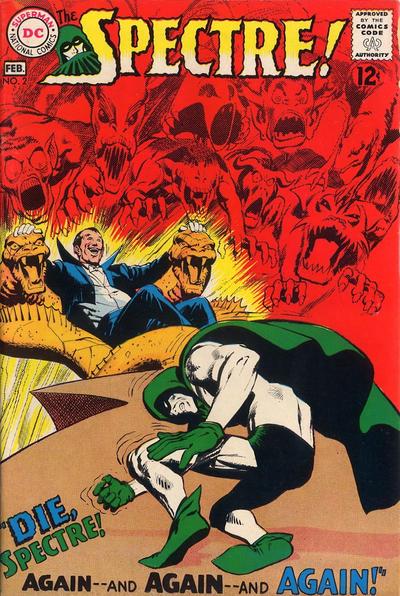
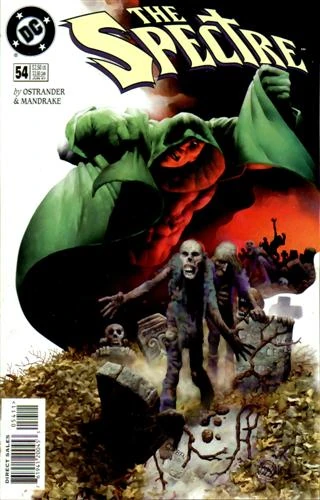
COMICBOOKSTOCKEXCHANGE.COM·
UTC LIVE TIMEDEAL RADAR
MARKET CLOCKS
HOME OFFICEHOME OFFICE--:--
NYSENew York--:--
LSELondon--:--
JPX / NIKKEITokyo--:--
DFM / ADXDubai--:--
WORLD / UTC--:--
Independent·Spectre·#7·Modern Age·ID-2419931
| Grade | Census & Float Distribution | Role | FMV | Total Value | Multiple |
|---|---|---|---|---|---|
| 9.8 | 4 of 4 slabs (100.0%) | SOV | $75.00 | $300.00 | (24.7x) |
| RAW | 124,996 ungraded (125,000 printed − 4 graded) | RAW | $3.04 | $379,987.84 | (1.0x Base) |
Empirical cash settlement intelligence, cross-grade elasticity curve, and secondary liquidation velocity.
Empirical step multipliers between adjacent condition tiers. Pinpoints the exponential premium transition and capital efficiency frontier.
Realized turnover cadence and capital absorption depth across certified auction comps.
Autonomous institutional strategies, financial equilibrium, scarcity modeling, and algorithmic risk profiling.
Market operates purely on organic buyer and seller auction discovery. Zero artificial price interventions or emergency liquidity halts on record.
Understand how physical sales, invested dollars, and liquidity friction divide across grades.
Historical price records
Relative market value allocation
Estimated execution friction
Bibliographic provenance, creator credits, historical significance, and multimedia documentation.
John Ostrander
Tom Mandrake
Tom Mandrake
Digital Chameleon
Todd Klein
Dan Raspler, Frank Pittarese
Publisher profile coming soon
Variant cover era. Trade paperback culture. Independent movement flourishes. Digital distribution begins.
Census-registered copies anchor pricing. First appearances of characters adapted to screen drive the market.
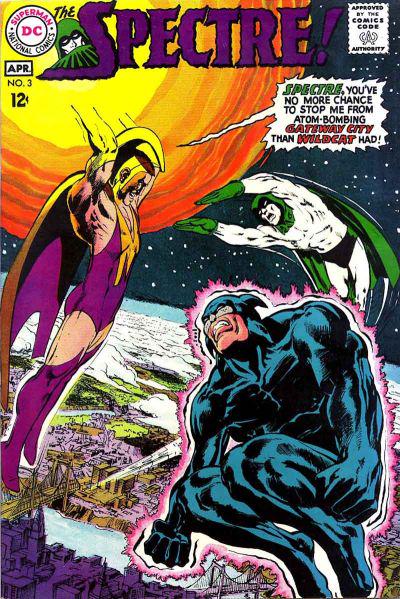
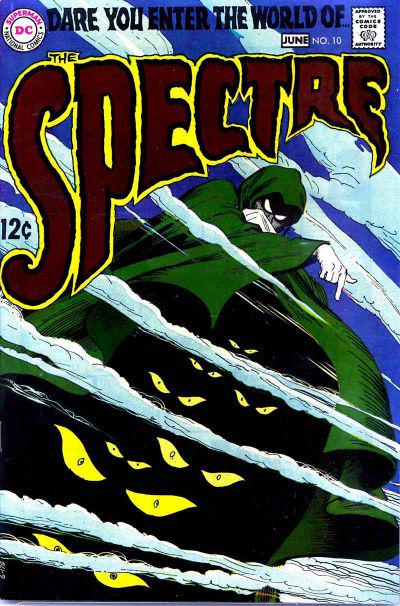
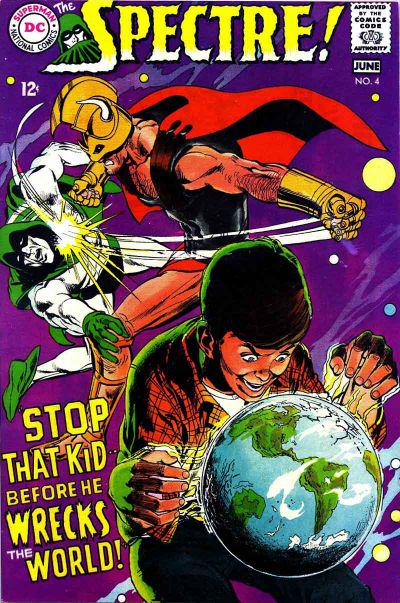
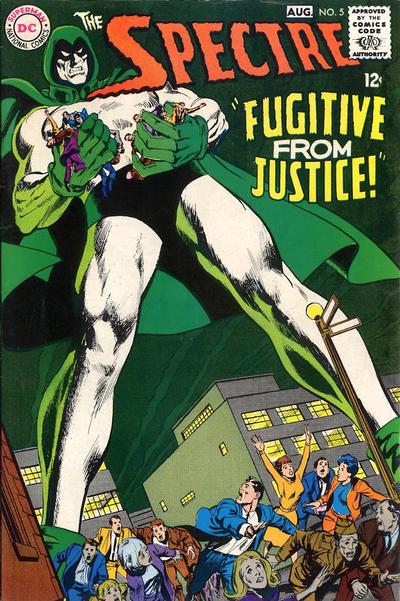


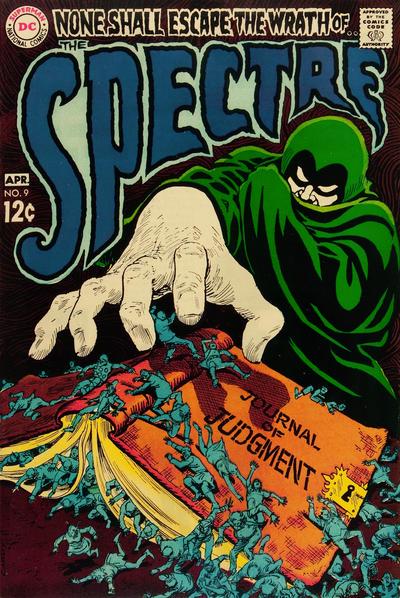
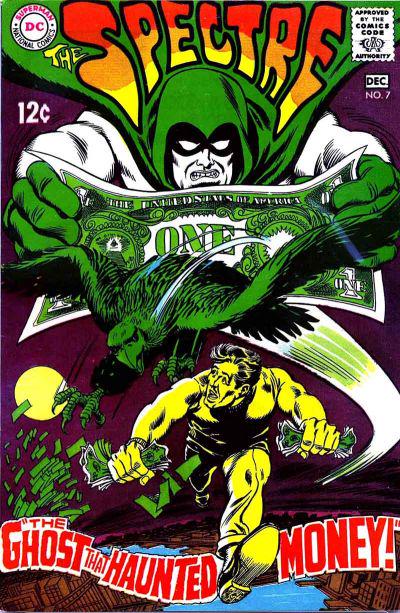

Modern Age (1992–present) — foil cover era, variant proliferation, and the independent movement. Strong narrative significance drives key issue demand. Census-registered copies anchor pricing.
Inspectable mathematical proof, blockchain/ledger provenance, data integrity validation, and asset taxonomy.
The recovery of third-party encapsulation and grading expenditures when an asset is acquired at a discount below the physical cost of replacement grading fees, shipping, and insurance.
Jim Corrigan, under Madame Xanadu's spell, is being chased by her "sendings." They toss him off the edge of a cliff and into the water. Nearby, Madame Xanadu walks through a medieval village with Amy Beitermann. She explains to Amy that she is just using a bit of magic; technically, they are still in the apartment. She explains that they're walking in the village where she grew up. It is a place that pre-dates Camelot. She then asks Amy to look into a pool of water so that she may understand why she needs her help in changing the world. While at the pool, it is revealed that Madame Xanadu was born into a matriarchal society that lived in harmony with the earth. When the world became more technically advanced and masculine, women lost their power and respect. Because of this, Madame Xanadu lost much of her power, and her powers were reduced to augury and divination. If she were able to access the Spectre's power, she would be able to restore the world that she knew. Amy is the key, because Amy is the focus and the key to the power the Spectre wields. Amy tells Madame Xanadu that she wants nothing to do with her plan. Never the less, Amy is already at the center of it. Corrigan, the Spectre, needs living people to act as his anchor to the mortal sphere; without human contact, the Spectre drifts away, becoming less human. At the same time, this human contact is what keeps Corrigan from achieving his own final rest. Amy continues to look into the pool and sees how Xanadu had gained some of the Spectre's power. It was when the Spectre first began to question his mission that he needed a refuge, a safe harbor. Xanadu created one for him. With the power that he gave to her, she formed some of the Spectre's dense protoplasm into a separate Jim Corrigan. She made him seem alive, even to himself. With more of the Spectre's power, she created the "sendings," which are portions of her own soul made palpable, to reinforce the illusion. As the spirit form, Kimmie, and as the physical form, Madame Xanadu, both natures of the Spectre fed her the tantric power by which she maintained the spell. As Madame Xanadu's is speaking her tale, Jim Corrigan crawls out of the water, still being chased by the monsters. Angered, Corrigan explains that, back then, he feel for Madame Xanadu's trap. She still believes that Corrigan should use his power to remake the world -- to cure the sick, to banish death itself. However, Corrigan explains when he is the Spectre, he doesn't fight death, he fights evil. Then, Madame Xanadu shows Amy her fate: she won't die of AIDS, but will be hacked to death in an alley. Nothing can prevent it, unless the world itself is changed. Madame Xanadu calls her sendings to her, and she takes in the power of the Spectre. She vows to reshape the world, but first, she will punish those who violate and destroy women. Jim Corrigan begins to fade away, but Amy agrees to help him find Madame Xanadu. Meanwhile, Madame Xanadu, now as the Spectre, punishes a pimp who was exploiting prostitutes. Next, she punishes a CEO whose company was poisoning the earth. The dying CEO points out that her goal was revenge, not justice; if her concern were pollution, she could have just used her power to clean it up, but it was more important to punish and release her anger. She then realizes that Corrigan has overtaken the body of the CEO. Corrigan tells Madame Xanadu that she will end up just like him if she continues to wield the power of the Spectre. With that, Madame Xanadu renounces the power. She tells Corrigan that he doesn't have to take back the Spectre's power, he may go to his final rest now. However, Corrigan insists on keeping the power so that he may help Amy avoid her fate. He reveals that he loves her. At Siegel-Bailey General Hospital, the Reaver enters the Medical Records room.
Madame Xanadu usurps the Spectre's power and uses it to enact revenge on those who harm women or the Earth. Corrigan convinces her that she has become a creature of rage and vengeance and she renounces the power, returning it to Corrigan. Also, Madame Xanadu shows Amy that her fate is not to die of AIDS, but to be stabbed to death in an alley.
Strict algorithmic segregation separating clean single-issue Cover A sales from multi-issue lot bundles, retailer exclusives, and foreign variants.
Spectre #3
9.8
$2,780.56
9.6
$204.00
9.4
$126.50
RAW
$21.50
Spectre #10
9.8
$1,998.09
9.6
$187.82
9.4
$159.00
RAW
$26.78
Spectre #4
9.8
$1,698.41
9.6
$265.50
9.4
$185.00
RAW
$17.80
Spectre #5
9.8
$1,560.00
9.6
$333.23
9.4
$159.00
RAW
$17.11
Spectre #8
9.8
$1,478.15
9.6
$327.49
9.4
$268.00
RAW
$18.21
A gunman, Frankie Barron, robs Gateway City Bank, but is shot by the security guard. In his dying breath, he says that he'll never let go of the money. Detective Corrigan investigates the scene, but doesn't see Frankie's ghost rise. Unable to physically hold the money, but still wanting it all, he causes any money withdrawn to fly back into the bank. At this point, Detective Corrigan's "Spectre senses" kick in and he notices the ghost. The ghost speeds off and comes to the conclusion that his ghost is sticking around becuase of his desire to heist the dough. He manages to hire men to help him with a night-time bank heist. It's up to the Spectre and Detective Corrigan to stop the robbery, and put the ghost to rest, but in order to do that, the Spectre will need to make Frankie hate money!
"The Ghost That Haunted Money!" is reprinted in Adventure Comics #501 and Showcase Presents: The Spectre Vol. 1 (Collected). "The Hour Hourman Died!" is reprinted in Justice League of America #91 and Crisis on Multiple Earths: The Team-Ups Vol. 1 (Collected).