
COMICBOOKSTOCKEXCHANGE.COM·
UTC LIVE TIMEDEAL RADAR
MARKET CLOCKS
HOME OFFICEHOME OFFICE--:--
NYSENew York--:--
LSELondon--:--
JPX / NIKKEITokyo--:--
DFM / ADXDubai--:--
WORLD / UTC--:--
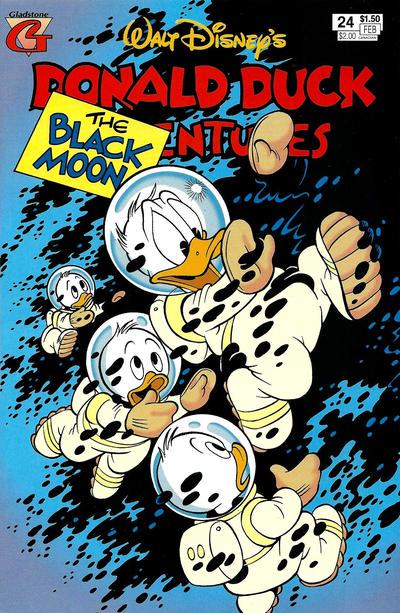
Gladstone·Walt Disney's Donald Duck Adventures·#24·Modern Age·ID-3393985
 DirectACTIVE
Empirical cash settlement intelligence, cross-grade elasticity curve, and secondary liquidation velocity.
Empirical step multipliers between adjacent condition tiers. Pinpoints the exponential premium transition and capital efficiency frontier.
Realized turnover cadence and capital absorption depth across certified auction comps.
Autonomous institutional strategies, financial equilibrium, scarcity modeling, and algorithmic risk profiling.
Market operates purely on organic buyer and seller auction discovery. Zero artificial price interventions or emergency liquidity halts on record.
Understand how physical sales, invested dollars, and liquidity friction divide across grades.
Historical price records
Relative market value allocation
Estimated execution friction
Bibliographic provenance, creator credits, historical significance, and multimedia documentation.
No narrative synopsis recorded in GCD for this sequence.
No creator data on record for this issue.
Gladstone is an indexed comic book publisher from the Modern Age tracked across the Panel Profits Sovereign Registry and CGC Census ledger.
Variant cover era. Trade paperback culture. Independent movement flourishes. Digital distribution begins.
Census-registered copies anchor pricing. First appearances of characters adapted to screen drive the market.

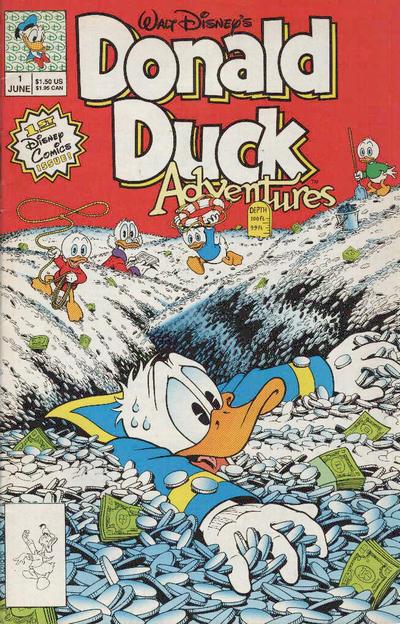


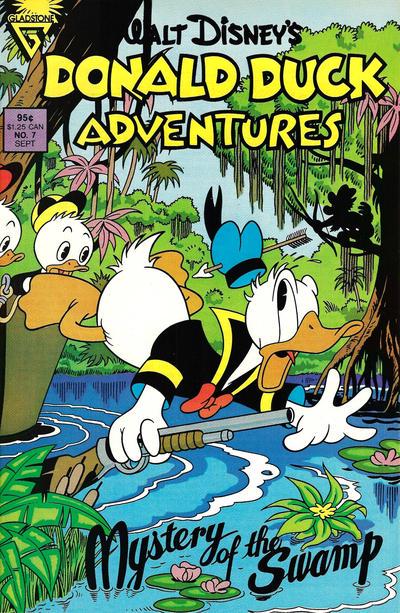

Modern Age (1992–present) — foil cover era, variant proliferation, and the independent movement. Strong narrative significance drives key issue demand. Census-registered copies anchor pricing.
Inspectable mathematical proof, blockchain/ledger provenance, data integrity validation, and asset taxonomy.
The recovery of third-party encapsulation and grading expenditures when an asset is acquired at a discount below the physical cost of replacement grading fees, shipping, and insurance.
Each cover variant, retailer incentive, and subsequent printing represents an independent atomic tradeable instrument with unique supply elasticity, barcode registration, and secondary market demand.
Strict algorithmic segregation separating clean single-issue Cover A sales from multi-issue lot bundles, retailer exclusives, and foreign variants.
Walt Disney's Donald Duck Adventures #35
9.8
$124.95
9.6
—
9.4
—
RAW
$4.03
Walt Disney's Donald Duck Adventures #1
9.8
$104.26
9.6
$58.83
9.4
$47.60
RAW
$6.14
Walt Disney's Donald Duck Adventures #14
9.8
$99.00
9.6
—
9.4
—
RAW
$7.99
Walt Disney's Donald Duck Adventures #1
9.8
$88.00
9.6
$42.00
9.4
—
RAW
$6.98
Walt Disney's Donald Duck Adventures #21
9.0
$55.00
9.6
—
9.4
—
RAW
$3.72
The Duck Who Never Was is a comic story written and drawn by Don Rosa. It features Donald Duck, the Birthday Genie, Gladstone Gander, Daisy Duck, Grandma Duck, Huey, Dewey and Louie Duck, Scrooge McDuck, Gyro Gearloose, the Little Helper, April, May and June and Daisy Duck as well as many of these characters' counterparts in the , including , the , , , the , the , the , , , , , , and .
Behind the Scenes: This story was written to celebrate Donald's 60th anniversary. It was first printed in 1994 in the German 60 Jahre Donald Duck. It was then printed in English in the British Mickey and Friends #1994-23, and finally in the U.S.A. in Donald Duck #286, where it was used as part of a frame story entitled The Birthday Boy. It was since reprinted in Walt Disney Treasures #2 and, of course, in the Don Rosa Library. The story follows the plot of the oft-spoofed movie by Frank Capra, ''It's A Wonderful Life''. In a nod to the film, the alternate Gladstone Gander and triplets both nearly quote the title of the movie, exclaiming “It's a marvelous life!” and “It's a swell life!” respectively, before, upon returning home, Donald himself finally says “One thing is certain, it's a wonderful life—” before being interrupted. The dystopian Duckburg of the Donaldless Continuum is partially inspired by the similar "grisly future" of Duckburg depicted twenty-four years earlier by Rosa and his friend Ray Foushee in their notorious comic (1970). The most obvious shared elements are the Beagle Boys having taken over the Duckburg justice system and becoming a vapid after selling the film rights to her diary.
• The story references The Golden Helmet (1952), with Donald nearly mentioning his previous tenure as a Duckburg Museum employee and his adventures involving the Old Viking Ship. • The alternate Gyro Gearloose's backstory seems to have diverged during the events that would have been Think Box Bollix (1952) had Donald been present. • The "square rocks" (really the eggs of the Square Chicken) are still in their museum casing in the alternate Duckburg's Museum; this only makes sense, as it was Donald Duck who originally discovered their true nature in Lost in the Andes (1949).

