
COMICBOOKSTOCKEXCHANGE.COM·
UTC LIVE TIMEDEAL RADAR
MARKET CLOCKS
HOME OFFICEHOME OFFICE--:--
NYSENew York--:--
LSELondon--:--
JPX / NIKKEITokyo--:--
DFM / ADXDubai--:--
WORLD / UTC--:--
Independent·Tales of the Green Hornet·#1·Modern Age·ID-8875137
 DirectACTIVE
Empirical cash settlement intelligence, cross-grade elasticity curve, and secondary liquidation velocity.
Empirical step multipliers between adjacent condition tiers. Pinpoints the exponential premium transition and capital efficiency frontier.
Realized turnover cadence and capital absorption depth across certified auction comps.
Autonomous institutional strategies, financial equilibrium, scarcity modeling, and algorithmic risk profiling.
Market operates purely on organic buyer and seller auction discovery. Zero artificial price interventions or emergency liquidity halts on record.
Understand how physical sales, invested dollars, and liquidity friction divide across grades.
Historical price records
Relative market value allocation
Estimated execution friction
Bibliographic provenance, creator credits, historical significance, and multimedia documentation.
No creator data on record for this issue.
Independent is an indexed comic book publisher from the Modern Age tracked across the Panel Profits Sovereign Registry and CGC Census ledger.
Variant cover era. Trade paperback culture. Independent movement flourishes. Digital distribution begins.
Census-registered copies anchor pricing. First appearances of characters adapted to screen drive the market.
Modern Age (1992–present) — foil cover era, variant proliferation, and the independent movement. Strong narrative significance drives key issue demand. Census-registered copies anchor pricing.
Tales of the Green Hornet #1
9.8
$71.18
9.6
—
9.4
—
RAW
$3.99
Tales of the Green Hornet #2
9.8
$59.56
9.6
—
9.4
—
RAW
$3.13
Tales of the Green Hornet #1
9.8
$42.19
9.6
—
9.4
—
RAW
$1.94
Inspectable mathematical proof, blockchain/ledger provenance, data integrity validation, and asset taxonomy.
The recovery of third-party encapsulation and grading expenditures when an asset is acquired at a discount below the physical cost of replacement grading fees, shipping, and insurance.
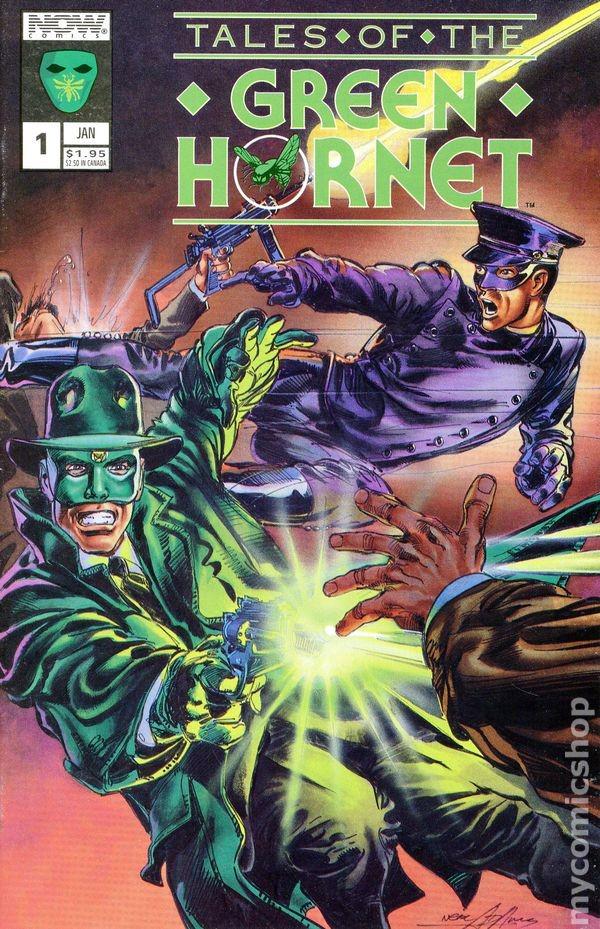
Sometime in the future, an aging Paul Reid reflects on family history, and the one incident that Britt I would not discuss, though a Sentinel front page clipping and his own journal documented it. 1936: A major, high society party attended by the city's most elite personages is revealed to be a devious trap set by Aaron Vanek, an escaped convict who blames them all for his conviction and five years of incarceration. The mansion is laden with incredible death traps, but among the invitees is Daily Sentinel publisher Britt Reid I, who manages to not only avoid traps, but to overpower one of Vanek's thugs as well. After seeing his date fall to her death, Britt takes the thug's revolver, hat and overcoat, and with an improvised mask, he becomes the Green Hornet. He makes his way to Vanek's control room, where the madman threatens to pull a lever and flood the entire house with poison gas. The Hornet stops Vanek in the only way available, by shooting him to death.
Each cover variant, retailer incentive, and subsequent printing represents an independent atomic tradeable instrument with unique supply elasticity, barcode registration, and secondary market demand.
Strict algorithmic segregation separating clean single-issue Cover A sales from multi-issue lot bundles, retailer exclusives, and foreign variants.
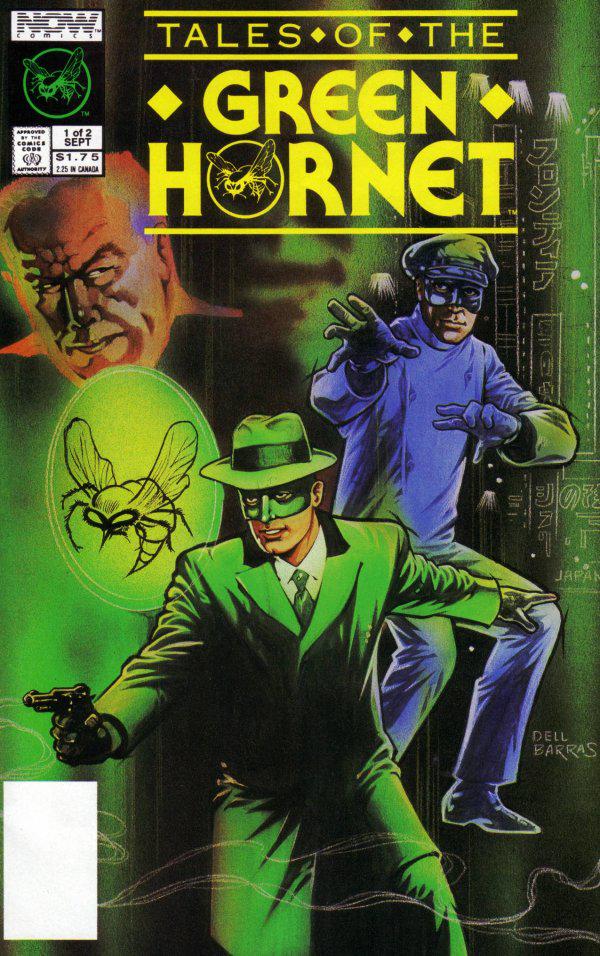
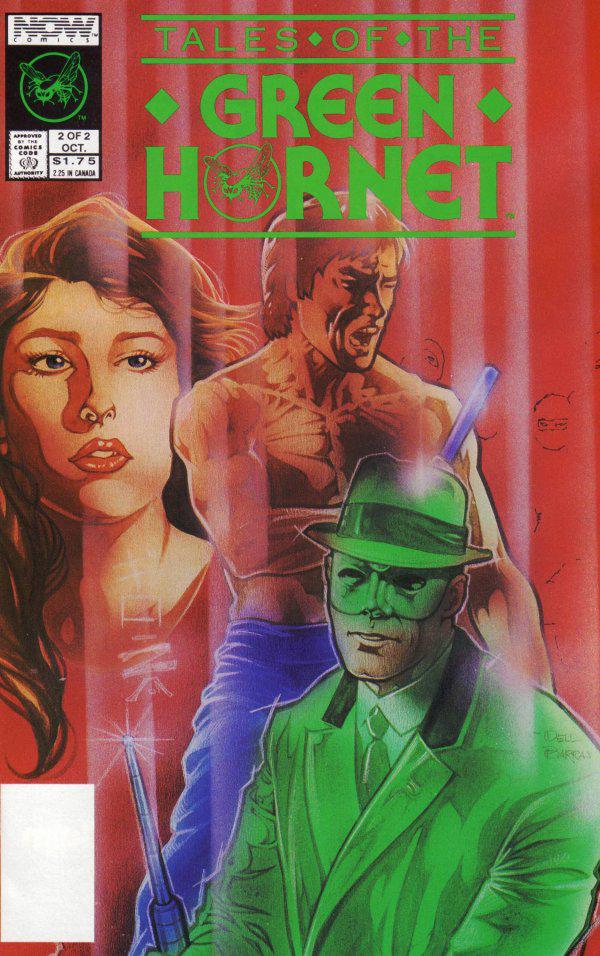
A symbolic splash page depicts the first Hornet-Kato team fighting criminals. An aging Britt II walks through the family library, stopping to look at a scrapbook, and specifically a preserved Daily Sentinel front page with a headline reading "PROTECTION RACKET MURDERS by Britt Reid." He remembers the story behind it. In 1934, Britt I began working as a crime reporter for the family-owned Daily Sentinel newspaper. A protection racket story leads to his interviewing a grocer about it, when a gun battle between two thug-carrying cars erupts in the street outside. The young man dives for cover, but the businessman freezes, and is killed by wild shots. In the street, Britt finds one of the cars wrecked, its occupants dead. A subsequent discussion with his father, Daniel, leads Britt to the conclusion that the police are incapable of cleaning up the city by themselves, and one man should be able to make a difference. Sometime later, three hoods attempt to kill Britt, who escapes by a combination of daring and luck, which includes their car wrecking and killing them. The attempt prompts Dan to take his wife and son on a long-considered trip to the Far East, to get Britt out of harm's way, at least for awhile. They find a sinister, Japanese undertone in Hong Kong. Then in Japan, a military air is apparent. Before they can leave the docks where they came ashore, the Reids spot a young man flailing about in the water, and Margaret says she saw him pushed in. Britt jumps in and saves the Japanese, who identifies himself as Ikano Kato, and pledges eternal servitude to his rescuers. By pretending to accept this, Britt keeps soldiers from taking Ikano into custody, but in subsequent, shipboard privacy is shocked to learn that the pledge was made in earnest, rather than merely as fast thinking to avoid arrest. Young Reid suggests a compromise, "Friends for life," which Ikano accepts. Kato then describes his challenging a speaker at a pro-imperialism rally and the resulting arrest and attempt on his life. At sea, Ikano describes his orphanage upbringing and his science and engineering education. While the Reid party is changing from ship to plane in Hawaii, someone slips a threatening note into Britt's pocket.
Sometime in the future, an aging Paul Reid reflects on family history, and the one incident that Britt I would not discuss, though a Sentinel front page clipping and his own journal documented it. 1936: A major, high society party attended by the city's most elite personages is revealed to be a devious trap set by Aaron Vanek, an escaped convict who blames them all for his conviction and five years of incarceration. The mansion is laden with incredible death traps, but among the invitees is Daily Sentinel publisher Britt Reid I, who manages to not only avoid traps, but to overpower one of Vanek's thugs as well. After seeing his date fall to her death, Britt takes the thug's revolver, hat and overcoat, and with an improvised mask, he becomes the Green Hornet. He makes his way to Vanek's control room, where the madman threatens to pull a lever and flood the entire house with poison gas. The Hornet stops Vanek in the only way available, by shooting him to death.
Listing of contemporaneous comics from NOW, followed by text announcements of Ron Fortier's return as writer of their regular Green Hornet series, and of Speed Racer voice artists Peter Fernandez and Corinne Orr's visit to NOW Comics' booth at a "licensing show in New York City."
Sometime in the future, an aging Paul Reid reflects on family history, and the one incident that Britt I would not discuss, though a Sentinel front page clipping and his own journal documented it. 1936: A major, high society party attended by the city's most elite personages is revealed to be a devious trap set by Aaron Vanek, an escaped convict who blames them all for his conviction and five years of incarceration. The mansion is laden with incredible death traps, but among the invitees is Daily Sentinel publisher Britt Reid I, who manages to not only avoid traps, but to overpower one of Vanek's thugs as well. After seeing his date fall to her death, Britt takes the thug's revolver, hat and overcoat, and with an improvised mask, he becomes the Green Hornet. He makes his way to Vanek's control room, where the madman threatens to pull a lever and flood the entire house with poison gas. The Hornet stops Vanek in the only way available, by shooting him to death.