COMICBOOKSTOCKEXCHANGE.COM·
UTC LIVE TIMEDEAL RADAR
MARKET CLOCKS
HOME OFFICEHOME OFFICE--:--
NYSENew York--:--
LSELondon--:--
JPX / NIKKEITokyo--:--
DFM / ADXDubai--:--
WORLD / UTC--:--
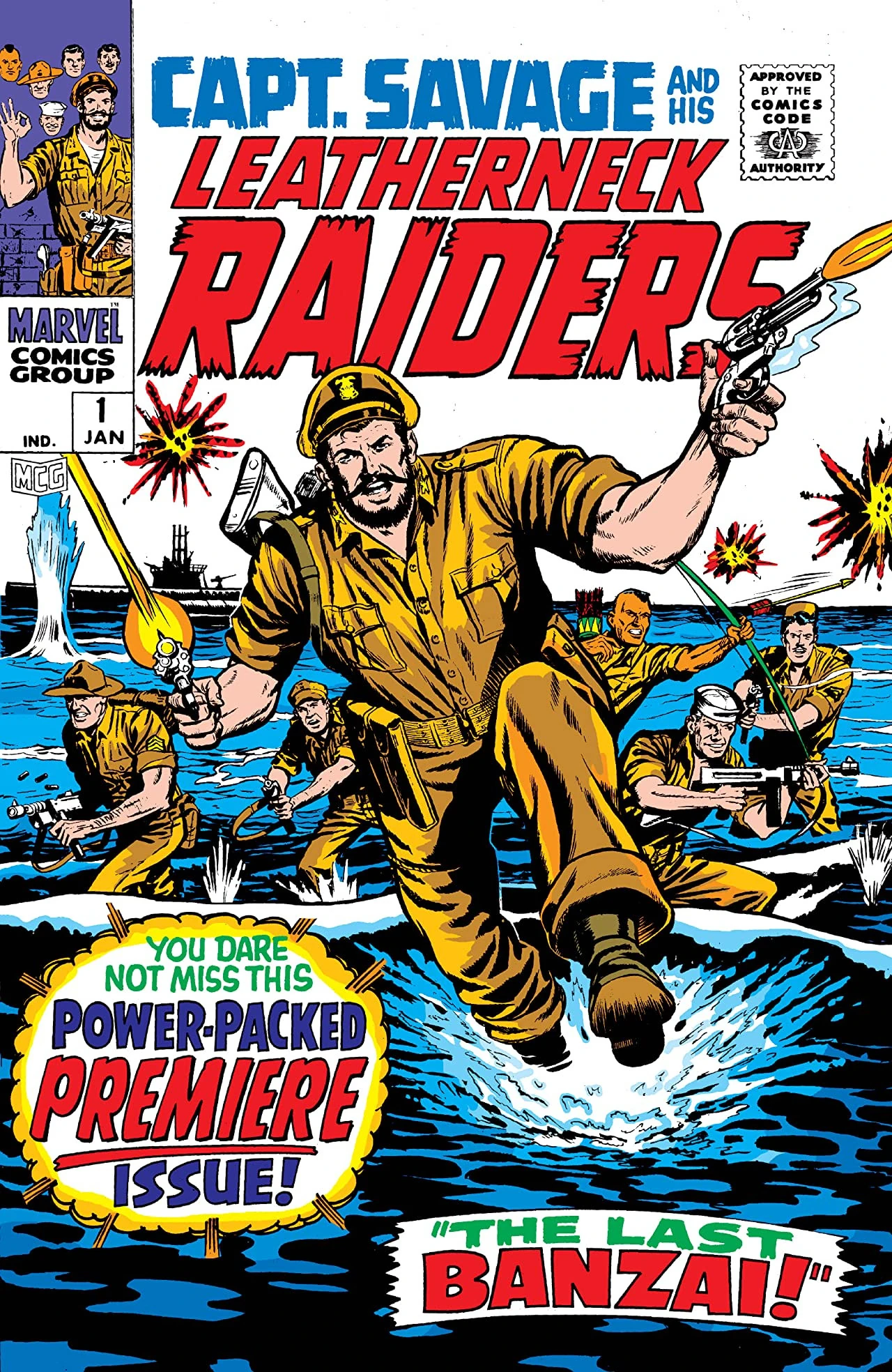
Independent·Capt. Savage and His Leatherneck Raiders·#1·Silver Age·ID-23997
Empirical cash settlement intelligence, cross-grade elasticity curve, and secondary liquidation velocity.
Empirical step multipliers between adjacent condition tiers. Pinpoints the exponential premium transition and capital efficiency frontier.
Realized turnover cadence and capital absorption depth across certified auction comps.
Autonomous institutional strategies, financial equilibrium, scarcity modeling, and algorithmic risk profiling.
Market operates purely on organic buyer and seller auction discovery. Zero artificial price interventions or emergency liquidity halts on record.
Verified historical transaction line with quarterly equilibrium baseline anchor.
Understand how physical sales, invested dollars, and liquidity friction divide across grades.
Historical price records
Relative market value allocation
Estimated execution friction
Bibliographic provenance, creator credits, historical significance, and multimedia documentation.
? (Items & checklist)
Dick Ayers
Syd Shores
Stan Lee
Publisher profile coming soon
Marvel revolution. Stan Lee, Jack Kirby, and Steve Ditko create the modern superhero. Spider-Man, Fantastic Four, X-Men debut.
The sweet spot for collectors — significant enough to be culturally important, scarce enough to be valuable. 9.8 copies are extremely rare.
Silver Age (1956–1970) — the era that redefined the superhero genre. Scientific themes, moral complexity, and Stan Lee's Marvel revolution define this period. High-grade copies command aggressive premiums.
Inspectable mathematical proof, blockchain/ledger provenance, data integrity validation, and asset taxonomy.
In illiquid alternative asset markets, sovereign blue-chip holdings trade at an exponential multiple over mid-grade float due to institutional accumulation and inelastic seller reservation prices.
was second-in-command in Leatherneck Raiders.]] On November 22, 1943, two days after the assault on the Japanese stronghold of Tarawa began, a group of six marines known as the Leatherneck Raiders, lead by Capt. Savage, banded together to attack an ammo dump at a Japanese base. As soon as they encountered some Japanese soldiers, they began to engage them in both gunfire and hand-to-hand combat. The team eventually arrived at a cave, where they decided to set up camp. When they were inside, Cpl. Jacques LaRocque pulled out photographs of women and stuck them to the wall, while Pvt. Lee Baker read a book on sociology. After eating their meals, which were cooked by Seaman Blarney Stone, Capt. Savage informed them that they would move out in five minutes to stay on schedule. The Raiders moved out and Capt. Savage tripped on a bamboo pole that was left by the Japanese and was attacked by Japanese soldiers, who he defeated within minutes. Then, the team came upon a mountain and began to climb it. Suddenly, Jacques lost his grip and almost fell, but hung onto a tree branch, but could not hold on for long, so Pvt. Jay Little Bear shot an arrow with a rope for Jacques to grab hold of and climb up. Once they reached the top, they came upon the Japanese base and decided to charge, firing their guns, until they reached the ammo dump. When they were in range of the ammo dump, they saw a Japanese soldier threatening to blow himself up with the ammo dump unless they fell back. The Raiders would not fall back, so the soldier shot himself in the head, killing him, making him drop his torch, which Little Bear shot with an arrow, stopping it from causing the ammo to combust. Capt. Savage began to rig dynamite to destroy the ammo dump, but more Japanese soldiers began to storm the base as well. The Raiders opened fire on the Japanese, with Little Bear gaining the first blood, and fled the mountain before it could explode and cause debris to fall. The Raiders got onto a raft and sailed into the Pacific Ocean until they came upon a ship with Sgt. Fury and his Howling Commandos. As the Raiders boarded the ship, they began a friendly rivalry with the Howling Commandos.
Each cover variant, retailer incentive, and subsequent printing represents an independent atomic tradeable instrument with unique supply elasticity, barcode registration, and secondary market demand.
Strict algorithmic segregation separating clean single-issue Cover A sales from multi-issue lot bundles, retailer exclusives, and foreign variants.