COMICBOOKSTOCKEXCHANGE.COM·
UTC LIVE TIMEDEAL RADAR
MARKET CLOCKS
HOME OFFICEHOME OFFICE--:--
NYSENew York--:--
LSELondon--:--
JPX / NIKKEITokyo--:--
DFM / ADXDubai--:--
WORLD / UTC--:--
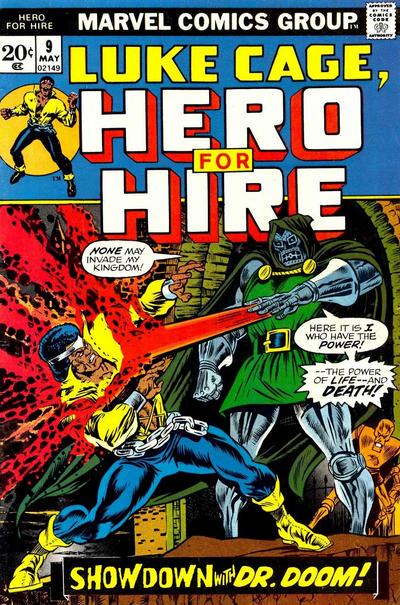
Marvel·Hero For Hire·#9·Bronze Age·ID-2410795
| Grade | Census & Float Distribution | Copies / Slabs | Role | FMV | Sales | Total Value | Multiple |
|---|---|---|---|---|---|---|---|
| 9.8 | 36 of 285 slabs (12.6%) | 36 | SOV | $750.00 | 36 | $27,000 | (15.7x) |
| 9.6 | 27 of 285 slabs (9.5%) | 27 | $357.50 | 27 | $9,653 | (7.5x) | |
| 9.4 | 50 of 285 slabs (17.5%) | 50 | ANC | $153.94 | 50 | $7,697 | (3.2x) |
| 9.2 | 29 of 285 slabs (10.2%) | 29 | $115.00 | 29 | $3,335 | (2.4x) | |
| 9.0 | 29 of 285 slabs (10.2%) | 29 | $114.00 | 29 | $3,306 | (2.4x) | |
| RAW | Raw Uncertified Copies | — | RAW | $47.90 | — | — | (1.0x Base) |
Autonomous institutional strategies, financial equilibrium, scarcity modeling, and algorithmic risk profiling.
Market operates purely on organic buyer and seller auction discovery. Zero artificial price interventions or emergency liquidity halts on record.
Understand how physical sales, invested dollars, and liquidity friction divide across grades.
Completed market sales by grade
Relative market value allocation
Estimated execution friction
Bibliographic provenance, creator credits, historical significance, and multimedia documentation.
Steve Englehart
George Tuska
William Graham Jr.
Stan Goldberg
Roy Thomas
Home of Spider-Man, X-Men, Avengers, and the Marvel Cinematic Universe.
Comics grow darker and more socially aware. Wolverine, Punisher, Swamp Thing debut. Creator-driven storytelling emerges.
Newsstand variants carry meaningful scarcity premiums. First appearances from this era are blue-chip investments.
Bronze Age (1970–1984) — comics grew darker and more socially aware. The era of classic runs, creator-driven storytelling, and the birth of serious collecting culture. Newsstand variants carry a meaningful scarcity premium.
Inspectable mathematical proof, blockchain/ledger provenance, data integrity validation, and asset taxonomy.
In illiquid alternative asset markets, sovereign blue-chip holdings trade at an exponential multiple over mid-grade float due to institutional accumulation and inelastic seller reservation prices.
Continued from last issue... Breaking into the Baxter Building, Luke Cage engages in a brief battle with the Fantastic Four which ends in a draw. After the fight, Luke explains that he came to the Baxter Building to obtain a ship to fly into Latveria and get the money that Dr. Doom owes him. Convincing Reed Richards, Luke is given one of the Fantastic Four's sky crafts and Luke flies it into Latveria. When the ship is suspended in the air at the Latverian border, Luke fights off Doom's army. Traveling the countryside, Luke comes into contact with the robot rebellion led by the Faceless One. Luke agrees to aid in their attack on Doom's castle, but only for the purposes of getting the money he's owed. While the robots keep the palace guards busy, Luke fights his way into Doom's throne room where the two come to blows over the payment that Luke is owed. During the fight, Doom's armor is critically damaged, making him an easy target for the Faceless One. However, not wanting the man who owes him money to be killed, defeats the Faceless One, who abandons his android body in order to escape. Impressed with Luke's determination, Dr. Doom pays Cage in full and allows him to leave Latveria. Luke quickly makes his exit leaving Doom to quell the robot uprising on his own. Returning to the Baxter Building, the Fantastic Four (Thing in particular) want to know what happened in Latveria, Luke disinterested in sharing stories simply walks out and takes a cab, leaving the Fantastic Four to only speculate how Doom stopped the robot uprising.
Each cover variant, retailer incentive, and subsequent printing represents an independent atomic tradeable instrument with unique supply elasticity, barcode registration, and secondary market demand.
Strict algorithmic segregation separating clean single-issue Cover A sales from multi-issue lot bundles, retailer exclusives, and foreign variants.