COMICBOOKSTOCKEXCHANGE.COM·
UTC LIVE TIMEDEAL RADAR
MARKET CLOCKS
HOME OFFICEHOME OFFICE--:--
NYSENew York--:--
LSELondon--:--
JPX / NIKKEITokyo--:--
DFM / ADXDubai--:--
WORLD / UTC--:--
Independent·Invaders·#2·Modern Age·ID-2412874
| Grade | Census & Float Distribution | Copies / Slabs | Role | FMV | Sales | Total Value | Multiple |
|---|---|---|---|---|---|---|---|
| 9.8 | 2 of 5 slabs (40.0%) | 2 | SOV | $82.99 | — | $165.98 | (32.2x) |
| 9.6 | 0 slabs | 0 | $91.00 | — | — | (35.3x) | |
| 9.4 | 1 of 5 slabs (20.0%) | 1 | — | — | — | (20.0%) | |
| 9.2 | 0 slabs | 0 | $21.97 | — | — | (8.5x) | |
| 9.0 | 0 slabs | 0 | $2.00 | — | — | (0.8x) | |
| RAW | Raw Uncertified Copies | 64,588 | RAW | $2.58 | — | $166,637 | (1.0x Base) |
Autonomous institutional strategies, financial equilibrium, scarcity modeling, and algorithmic risk profiling.
Market operates purely on organic buyer and seller auction discovery. Zero artificial price interventions or emergency liquidity halts on record.
Understand how physical sales, invested dollars, and liquidity friction divide across grades.
Historical price records
Relative market value allocation
Estimated execution friction
Bibliographic provenance, creator credits, historical significance, and multimedia documentation.
Roy Thomas
? (photo)
? (photo)
? (photo)
Mike Rockwitz
No narrative synopsis recorded in GCD for this sequence.
Publisher profile coming soon
Variant cover era. Trade paperback culture. Independent movement flourishes. Digital distribution begins.
Census-registered copies anchor pricing. First appearances of characters adapted to screen drive the market.
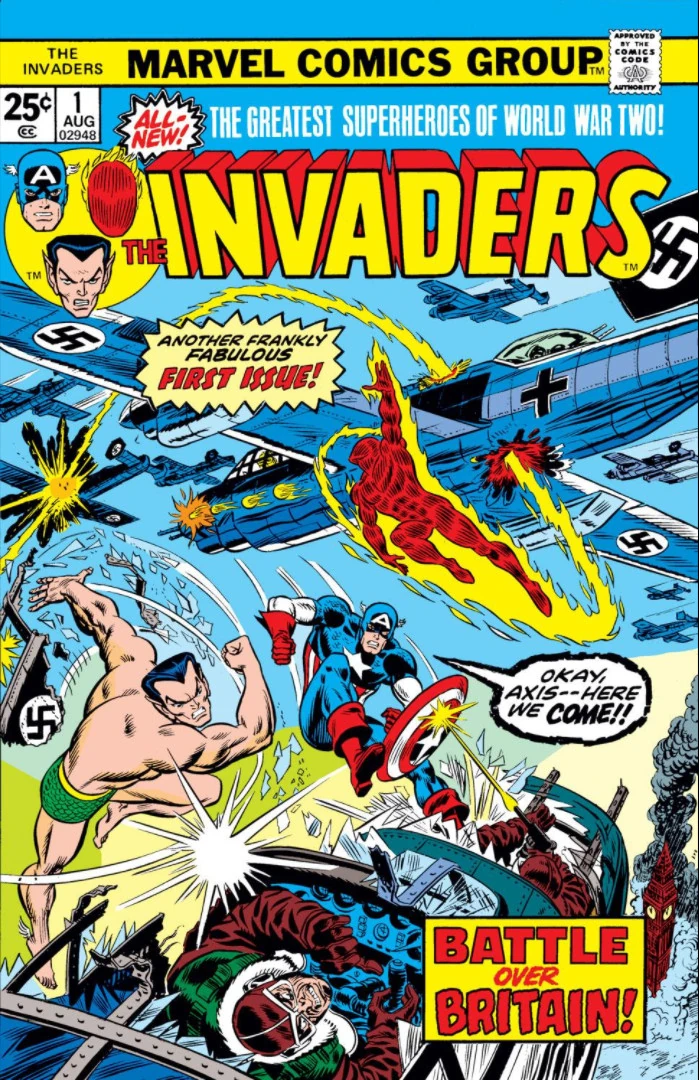
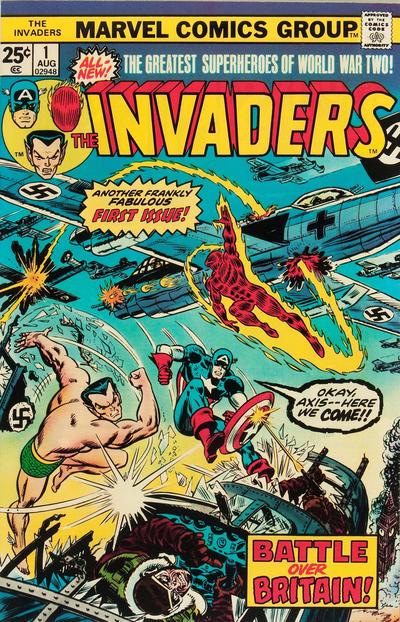
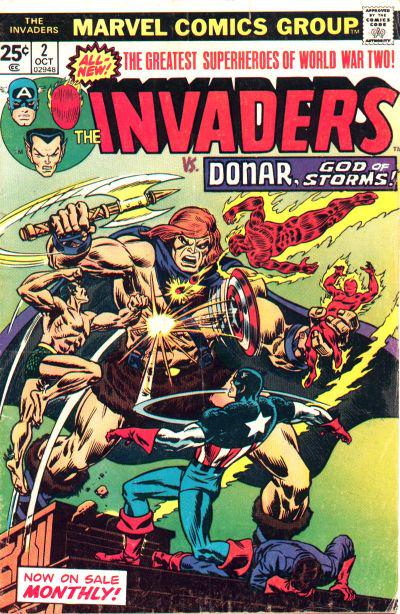
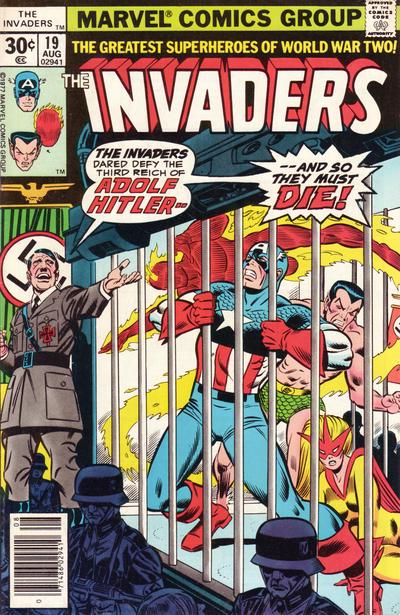
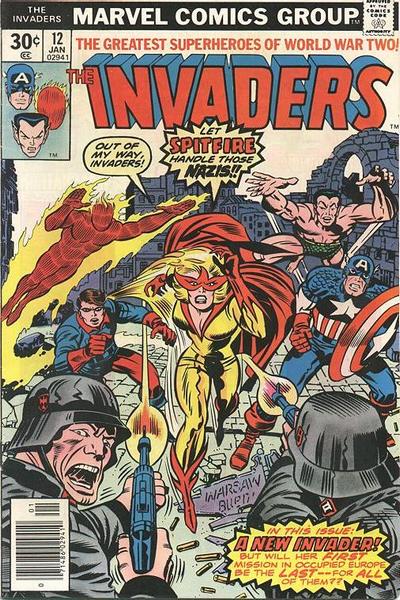

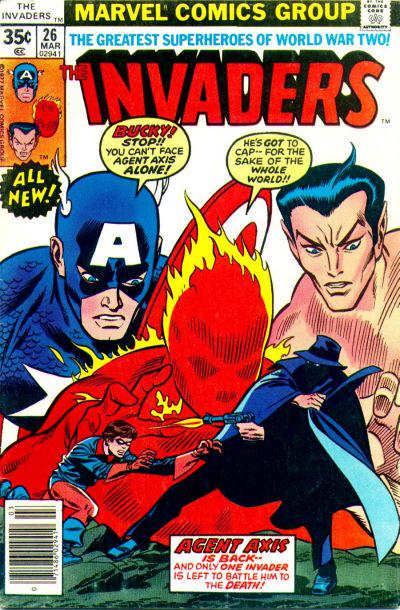

Modern Age (1992–present) — foil cover era, variant proliferation, and the independent movement. Strong narrative significance drives key issue demand. Census-registered copies anchor pricing.
Inspectable mathematical proof, blockchain/ledger provenance, data integrity validation, and asset taxonomy.
The recovery of third-party encapsulation and grading expenditures when an asset is acquired at a discount below the physical cost of replacement grading fees, shipping, and insurance.
Strict algorithmic segregation separating clean single-issue Cover A sales from multi-issue lot bundles, retailer exclusives, and foreign variants.
Invaders #1
9.8
$3,416.00
9.6
—
9.4
—
RAW
$18.35
Invaders #3
9.8
$930.00
9.6
—
9.4
—
RAW
$9.29
Invaders #1
9.8
$449.24
9.6
—
9.4
—
RAW
$19.74
Invaders #2
9.8
$327.89
9.6
—
9.4
—
RAW
$8.38
Invaders #19
9.8
$253.33
9.6
—
9.4
—
RAW
$8.02
left|thumb|[[Werner Schmidt (Brain Drain) (Earth-616)|Brain Drain]]The Invaders square off against three alleged Teutonic Gods: Donar, Froh and Loga. Prince Namor grapples with Donar while the Human Torch swaps fireballs with Loga. Toro meanwhile, has his hands full evading Froh's hurled lightning bolts.
Elsewhere, Captain America and Hildy are captured by Nazi officers. They are taken to the laboratory of the criminal scientist known as Brain Drain. Brain Drain's body consists of little more than a disembodied brain and eyes, contained within a glass dome, attached to a robotic body.
Brain Drain explains how he found an alien ship containing four travelers. He took from them the Ring of the Nebulas and used its power to increase his own mechanical systems. He also used it to put the travelers into a deep trance, bending their will to his own. He patterned their appearance and behavior after Teutonic gods.
Hildy suddenly remembers everything and knows that she is one of these alien travelers. She swipes the Ring of the Nebulas from Brain Drain's grasp and tosses it into a vat of acid. With the ring destroyed, its mental effects wear off and Donar, Froh and Loga stop fighting the Invaders.
Realizing that they can never again return to the stars, the aliens decide to take their own lives. Hildy and the others elect to dive into the vat of acid, killing themselves. Brain Drain, who professes to be in love with Hildy follows her into the acid vat and seemingly dies as well.
First full and earliest chronological appearance of Brain Drain. Brain Drain made behind-the-scenes appearances in Giant-Size Invaders Vol 1 1 and Invaders Vol 1 1. This issue contains a letters page, "O.K. Axis, Here We Come!" Letters are published from Jerry C. Cleary, Jim Millaway, Michael H. Schwartz, Roy Ostergen, and Mark Schneider.