
COMICBOOKSTOCKEXCHANGE.COM·
UTC LIVE TIMEDEAL RADAR
MARKET CLOCKS
HOME OFFICEHOME OFFICE--:--
NYSENew York--:--
LSELondon--:--
JPX / NIKKEITokyo--:--
DFM / ADXDubai--:--
WORLD / UTC--:--
Independent·Salvation Run·#1·Independent·ID-3396890
| Grade | Census & Float Distribution | Copies / Slabs | Role | FMV | Sales | Total Value | Multiple |
|---|---|---|---|---|---|---|---|
| 9.8 | 4 of 12 slabs (33.3%) | 4 | SOV | $19.86 | — | $79.44 | (2.9x) |
| 9.6 | 2 of 12 slabs (16.7%) | 2 | $22.00 | — | $44.00 | (3.2x) | |
| 9.4 | 3 of 12 slabs (25.0%) | 3 | — | — | — | (25.0%) | |
| 9.2 | 0 slabs | 0 | $20.82 | — | — | (3.0x) | |
| 9.0 | 1 of 12 slabs (8.3%) | 1 | $4.00 | — | $4.00 | (0.6x) | |
| RAW | Raw Uncertified Copies | 28,350 | RAW | $6.96 | — | $197,316 | (1.0x Base) |
Empirical cash settlement intelligence, cross-grade elasticity curve, and secondary liquidation velocity.
Empirical step multipliers between adjacent condition tiers. Pinpoints the exponential premium transition and capital efficiency frontier.
Realized turnover cadence and capital absorption depth across certified auction comps.
Autonomous institutional strategies, financial equilibrium, scarcity modeling, and algorithmic risk profiling.
Market operates purely on organic buyer and seller auction discovery. Zero artificial price interventions or emergency liquidity halts on record.
Verified historical transaction line with quarterly equilibrium baseline anchor.
Understand how physical sales, invested dollars, and liquidity friction divide across grades.
Historical price records
Relative market value allocation
Estimated execution friction
Bibliographic provenance, creator credits, historical significance, and multimedia documentation.
Bill Willingham
Sean Chen
Walden Wong
John Kalisz
Stephanie Buscema, Joey Cavalieri
Publisher profile coming soon
Outside the Marvel/DC duopoly. Often creator-owned with outsized cultural impact and far greater natural scarcity.
No returnable copies, no overprint buffer. True scarcity with potential for explosive growth on media adaptation news.
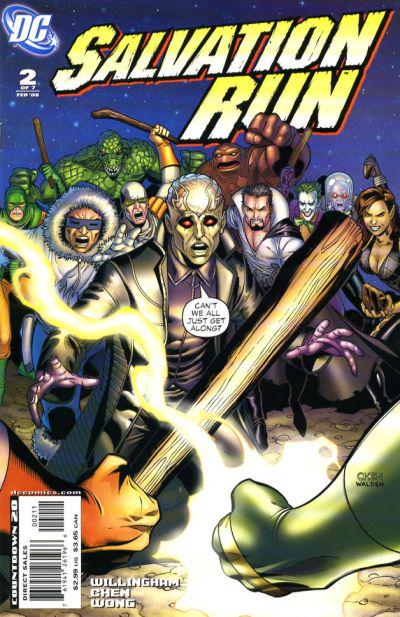

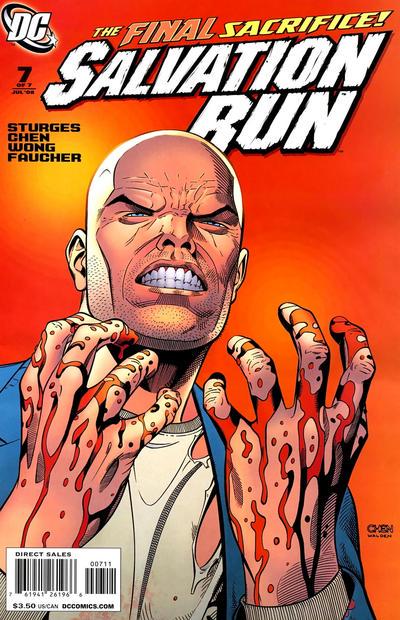

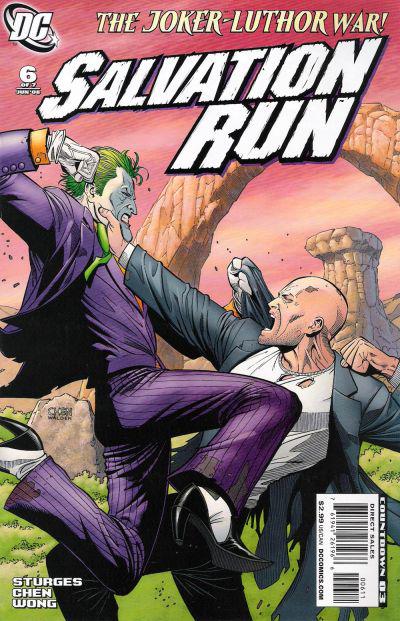
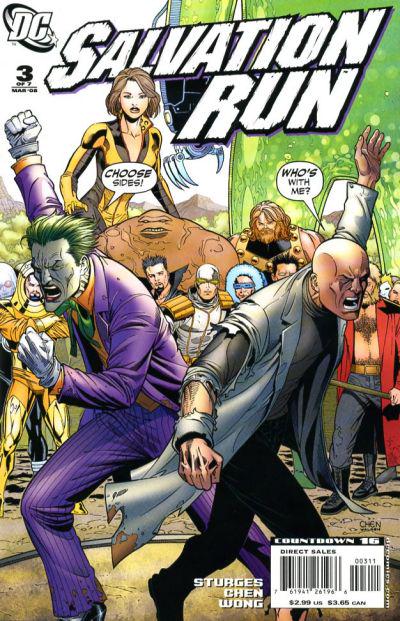
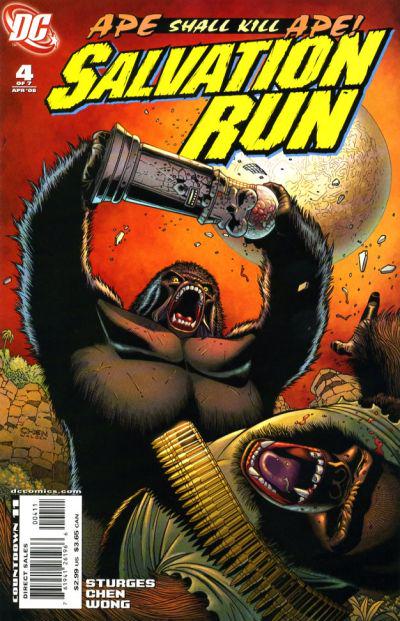
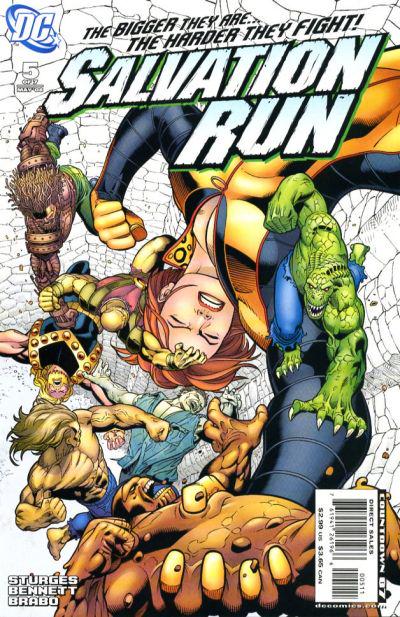
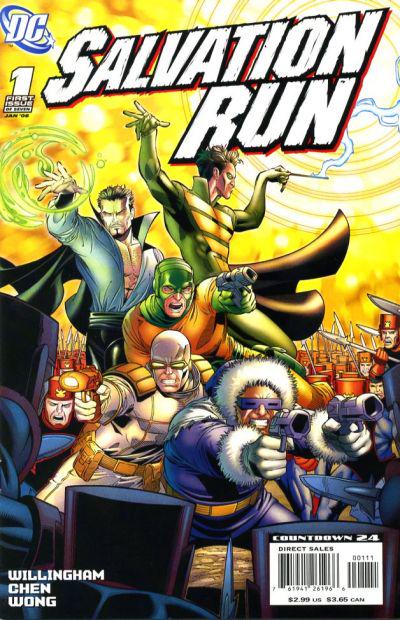
Independent publisher — outside the Marvel/DC duopoly. These issues often carry outsized cultural impact with far greater natural scarcity. No returnable copies, no overprint buffer.
Salvation Run #2
9.8
$249.57
9.6
—
9.4
—
RAW
$80.37
Salvation Run #7
9.8
$225.29
9.6
—
9.4
—
RAW
$68.55
Salvation Run #7
9.8
$118.61
9.6
—
9.4
—
RAW
$19.50
Salvation Run #1
9.8
$60.42
9.6
—
9.4
—
RAW
$14.17
Salvation Run #6
9.8
$42.03
9.6
—
9.4
—
RAW
$8.01
Inspectable mathematical proof, blockchain/ledger provenance, data integrity validation, and asset taxonomy.
The recovery of third-party encapsulation and grading expenditures when an asset is acquired at a discount below the physical cost of replacement grading fees, shipping, and insurance.
In a darkened office, Amanda Waller and Rick Flag, Jr. are discussing a recent solution to the growing problem of supervillains: dump them on a planet somewhere in deep space, and forget about them. Despite some ethical concerns (which the two do not share) the plan is to go ahead. Two weeks later, the Keystone City Rogues (Captain Cold, Weather Wizard, Heat Wave, Mirror Master and Abra Kadabra) are wandering the surface of the planet they have christened "Prison World". Despite the constant danger of attack by biomechanical horrors, they are wandering - Abra Kadabra's futuristic intellect has allowed them to converse with local pygmies and learn a rumor of a 'Safe Zone', a miles-wide district where the hostile biomechs have been cleaned out. They know the planet will eventually kill them - a point brought home by the fact that Abra Kadabra breaks his arm in the next attack. While they are camped that night, the five criminals ponder their situation. They remember Rick Flag's admonition that the governments of Earth had reached the limits of their patience, and were using the Boom Tube to rid themselves of the criminals - who after all, had escaped from every conventional prison on Earth. Since most supervillains express some desire to conquer the world, giving them a prison world of their own was considered a parting ironic stab. We also learn in flashback that Checkmate had told them the world was perfectly safe and had all of the tools they would need to survive and reestablish society, not wishing them any ill will, just wanting to get rid of them on Earth. An explosion heralds the arrival of a new group of criminals, and the next morning the Rogues go back to find them and explain the danger. Some of the new arrivals (primarily the Joker) do not believe them, but when a burrowing monster attacks Girder, they save him, proving their case. Still, the villains complain of the fact that Checkmate promised them a dull prison world - and we see that they are being spied upon by two mysterious beings, who reveal that Checkmate had not been lying to them, and that when the planet had been investigated for eligibility it had in fact looked extremely safe. We are warned that sentences will be lifelong and harsh - but they will not necessarily be lengthy!
Each cover variant, retailer incentive, and subsequent printing represents an independent atomic tradeable instrument with unique supply elasticity, barcode registration, and secondary market demand.
Strict algorithmic segregation separating clean single-issue Cover A sales from multi-issue lot bundles, retailer exclusives, and foreign variants.
Checkmate begins to banish Earth's superhuman criminals to another world, where they must learn to fend for themselves.
“You've each tried to conquer the world before, now we're granting your wish. A world of your own to conquer.”
In a darkened office, Amanda Waller and Rick Flag, Jr. are discussing a recent solution to the growing problem of supervillains: dump them on a planet somewhere in deep space, and forget about them. Despite some ethical concerns (which the two do not share) the plan is to go ahead.
Two weeks later, the Keystone City Rogues (Captain Cold, Weather Wizard, Heat Wave, Mirror Master and Abra Kadabra) are wandering the surface of the planet they have christened "Prison World". Despite the constant danger of attack by biomechanical horrors, they are wandering — Abra Kadabra's futuristic intellect has allowed them to converse with local pygmies and learn a rumor of a 'Safe Zone', a miles-wide district where the hostile biomechs have been cleaned out. They know the planet will eventually kill them — a point brought home by the fact that Abra Kadabra breaks his arm in the next attack.
While they are camped that night, the five criminals ponder their situation. They remember Rick Flag's admonition that the governments of Earth had reached the limits of their patience, and were using the Boom Tube to rid themselves of the criminals — who after all, had escaped from every conventional prison on Earth. Since most supervillains express some desire to conquer the world, giving them a prison world of their own was considered a parting ironic stab. We also learn in flashback that Checkmate had told them the world was perfectly safe and had all of the tools they would need to survive and reestablish society, not wishing them any ill will, just wanting to get rid of them on Earth.
An explosion heralds the arrival of a new group of criminals, and the next morning the Rogues go back to find them and explain the danger. Some of the new arrivals (primarily the Joker) do not believe them, but when a burrowing monster attacks Girder, they save him, proving their case. Still, the villains complain of the fact that Checkmate promised them a dull prison world — and we see that they are being spied upon by two mysterious beings, who reveal that Checkmate had not been lying to them, and that when the planet had been investigated for eligibility it had in fact extremely safe. We are warned that sentences will be lifelong and harsh — but they will not necessarily be lengthy!
This issue shipped on November 14th, 2007. Also shipped with a variant retailers incentive cover illustrated by Joe Corroney. Includes DC Nation #87 editorial by Dan DiDio. Most of the villains featured in the second wave comprise the group captured during the fight at the wedding of Green Arrow and Black Canary.