COMICBOOKSTOCKEXCHANGE.COM·
UTC LIVE TIMEDEAL RADAR
MARKET CLOCKS
HOME OFFICEHOME OFFICE--:--
NYSENew York--:--
LSELondon--:--
JPX / NIKKEITokyo--:--
DFM / ADXDubai--:--
WORLD / UTC--:--
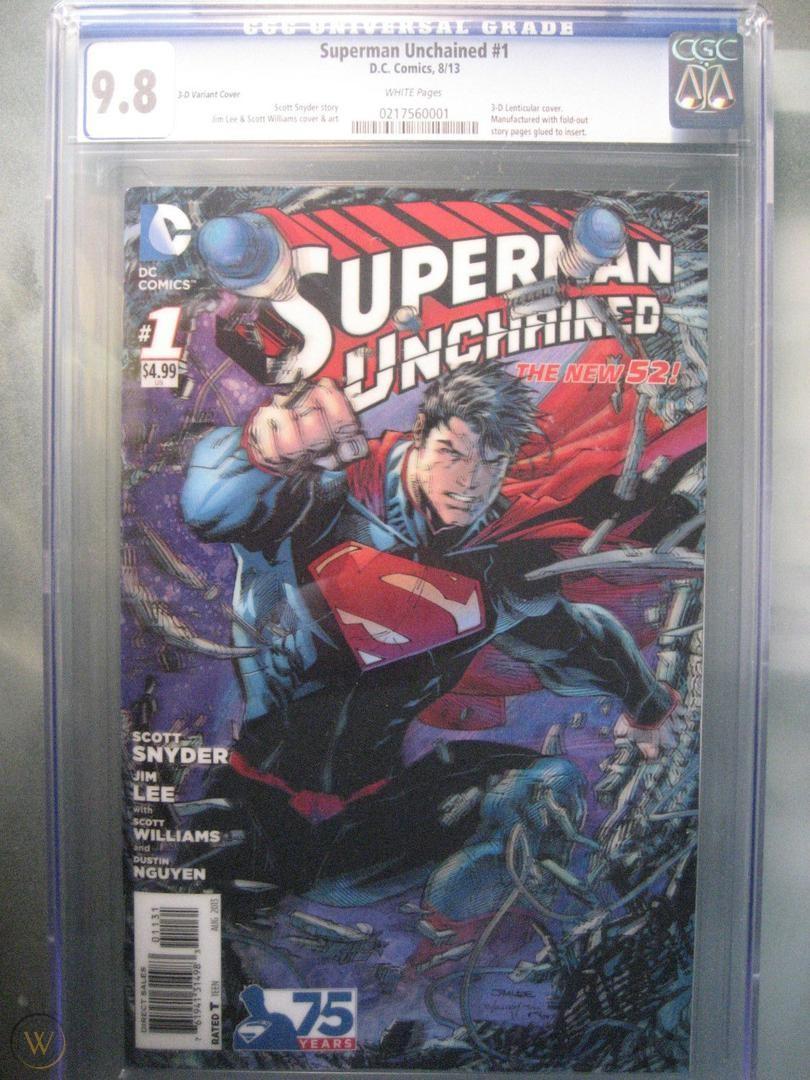
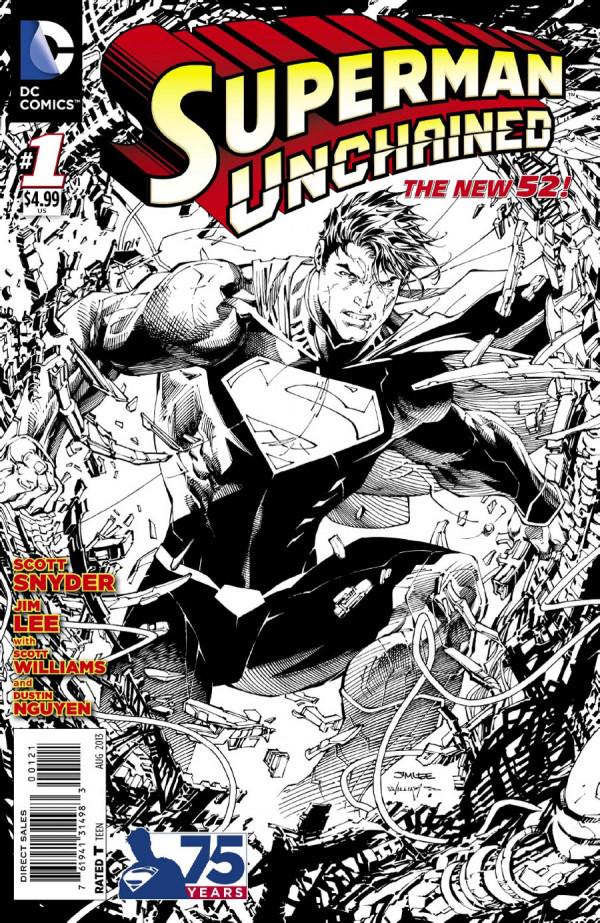
DC·Superman Unchained·#1·Independent·ID-2411021
| Grade | Census & Float Distribution | Copies / Slabs | Role | FMV | Sales | Total Value | Multiple |
|---|---|---|---|---|---|---|---|
| 9.8 | 687 of 983 slabs (69.9%) | 687 | SOV | $62.75 | 687 | $43,109 | (8.9x) |
| 9.6 | 179 of 983 slabs (18.2%) | 179 | $35.00 | 179 | $6,265 | (4.9x) | |
| 9.4 | 62 of 983 slabs (6.3%) | 62 | $26.46 | 62 | $1,641 | (3.7x) | |
| 9.2 | 20 of 983 slabs (2.0%) | 20 | $16.75 | 20 | $335.00 | (2.4x) | |
| 9.0 | 15 of 983 slabs (1.5%) | 15 | $15.50 | 15 | $232.50 | (2.2x) | |
| RAW | ~175,036 surviving raw (of ~251,456 printed) | 175,036 | RAW | $7.08 | — | $1,239,255 | (1.0x Base) |
Autonomous institutional strategies, financial equilibrium, scarcity modeling, and algorithmic risk profiling.
Market operates purely on organic buyer and seller auction discovery. Zero artificial price interventions or emergency liquidity halts on record.
Understand how physical sales, invested dollars, and liquidity friction divide across grades.
Completed market sales by grade
Relative market value allocation
Estimated execution friction
Bibliographic provenance, creator credits, historical significance, and multimedia documentation.
Scott Snyder
Jim Lee
Scott Williams
Alex Sinclair
Matt Idelson, Chris Conroy
No narrative synopsis recorded in GCD for this sequence.
Home of Superman, Batman, Wonder Woman, and the Justice League.
Outside the Marvel/DC duopoly. Often creator-owned with outsized cultural impact and far greater natural scarcity.
No returnable copies, no overprint buffer. True scarcity with potential for explosive growth on media adaptation news.
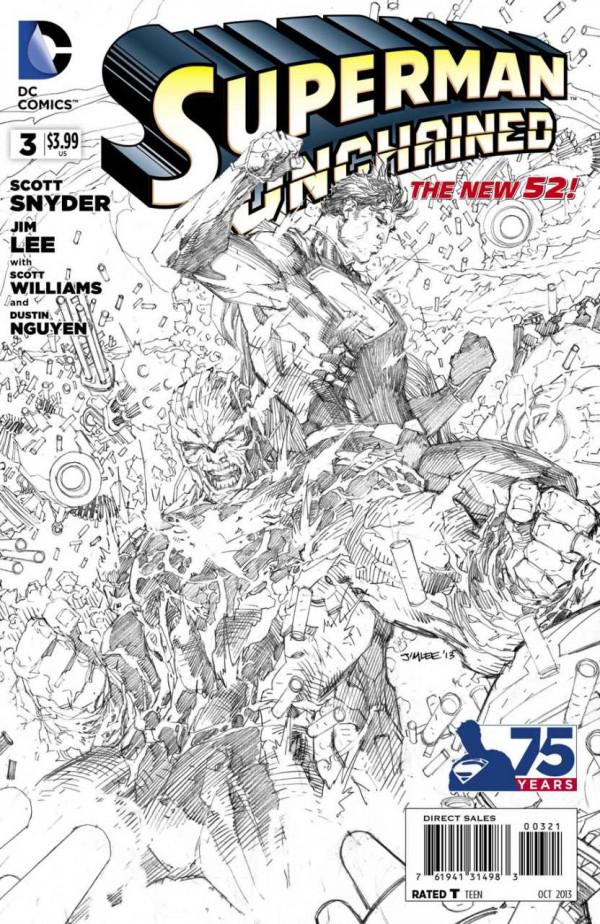
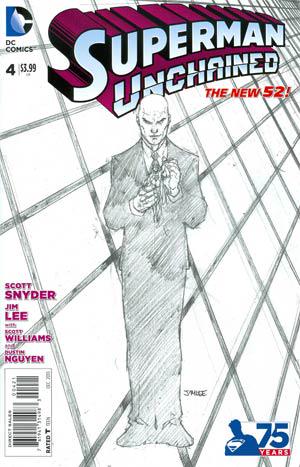
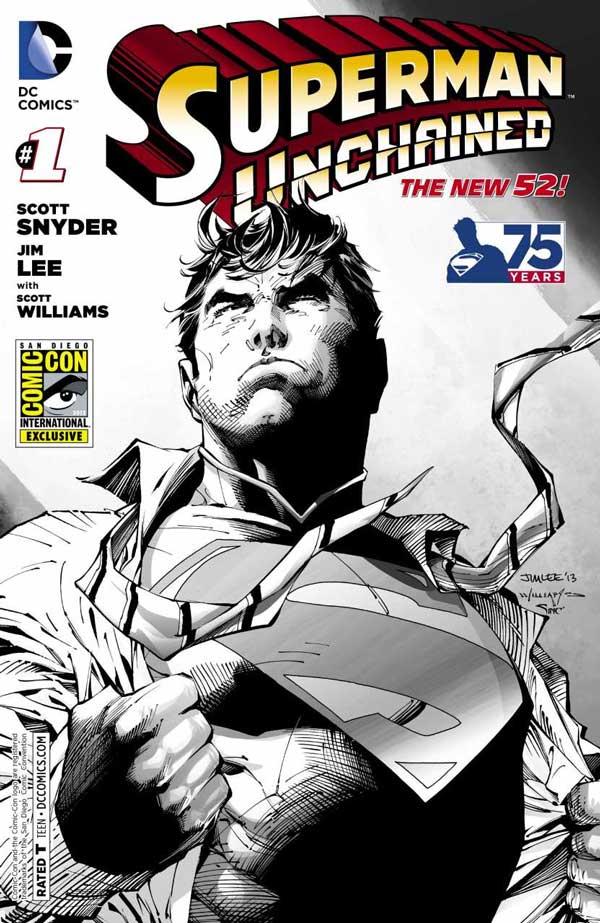
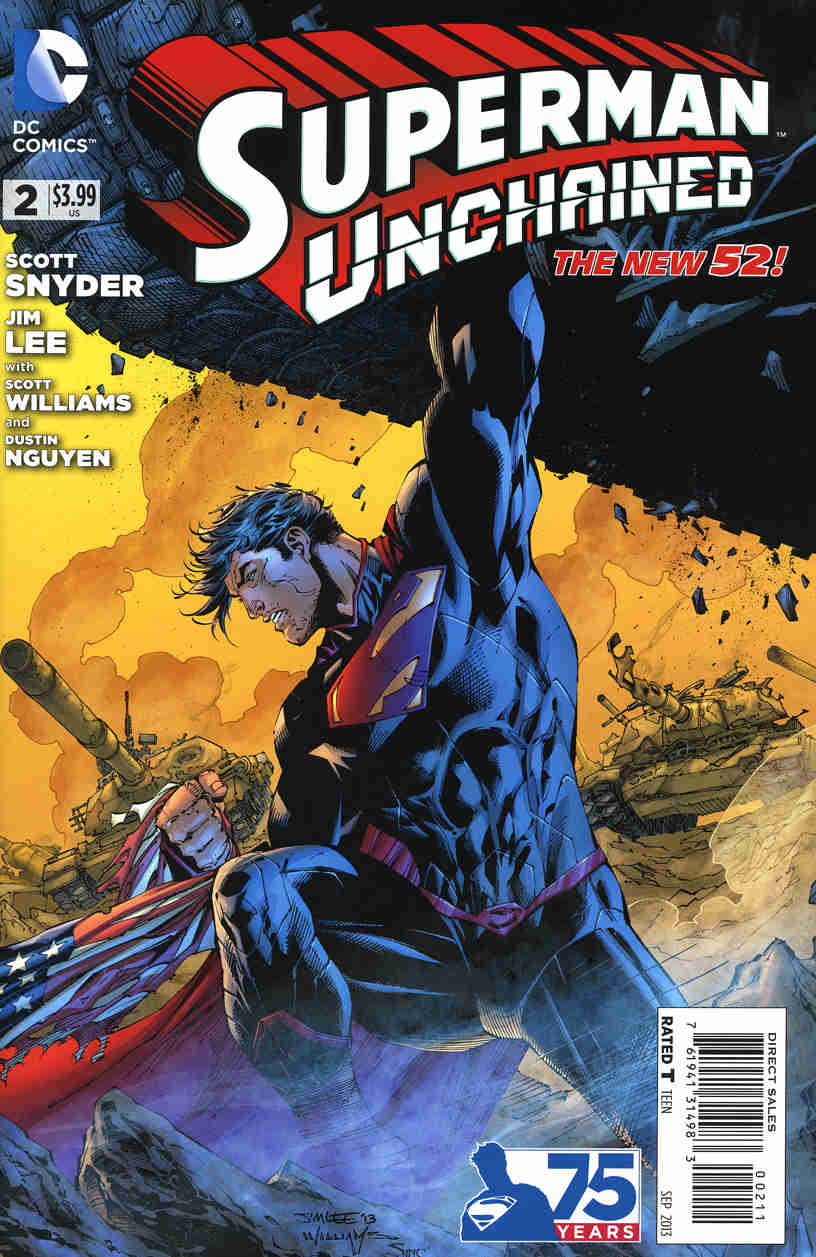
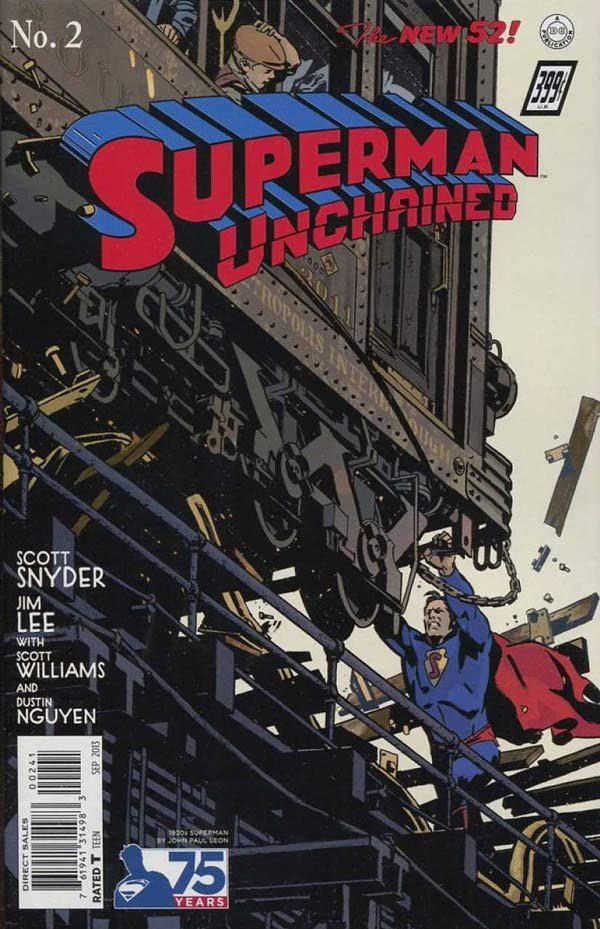
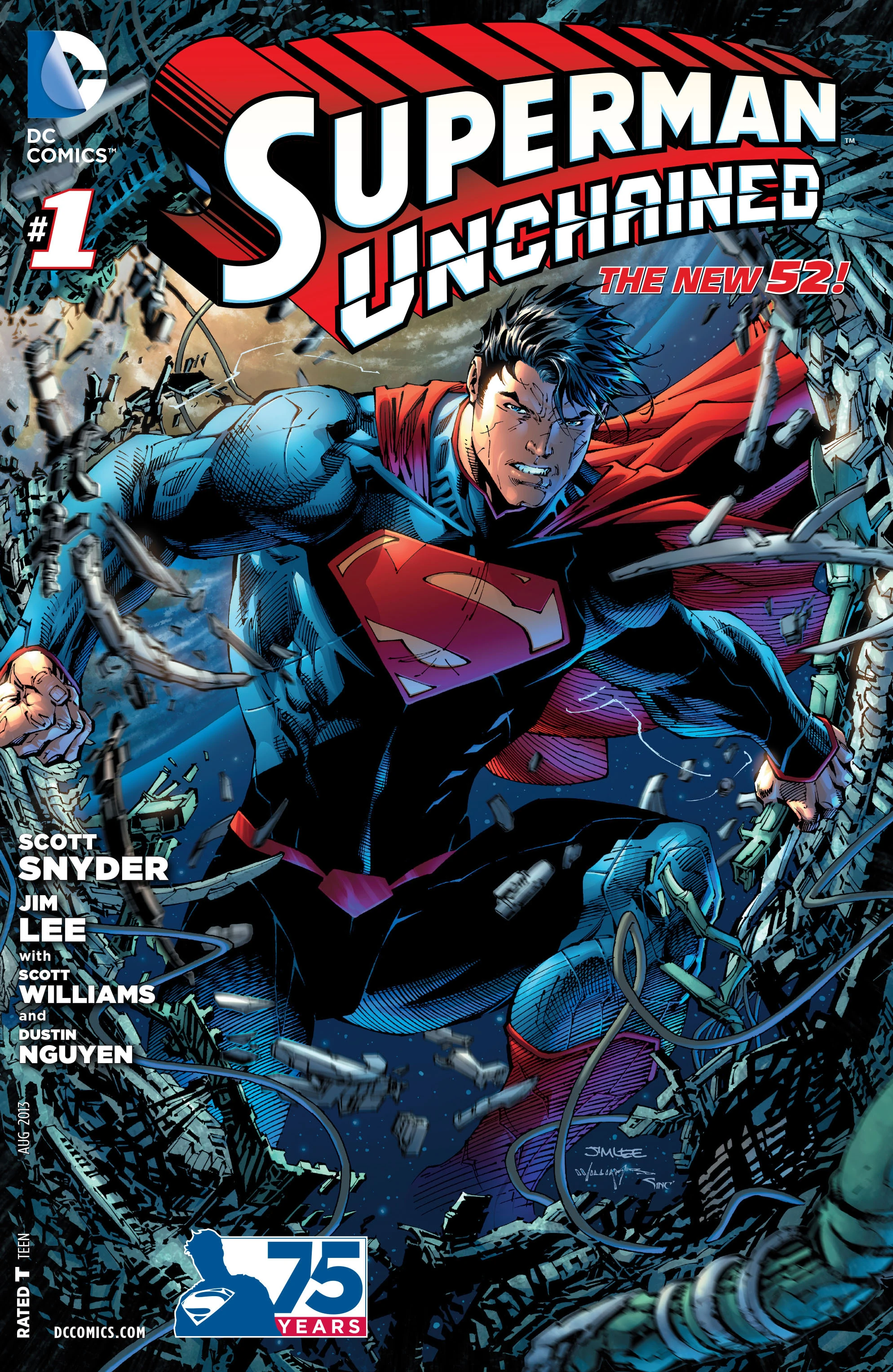
Independent publisher — outside the Marvel/DC duopoly. These issues often carry outsized cultural impact with far greater natural scarcity. No returnable copies, no overprint buffer.
Inspectable mathematical proof, blockchain/ledger provenance, data integrity validation, and asset taxonomy.
The recovery of third-party encapsulation and grading expenditures when an asset is acquired at a discount below the physical cost of replacement grading fees, shipping, and insurance.
During the second World War, the Japanese feared a new weapon that they knew would come from the skies. One day, in Nagasaki, a young boy looked up to see a plane flying overhead. He watched through binoculars to see it dropping what appeared to be a bomb. However, the casing fell away to reveal a man. Now, Superman re-enters the Earth's atmosphere, and recalls how it feels similar to the experience of a game he used to play with his friends in Smallville called "The Colder Leap", where they would jump from a neighbor's silo into his haystacks before school. There, though, in outer space, Superman has found a prototype space station called the Lighthouse, developed in cooperation between the Americans, Russians, and Japanese. It is meant to be a hub for deep space exploration. Unfortunately, it is also the eighth object that has been hurled out of orbit today by someone who is attempting to destroy the Earth. This particular object is nuclear equipped, and as such, it is far too dangerous to let collide with the planet, and it is a struggle to get a handle on it. What's worse is that there are people on board. Yanking them free with little time for explanation, he is surprised when the Lighthouse fights back. Forcing himself to talk to the astronauts, Superman assures them they'll be fine, though he knows they will burn up in the atmosphere if he can't save them first. Using his heat-vision, he activates the Lighthouse's built-in re-entry shield to protect them. Returning his attention to the Lighthouse's impending crash, Superman hopes to stop the thing's engine, but the only safe method for doing that would be to short out the electrical engine without damaging the nuclear battery. Hopefully, he uses his X-Ray vision, at Gamma level, to short it out. This, at least, stops the Lighthouse from propelling itself toward the earth, though it is still too late to stop it from falling to Earth entirely. Desperately, Superman grabs the astronauts in mid-air and attempts to shield them with his body, promising that he will prevent any lives from being lost. The Lighthouse comes down hard against the Earth's surface, but, true to his promise, Superman protects the astronauts from any harm. His work done, Superman receives a sudden call from Jimmy Olsen, who reports happily that Superman stopped the Lighthouse, thinking he is giving his friend Clark Kent an early tip. Jimmy suggests that the crash may have been the work of a cyber-terrorist group called Ascension, but it seems to Clark like more than they're capable of. Meanwhile, over Metropolis, prisoner Lex Luthor non-chalantly reads from the Illiad as his companion prisoners attempt escape by attacking their guards - sending the chopper they are riding in careening off-course. Fortunately, they are saved by Superman, who is not pleased to see Luthor involved - particularly since the earth-bound objects were weaponized by a malware program similar to one described in Luthor's doctorate research. However, Luthor explains that his research was stolen years ago, in a well-documented theft. Annoyed that Superman doesn't appear to believe him, he demands of Superman to explain to him why he would do it. Superman responds that Luthor would do it merely to show that he can. Smirking, Luthor explains that he has other plans for the world - better plans. He intends to build Metropolis a central solar tower which will generate nearly 600 megawatts daily, and he intends to do it from a Supermax prison. Later, Jimmy suggests that the Daily Planet now works like an evil empire, and he admires Clark for quitting his job there, and doing things right. Clark explains that the Planet wasn't interested in printing the stories he wanted to write, anyway. In this case, he is working on the Lighthouse story, having got an interview with one of the astronauts the night before. Their conversation is interrupted by a call from Lois Lane, who has already read the headline on his story, but before she can launch into a critique she is interrupted by Perry White. She resumes by complaining that Clark failed both to mention Superman and to suggest that Ascension might have been responsible. She knows it seems too big for them too, and has been trying to convince her father to look into it. However, what Clark really missed in his article is that the seventh object, which he thought he had let crash into an unoccupied installation near Thailand, had actually missed and hit the water. This comes as a surprise to Clark, because physically, the satellite couldn't have missed. As Superman, he travels to the sea in search of evidence, knowing that neither he nor his compatriots in the Justice League had redirected the satellite's course. When he arrives, he discovers a giant hand-print on the side of it, and is confused. However, he is further taken aback when torpedoes from a nearby submarine home in on him. This comes as a surprise to the submariners as well, considering that they had not expected Superman to be there. They were merely destroying the wreckage under orders from General Sam Lane. General Lane, meanwhile, is in a secret underground base, hoping that Superman will not delve too much deeper, but sure that he will never find this place. And, if by chance he does find it, the weapon they have hiding there is more than any match for Superman - and it's been working for the US government for nearly 75 years.
Each cover variant, retailer incentive, and subsequent printing represents an independent atomic tradeable instrument with unique supply elasticity, barcode registration, and secondary market demand.
Strict algorithmic segregation separating clean single-issue Cover A sales from multi-issue lot bundles, retailer exclusives, and foreign variants.