COMICBOOKSTOCKEXCHANGE.COM·
UTC LIVE TIMEDEAL RADAR
MARKET CLOCKS
HOME OFFICEHOME OFFICE--:--
NYSENew York--:--
LSELondon--:--
JPX / NIKKEITokyo--:--
DFM / ADXDubai--:--
WORLD / UTC--:--
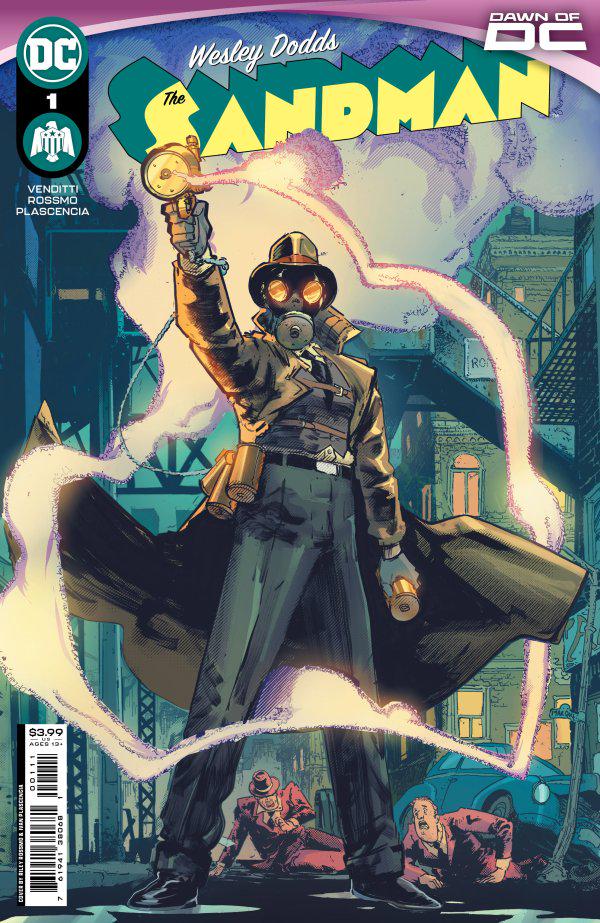
DC·Wesley Dodds·The Sandman·#3·Postmodern Age·ID-6135813
 Riley RossmoACTIVE
Autonomous institutional strategies, financial equilibrium, scarcity modeling, and algorithmic risk profiling.
Market operates purely on organic buyer and seller auction discovery. Zero artificial price interventions or emergency liquidity halts on record.
Understand how physical sales, invested dollars, and liquidity friction divide across grades.
Historical price records
Relative market value allocation
Estimated execution friction
Bibliographic provenance, creator credits, historical significance, and multimedia documentation.
Robert Venditti
Riley Rossmo
Riley Rossmo
Ivan Plascencia
Tom Napolitano
Marquis Draper, Andrew Marino, Katie Kubert
Home of Superman, Batman, Wonder Woman, and the Justice League.
Deconstructionist storytelling. Trade-first publishing. Creator prestige over character IP.
Value driven by creator reputation and adaptation potential rather than print scarcity.
Postmodern era — deconstructionist storytelling and trade paperback culture. Sustained demand comes from adaptations and creator prestige rather than print scarcity.
Inspectable mathematical proof, blockchain/ledger provenance, data integrity validation, and asset taxonomy.
The recovery of third-party encapsulation and grading expenditures when an asset is acquired at a discount below the physical cost of replacement grading fees, shipping, and insurance.
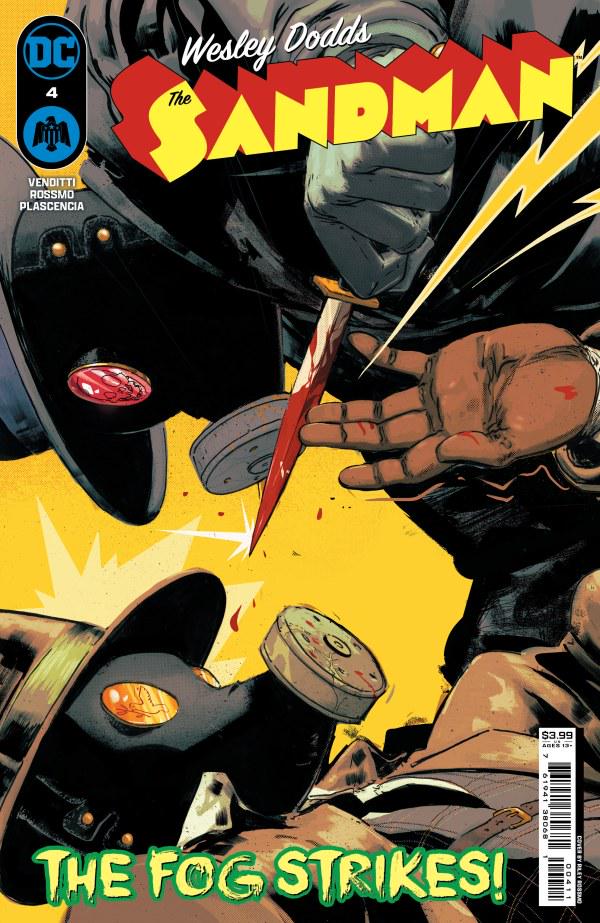
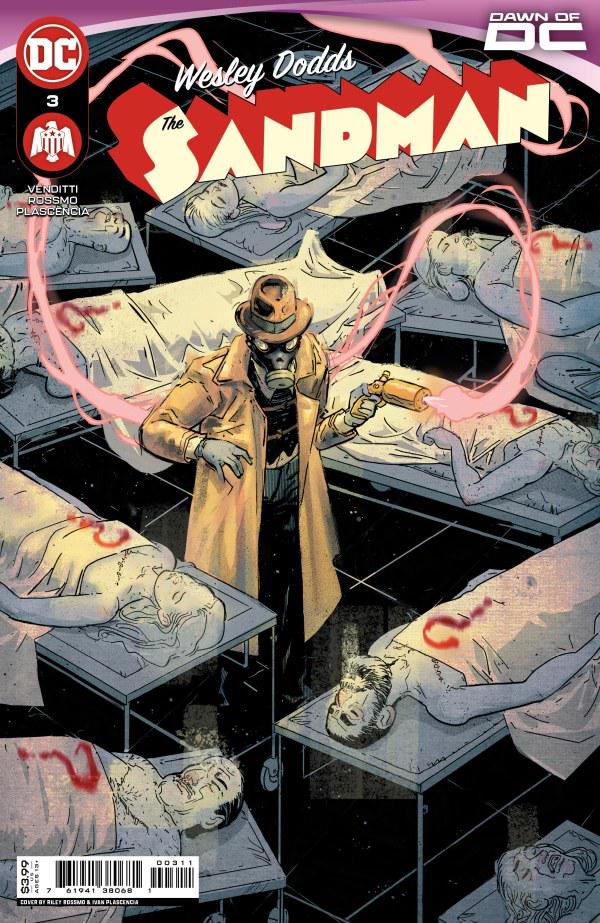
The Sandman sneaks into the morgue to examine Igor Kluge's corpse. The coroner, who he regularly works with, tells him that Kluge was dead before he was burned; meaning his body was planted by whoever actually robbed the Dodds mansion. The next morning, Dian and Vanderlyle find Wesley asleep in his penthouse after a long night poring over evidence. Vanderlyle asks why Wesley has police files but Dian tells him that Wesley is doing background checks on contractors to rebuild his house. She points out to him that Igor Kluge was dishonourably discharged from the army for theft. Vanderlyle goes to leave but warns Wesley that he is behaving like his father. After Wheeler leaves, Wesley deduces that Kluge another ex-soldier must have been the one who robbed his house and murdered Kluge. Dian tells Wesley that Vanderlyle is right and he is putting too much strain on himself; Wesley assures her that he is fine, but he is lying. That night he goes back to the ruins of his house to look for clues, and is attacked by the man in the black costume from his dream. The two fight, and eventually the man in black manages to take Wesley's mask. He attempts to spray Wesley with toxic gas, but Wesley is able to snatch the canister and smash it through the lenses on his mask. This spreads the gas everywhere and forces the man in black to abandon his mask and flee, but Wesley is unable to get away in time and inhales the gas.
Each cover variant, retailer incentive, and subsequent printing represents an independent atomic tradeable instrument with unique supply elasticity, barcode registration, and secondary market demand.
Strict algorithmic segregation separating clean single-issue Cover A sales from multi-issue lot bundles, retailer exclusives, and foreign variants.