COMICBOOKSTOCKEXCHANGE.COM·
UTC LIVE TIMEDEAL RADAR
MARKET CLOCKS
HOME OFFICEHOME OFFICE--:--
NYSENew York--:--
LSELondon--:--
JPX / NIKKEITokyo--:--
DFM / ADXDubai--:--
WORLD / UTC--:--
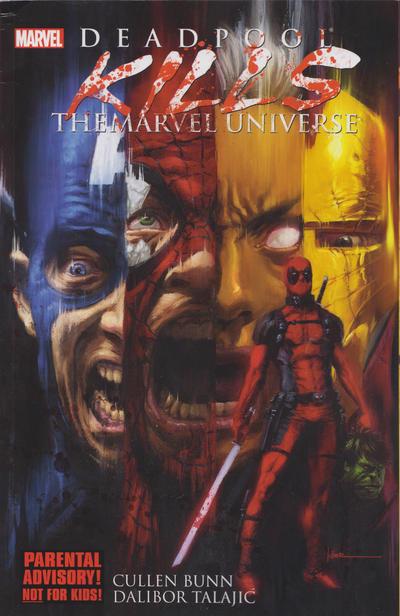
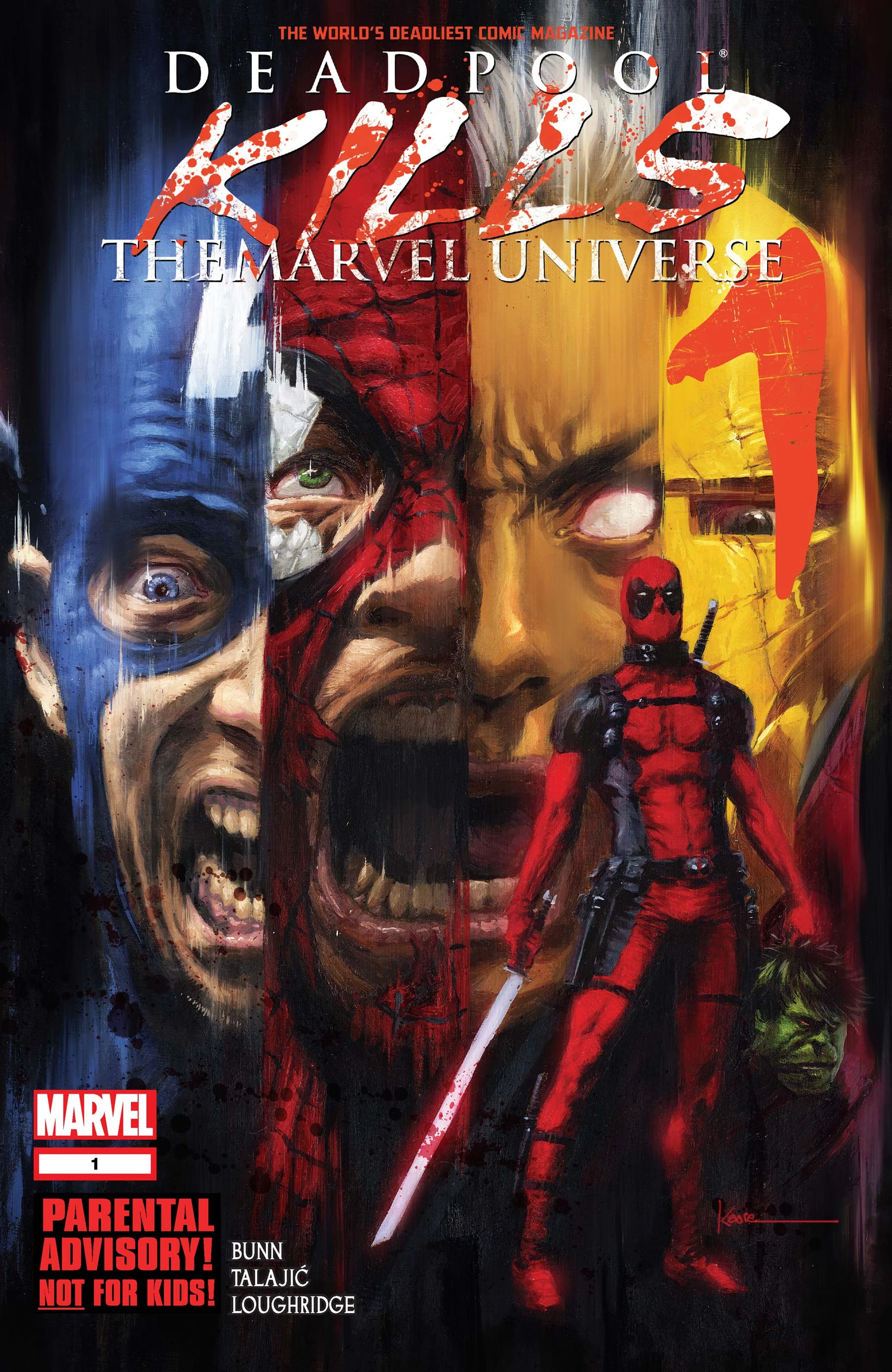
Marvel·Deadpool Kills the Marvel Universe·#1·Independent·ID-2450165
| Grade | Census & Float Distribution | Copies / Slabs | Role | FMV | Sales | Total Value | Multiple |
|---|---|---|---|---|---|---|---|
| 9.8 | 135 of 364 slabs (37.1%) | 135 | SOV | $59.96 | 135 | $8,095 | (3.9x) |
| 9.6 | 105 of 364 slabs (28.8%) | 105 | $50.00 | 105 | $5,250 | (3.2x) | |
| 9.4 | 51 of 364 slabs (14.0%) | 51 | $41.00 | 51 | $2,091 | (2.6x) | |
| 9.2 | 36 of 364 slabs (9.9%) | 36 | $50.00 | 36 | $1,800 | (3.2x) | |
| 9.0 | 15 of 364 slabs (4.1%) | 15 | $49.76 | 15 | $746.40 | (3.2x) | |
| RAW | Raw Uncertified Copies | — | RAW | $15.50 | — | — | (1.0x Base) |
Empirical cash settlement intelligence, cross-grade elasticity curve, and secondary liquidation velocity.
Empirical step multipliers between adjacent condition tiers. Pinpoints the exponential premium transition and capital efficiency frontier.
Realized turnover cadence and capital absorption depth across certified auction comps.
Autonomous institutional strategies, financial equilibrium, scarcity modeling, and algorithmic risk profiling.
Market operates purely on organic buyer and seller auction discovery. Zero artificial price interventions or emergency liquidity halts on record.
Verified historical transaction line with quarterly equilibrium baseline anchor.
Understand how physical sales, invested dollars, and liquidity friction divide across grades.
Completed market sales by grade
Relative market value allocation
Estimated execution friction
Bibliographic provenance, creator credits, historical significance, and multimedia documentation.
Cullen Bunn
Dalibor Talajic
Dalibor Talajic
Lee Loughridge
Joe Sabino
Jordan D. White, Nick Lowe
Home of Spider-Man, X-Men, Avengers, and the Marvel Cinematic Universe.
Outside the Marvel/DC duopoly. Often creator-owned with outsized cultural impact and far greater natural scarcity.
No returnable copies, no overprint buffer. True scarcity with potential for explosive growth on media adaptation news.
Independent publisher — outside the Marvel/DC duopoly. These issues often carry outsized cultural impact with far greater natural scarcity. No returnable copies, no overprint buffer.
Inspectable mathematical proof, blockchain/ledger provenance, data integrity validation, and asset taxonomy.
The recovery of third-party encapsulation and grading expenditures when an asset is acquired at a discount below the physical cost of replacement grading fees, shipping, and insurance.
The story starts with a narration of Uatu the Watcher talking about the Marvels that surrounded this world, and how now every single Marvel is meeting its inevitable end. Next, we see Susan Storm grieving over her dying husband Reed Richards, while surrounded by the remains of Ben Grimm's rocky body. Reed mentions with his last breath that he managed to keep their children safe in the Negative Zone from this menace. An explosion sounds and Susan becomes invisible only to find out that the perpetrator was none other than Deadpool who just crashed a ship crushing Johnny Storm and slitting his throat. The resulting blood splat reveals Susan's position to Deadpool but before he can attack her, Susan blows his head up with a force field. However, Deadpool's healing factor rebuilds his head and he manages to stab Susan in the back, effectively killing the Fantastic Four. In a flashback is revealed that Deadpool was committed into the Ravencroft Asylum by the X-Men in order to heal him from his insanity, but unbeknownst to them, his doctor was actually Psycho-Man who was brainwashing his patients into doing his bidding and was aiming to do the same with Deadpool by shutting down his inner voices. The plan backfired as his voices were replaced by a new one that encouraged him to kill everyone. Deadpool kills Psycho-Man by smashing his head as a stamp and later he escapes the asylum not before blowing it up. Deadpool confronts Uatu once he manages to find him and even manages to kill him thanks to one of Reed's devices, before heading on with his massive killing spree.
Each cover variant, retailer incentive, and subsequent printing represents an independent atomic tradeable instrument with unique supply elasticity, barcode registration, and secondary market demand.
Strict algorithmic segregation separating clean single-issue Cover A sales from multi-issue lot bundles, retailer exclusives, and foreign variants.